


Oct 19, 2026
Get ahead: 5 tax planning steps you can take before the new year
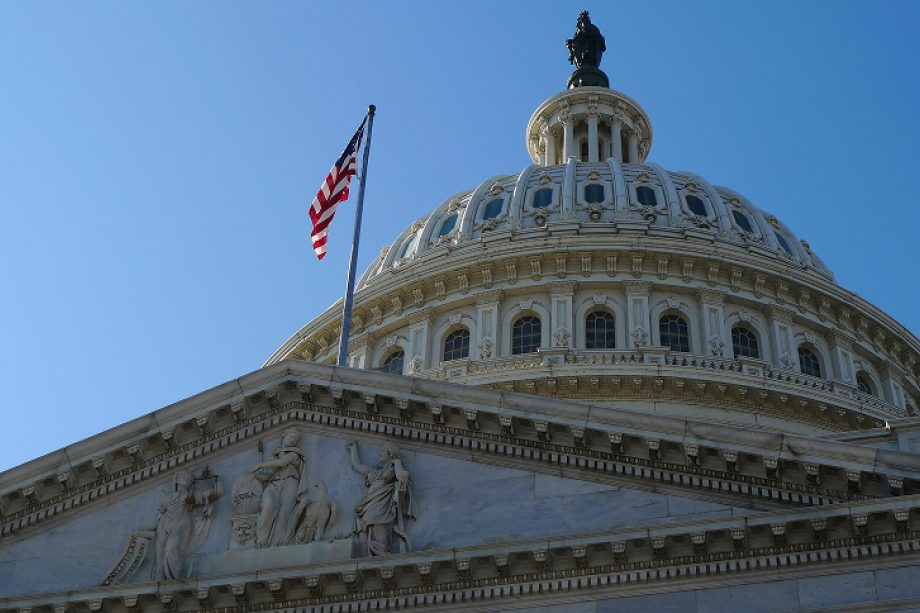
The United States is facing the 2026 midterm elections with little fiscal room to maneuver. The outcome is unlikely to reverse that trajectory with every potential scenario pointing to continued pressure on federal borrowing as spending priorities broaden in both scale and across industries.
The variability lies in what Congress spends on, how it raises revenue and the frequency of political friction in the process. Based on historical precedent, a Democratic sweep of Congress would likely prioritize access to health care through social programs like Medicare and Medicaid, education, income support programs and investment in public infrastructure. A Republican sweep, on the other hand, would likely favor increased defense spending including border security, tax cuts and deregulation in industries like energy.
Midterm elections rarely rewrite the economic outlook on their own. But they can change who controls the federal government’s checkbook—and, with it, which policies receive funding, how much Americans pay in taxes, and how easily Washington can keep the government running.
As government debt has risen over the decades, policymakers have not enacted meaningful austerity measures. Growing out of the debt burden has instead become Washington's de facto fiscal strategy as stronger economic growth is leveraged to help stabilize debt relative to GDP.
But make no mistake: The United States has a debt problem. National debt relative to gross domestic product (GDP) sits at 123%, 1 the third highest among its G-10 peers. 2 The Congressional Budget Office expects the federal government to borrow roughly $1.9 trillion in fiscal year 2026, equivalent to 5.8% of GDP. The CBO projects the deficit will rise steadily over the next decade, reaching $3.1 trillion or 6.7% of GDP by 2036, with rising net interest costs driving much of the increase. Although the 2026 deficit is substantially above the 3.8% average over the past 50 years, the deficit as a percentage of GDP has been wider in prior years. This highlights that borrowing—historically elevated as it is—is only manageable if the economy is growing at a fast enough clip.
Economic growth received a boost from government spending, which added roughly 80 basis points to growth in the first half of 2026 and helped cushion the economy during the Middle East conflict. But that support is expected to reverse, with fiscal policy projected to become a roughly 70 basis point drag on growth through 2027. 3 That is one less tailwind to the speed of expansion in the U.S. economy at a time when borrowing needs continue to rise.
Investors are increasingly demanding additional compensation to hold long-dated Treasury bonds, contributing to the rising term premium in the bond market alongside increased supply. The U.S. Treasury is on track to issue over $30 trillion in government debt across bills, notes and bonds to finance higher federal spending, service higher interest costs and refinance existing debt in 2026. Alongside higher issuance from the companies financing the AI build-out, this is helping push bond yields to multi-decade highs.
However, it’s important to note that the most important measure of issuance is not gross or total issuance, but net issuance. In other words, how much new issuance is coming to market. By this measure, it’s clear that issuance is rising, but remains significantly below the highs of 2020. Note: During the pandemic, fiscal policy and 0% interest rates helped keep the economy afloat while physical movement was shut down. Consequently, the fiscal deficit expanded. The fact that it remains at historically elevated levels six years later is notable.
The makeup of that issuance is crucial too. Given the volume of T-bills relative to notes and bonds, shorter maturities create more volatility and further increase the need for additional funding. If Treasury issuance grows faster than demand from households, pension funds, banks and foreign buyers, investors may continue to demand higher yields to absorb the additional supply.
Midterm elections are often seen as a referendum on the incumbent administration. The political pendulum tends to swing away from the party in power, with majority control changing hands in at least one chamber of Congress. That has been the result in three of the past four midterm elections.
A mixed Congress with one chamber controlled by Democrats and the other controlled by Republicans can limit new legislation, leaving little room for policy changes. Tax and spending policy can operate on autopilot, with existing laws, entitlement formulas and interest costs doing the heavy lifting. Investors tend to greet this kind of gridlock scenario with relief as it eliminates policy uncertainty and adds near-term visibility for the business operating environment.
The initial market reaction can create a bid for bonds as investors seek safety in what is meant to be the world’s safest asset, but a pattern of prolonged fiscal brinkmanship can increase market volatility.
In some cases, gridlock doesn't reduce spending. It amplifies it. In the face of true gridlock, lawmakers can be encouraged to fund priorities from both parties. Some of the biggest budget deals and spending packages of the 21st century thus far were bipartisan, but ultimately led to greater funding needs.4 Although it has limited near-term effect, it can amplify debt burden worries in the long term—something already reflected in the growing term premium.
Another risk sits in the budget creation process itself. Take the 2025 funding lapse, which lasted 43 days and became the longest government shutdown in modern U.S. history. Followed by a series of rolling partial closures, it serves as a warning of delayed appropriations and the more frequent use of continuing resolutions.5 It keeps the government open but extends the overhang of fiscal uncertainty and raises the stakes when the debt ceiling needs to be revisited
If Democrats win the majority of seats in both the House and Senate, Congress would have greater leverage over appropriations, taxes and oversight—but not a free hand. A Republican White House could still veto legislation, and most bills in the Senate would need bipartisan support as any majority is expected to be a slim one.
Amid a slew of spending priorities, one likely policy emphasis could be on affordability measures and protecting social safety nets like social security, Medicare, Medicaid spending on long-term care and expanding access to healthcare through legislation like Affordable Care Act subsidies.
It’s no secret that the U.S. population is aging. The 65 and over age group is expected to grow from 18% to 25% of the total population over the next 30 years.6 Fewer workers are supporting more retirees, which makes demographics a key part of which spending promises can and should be sustained.
With a growing number of elderly citizens who rely on social programs, the cost naturally grows over time. That can be a long-term concern for the bond market as responsible financing becomes a bigger tenet of the term premium. As investors focus on whether new spending is paired with durable revenue, an expansion financed primarily through borrowing could put upward pressure on issuance and potentially on longer-term yields.
If Republicans retain both chambers of Congress, they will likely keep pursuing the White House’s policy agenda. A renewed Republican majority could pursue additional tax relief, continued deregulation and an increase in defense and national-security spending. Note: the White House has already proposed a record $1.5 trillion in defense spending for 2027.
The Republican party has long been associated with prioritizing fiscal prudence and cutting federal spending, but the experience of the past decade suggests that a unified government can make major fiscal legislation easier to pass, but not necessarily make a deficit reduction easier to deliver—especially when defense, technology and energy are party priorities.
Domestic investment in onshore manufacturing, energy security and the AI build-out in a more deglobalized world have become key tenets of the Republican—and in some cases bipartisan—agenda. It has spurred some economic growth, but still far outpaces tax and other government revenues.
That investment is likely to increase the cost of goods and labor. Those rising prices feed into a structurally higher inflation environment, which then fuels higher bond yields. For investors, that means the cost of capital can increase as these spending priorities amplify the need for both more resources and eventually more Treasury borrowing.
The three outcomes would create distinctly different sector winners, but the bond-market signal is less partisan. Investors are already charging borrowers more for duration. The Federal Reserve Bank of San Francisco estimated the 10-year Treasury term premium at 1.40 percentage points as recently as the end of September, up from 1.14 percentage points one year earlier.7
The 2026 midterms will determine the level of spending that gets through Congress, but with the nation already facing large deficits, rising mandatory spending and rapidly growing interest costs, midterm elections are unlikely to change the United States’ debt trajectory. While reversing the debt path would require tough choices on taxes and social programs—something neither party has made central to its campaign—a new Congressional makeup can change the composition of policy at the margin.
For investors, the most important post-election signals may be the size of each party’s majority, the first budget resolution and the willingness of lawmakers to attach offsets to new priorities. Those details will help determine whether the next Congress delivers a change in the composition of spending, a meaningful increase in borrowing or a period of gridlock without necessarily improving the long-term arithmetic.

Federal Reserve Bank of San Francisco, Treasury Yield Premiums. Data as of September 30, 2026.
https://www.frbsf.org/research-and-insights/data-and-indicators/treasury-yield-premiums/
We can help you navigate a complex financial landscape. Reach out today to learn how.
Contact usLEARN MORE About Our Firm and Investment Professionals Through FINRA BrokerCheck
To learn more about J.P. Morgan’s investment business, including our accounts, products and services, as well as our relationship with you, please review our J.P. Morgan Securities LLC Form CRS and Guide to Investment Services and Brokerage Products.
JPMorgan Chase Bank, N.A. and its affiliates (collectively "JPMCB") offer investment products, which may include bank-managed accounts and custody, as part of its trust and fiduciary services. Other investment products and services, such as brokerage and advisory accounts, are offered through J.P. Morgan Securities LLC ("JPMS"), a member of FINRA and SIPC. Insurance products are made available through Chase Insurance Agency, Inc. (CIA), a licensed insurance agency, doing business as Chase Insurance Agency Services, Inc. in Florida. JPMCB, JPMS and CIA are affiliated companies under the common control of JPMorgan Chase & Co. Products not available in all states.
Please read the Legal Disclaimer for J.P. Morgan Private Bank regional affiliates and other important information in conjunction with these pages.
Bank deposit products, such as checking, savings and bank lending and related services are offered by JPMorgan Chase Bank, N.A. Member FDIC.
Not a commitment to lend. All extensions of credit are subject to credit approval.