Oct 8, 2026
Plan ahead: How to part ways with your company
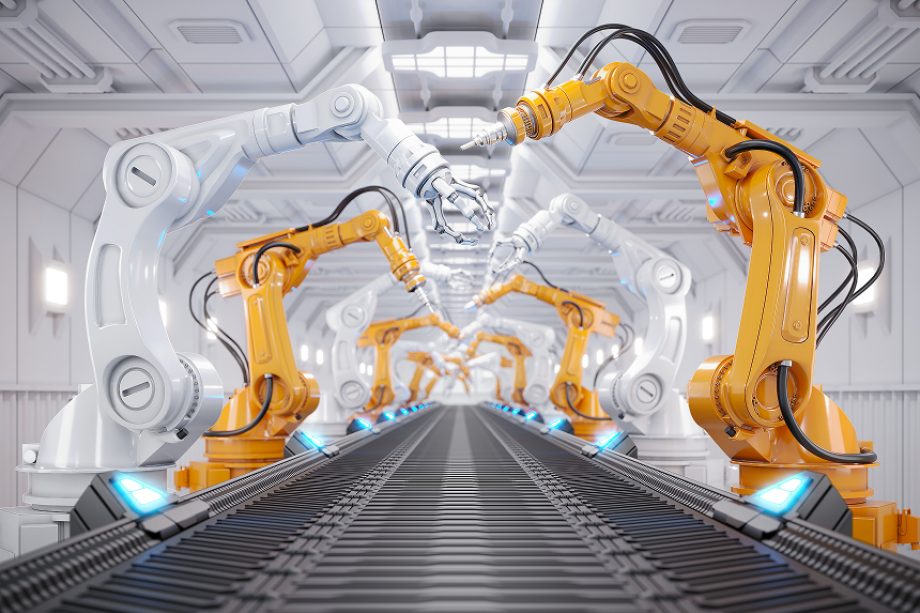
The term “physical AI” refers to AI that doesn’t just predict or recommend, but also takes action in the physical world by powering robots, vehicles and industrial machinery.
To help you think through the state of robotics today, the outlook when it comes to overcoming current constraints and where value may accrue for investors, here are five signals we are watching: the size of the opportunity; the geopolitics of manufacturing; the progression of robots’ autonomy; the engineering; and the potential constraints on widespread adoption.
Industry consultants and investment analysts suggest the global robotics market could grow 25x, to $2.5 trillion in annual sales, by 2035. That implies a roughly 35% to 40% annual growth rate from $100 billion in annual sales in 2025.1
Today, the category consists mostly of industrial robots and small drones. Expectations, however, are for humanoid robots and autonomous vehicles to deliver the majority of value creation in the future.
A key point about these forecasts to bear in mind: Real outcomes are likely to depend as much on breakthroughs in reliability and safety that have not yet occurred as on manufacturing costs, which should decline with economies of scale and as makers gain experience.
Humanoid robots and autonomous vehicles will likely have many applications, and you may not need to know which end use will ultimately be the most profitable to invest in the trend today. As with other technology cycles, including digital AI, the earliest beneficiaries often sit in the infrastructure layer, particularly semiconductors, and the platforms—in this case, the vertically integrated manufacturers and their tooling partners that make the ecosystem possible.
In the digital AI investing cycle, a small number of LLM developers have emerged as market leaders, but robotics will likely be different, shaped as much by where manufacturing can scale up as by which companies have the most capable software. By that measure, China appears particularly well-positioned and already accounts for roughly 75% of both the humanoid and AV markets.
China’s advantage begins with manufacturing depth. Physical AI requires vast networks of suppliers, component manufacturers and production capacity. China has spent decades building those capabilities and now benefits from integrated supply chains, government support, quickly developing AI capabilities and economies of scale.
China’s cost advantage is stark. A typical humanoid robot’s materials cost roughly $46,000 in China versus $131,000 in the United States.4 China also produces about 70% of the world’s actuators—the motors, sensors and transmissions that function as humanoid robots’ “muscles” and can account for up to 50% of the total cost.
These cost advantages are increasingly visible in production data. The three leading Chinese humanoid manufacturers are on track to produce more than 100,000 units this year, about five times last year’s level and ahead of many industry expectations.5
That does not mean the West is absent. The United States retains important advantages through its leading AI model developers, AI semiconductor ecosystem, robotaxi operators and electric vehicle innovators. Europe is well-positioned in the enabling technologies behind robotics, leveraging decades of expertise in industrial automation, precision engineering and factory software.
If the current AI cycle has rewarded the companies that trained the models’ “brains,” the robotics cycle may reward those that can manufacture the bodies—of both humanoids and AVs.
Investors often talk about humanoids and AVs in the same breath. But unlike humanoids, the leading AV makers are already operating autonomously (as robotaxis) in the real world. The debate is increasingly about how fast they scale, not whether the technology works. To be sure, AVs still have challenges ahead relating to regulation, cost, public acceptance and how, where and when they’ll be deployed. These are slowly being tackled.
The leading U.S. robotaxi operator is completing trips without human intervention in designated locations. The company operated roughly 3,000 vehicles last year and plans to expand significantly in rides and geographic coverage. The company’s December 2025 safety study found approximately 82% fewer injury-related crashes than human drivers on a per-mile basis across its four major markets (Austin, Los Angeles, San Francisco and Phoenix).6
Mass adoption of AVs will likely be gradual—they are expected to represent less than 1% of U.S. miles driven over the next decade—but we see promising potential. The low penetration suggests the market may still be largely untapped a decade from now, with room for growth.
As people’s utilization of AVs rises and operating costs fall, autonomous transportation could become cheaper than owning a car. If that happens, those favorable economics could help drive adoption.
Humanoids are meant to operate in environments built for humans, which adds to their appeal, but their human form also makes them difficult to build.
In our view, the gap between a viral demo reel and a truly useful general-purpose robot remains quite wide—something investors need to appreciate. The challenge lies in getting humanoids to perform a wide range of tasks safely, reliably and autonomously in an unpredictable world.
While low-cost humanoids, which cost from $5,000 to $10,000, can look impressive in controlled demonstrations, their actual dexterity, mobility, battery life and autonomy are meaningfully constrained outside those demos. Many headline-grabbing performances still rely on pre-programmed actions or remote control; autonomy is a crucial measure for a humanoid.
Higher-end humanoids systems are beginning to prove themselves in factory pilots and can exceed human capabilities at specific tasks, such as sorting and moving heavy auto parts. Yet they still struggle with the kind of adaptability and fine motor skills that humans take for granted, frequently requiring intervention when conditions change. In addition, those humanoids required millions of hours of simulation to learn the basic task of moving a mini-fridge. This suggests they may have a limited ability to extrapolate their knowledge to other, similar tasks.
High-end humanoids also take a tremendous amount of computing power and, indeed, rely on supercomputers to function. Physical AI supercomputers are capable of allowing humanoids to do early-stage generative reasoning.7 They can do computational processing at the rate of 2,000 trillion operations per second. Yet all that brain power and processing ability only produces roughly 10% of what an average adult human brain could do—not enough yet to replace generalized human labor.
The labor implications of physical AI are significant but unlikely to be straightforward. While automation could displace some workers, many early applications target jobs that are experiencing a labor shortage, are physically demanding and/or hazardous.
Those dynamics may prove critical. The 10 most dangerous U.S. occupations employ roughly 3.4 million workers and face an estimated 1.5 million worker shortage.8 In healthcare, where approximately two million roles are unfilled, workers face elevated rates of injury and violence, versus other industries. Those factors could help spur adoption.9
It’s also far from clear whether humanoids will more often substitute for laborers or augment them. Historically, the economic evidence on technology displacing people is mixed. Some studies link industrial robots to job losses, while others suggest automation can boost productivity and support employment growth. The uncertainty increases the likelihood of policy responses, including reskilling, education investment and expanded safety nets.
What receives less attention is a different potential impediment: Robots are only as capable as the AI powering them. Physical AI’s widespread adoption will depend on advances in AI reasoning, perception and autonomy. Progress in these areas remains impressive but uneven.
Another potential set of limitations: The infrastructure supporting AI is under growing strains. The demand for AI computing power is rising rapidly, semiconductor costs are elevated and next generation AI systems require exponentially more processing power than earlier models.
Power, in our view, is another underappreciated risk to achieving mass adoption. The bottleneck may be in powering the supply of intelligence required to run robots at scale. Physical AI’s future as an investing theme could be determined by the sufficiency of data centers, semiconductors, power and computing infrastructure.
The race is not simply to build better machines but to build the ecosystem capable of supporting them.
Investments in physical AI are surging as the category ramps up from experimentation to deployment—especially humanoid robots and AVs. Yet a technological possibility isn’t the same thing as mass adoption. The winners will be those selling intelligent machines that are reliable, economical and can be produced at scale.
With those caveats, we think today’s combination of early-stage uncertainty and rapid technological progress could create an attractive entry point into a theme that may reshape transportation, manufacturing, logistics and services. We see opportunities across the physical AI ecosystem—from the semiconductors powering robotic intelligence to the factory automation platforms building the hardware to a select group of leading companies closest to achieving mass market adoption.

We can help you navigate a complex financial landscape. Reach out today to learn how.
Contact usLEARN MORE About Our Firm and Investment Professionals Through FINRA BrokerCheck
To learn more about J.P. Morgan’s investment business, including our accounts, products and services, as well as our relationship with you, please review our J.P. Morgan Securities LLC Form CRS and Guide to Investment Services and Brokerage Products.
JPMorgan Chase Bank, N.A. and its affiliates (collectively "JPMCB") offer investment products, which may include bank-managed accounts and custody, as part of its trust and fiduciary services. Other investment products and services, such as brokerage and advisory accounts, are offered through J.P. Morgan Securities LLC ("JPMS"), a member of FINRA and SIPC. Insurance products are made available through Chase Insurance Agency, Inc. (CIA), a licensed insurance agency, doing business as Chase Insurance Agency Services, Inc. in Florida. JPMCB, JPMS and CIA are affiliated companies under the common control of JPMorgan Chase & Co. Products not available in all states.
Please read the Legal Disclaimer for J.P. Morgan Private Bank regional affiliates and other important information in conjunction with these pages.
Bank deposit products, such as checking, savings and bank lending and related services are offered by JPMorgan Chase Bank, N.A. Member FDIC.
Not a commitment to lend. All extensions of credit are subject to credit approval.