Jul 21, 2026
After the IPO: 10 steps to successful wealth management
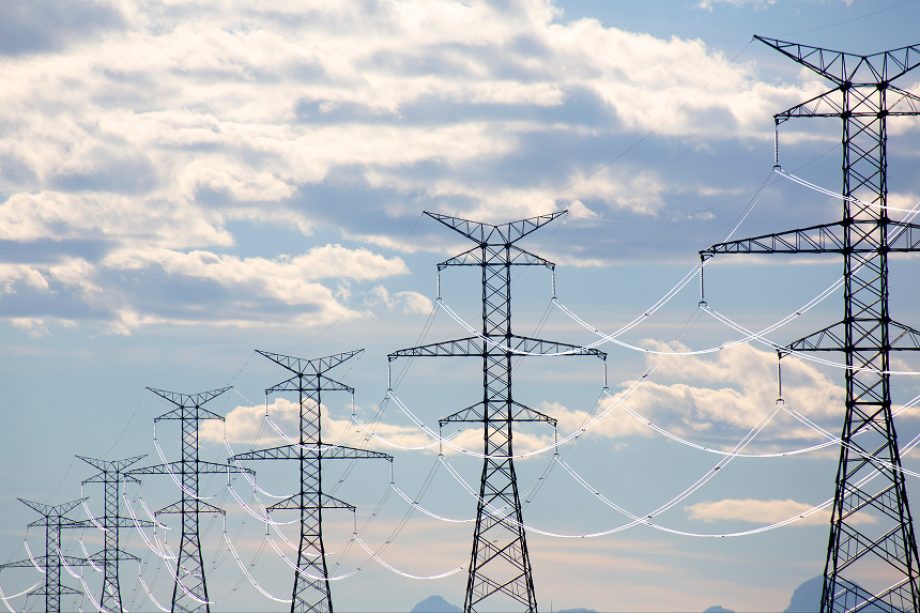
The U.S. electrical grid needs to add the equivalent of more than 20 New York Cities by the early 2030s.1
That’s how much demand for power is expected to outstrip supply in the coming years—mostly due to AI data centers, whose power needs are skyrocketing far beyond existing electrical capacity, and projections for AI power needs are being revised ever higher.2
The companies that generate, transmit and equip the grid are now exposed to demand growth potential that looks more like technology than utilities, changing power companies and utilities from a defensive, low-growth corner of the market into a high-growth sector and one of today’s most consequential investment themes.
Newer data centers can be 50 times the size, and more power-dense, than prior generations—and even a 10-percentage point increase in agentic AI adoption could increase data center power needs by another 25% by 2035.3 The grid hasn’t caught up, setting off a resource grab for power and a secondary capex cycle, echoing AI’s.
We think the building of new power generators offers attractive return potential at a time when $600 billion in transmission and distribution spending is projected through 2030.4 This cycle may be long-lived, as the power sector has experienced about $3 trillion in underinvestment since 1999.5 The high, growing and unmet demand for power can’t be fulfilled quickly.
We view the cycle favorably, particularly select power generators, “picks and shovels” (engineering and construction) firms, electrical equipment manufacturers and others sitting close to the deployment bottleneck.
Here, we examine the structural forces driving the power build-out and the parts of the ecosystem most likely to benefit. We see the most compelling potential opportunity in decades in utilities—but only if investors exercise selectivity. Outcomes will vary widely by local power-market constraints and regulations, which could extend the demand shock through the end of this decade. We consider the possible upside forces and potential risk signals that may help us identify emerging leaders across a handful of industrial sectors.
The electrical grid, a physical system—generators, interconnection, the grid, equipment manufacture—is growing capacity at a linear pace. By contrast, AI-related computing needs are scaling exponentially.
Hyperscalers and power project developers are looking to build in regions with available capacity, faster interconnection and supportive policy. They face many hurdles: A lack of skilled labor, complex regulations, long production times for critical equipment like turbines and large transformers, and growing popular and political opposition to data centers and the rising electricity costs to consumers that many have triggered.
Satisfying AI’s demand for power will require a mix of fuel sources, including nuclear and renewables, each with pros and cons. Data center operators and developers can get online on the grid faster, and ease some opposition, by building and paying for their own power plants, called dedicated or “behind-the-meter” supply,6 which can reduce how much of the bill lands on existing utility customers. That’s a trend we expect will grow. But even then, they must still negotiate permits, connection approvals, reliability rules set by regulators, and potentially a multi‑year wait.
Regulation is now in focus. In tight power markets, regulatory rules are more likely to determine power generators’ outcomes than fuel costs or technology choices. The demand growth matters for portfolio decisions, but clarity around key regulations is a leading driver of investor outcomes.
As the power system moves from stable demand to a steep, step-function growth in demand, it’s not unusual to see an industry confront the constraints with transitional planning and turn to emergency procurement mechanisms. Regulators are stepping in, but there isn’t a clear path forward yet. As we’ll discuss, nonprofit PJM Interconnection, the largest U.S. regional grid operator running the power market from New Jersey to Illinois, is a real-time case study.
Politics are another major constraint. Someone pays in conditions of scarcity, and in some districts where that has fallen to consumers, voters have become upset about affordability. Regulatory proceedings have recently been allocating the cost of new generation, among data centers, residential ratepayers and utility shareholders. At the time of this writing, the regulatory environment remains uncertain.
Still, this is potentially the most interesting opportunity for investors in the utilities and adjacent sectors in decades. But only, we think, with selectivity. We do not believe the impacts will be equally distributed. Here’s how we understand the unique local environments where power is generated, including the complex and extremely regulated ways electricity comes to market. The constraints and bottlenecks could, we think, prolong the demand shock and the investing opportunity through the end of the decade.
To be sure, demand growth could undershoot current projections if chip energy efficiency, the architecture of AI models or workload optimization prove able to reduce the power intensity of AI computing. But we don’t expect efficiency gains to be enough to offset leading AI companies’ power requirements, which are expected to double by 2027, according to IEA estimates.
For further background on the opportunity, see Michael Cembalest’s Eye on the Market energy paper.
A power project’s debut often depends on its place in a years-long queue, rather than on capital. Large customers must get in line for a utility or grid operator to run engineering checks, make local upgrades, approve plans and schedule work.7
This isn’t a new story. As early as 2024, the increased demand for power from AI data centers had begun to take center stage. We predicted the unsatisfied demand in earlier reports and reiterated that demand growth was a high conviction theme in both public and private markets. Now demand growth is at an over 20-year high and U.S. electrical infrastructure can’t keep up. After 20 flat years of industrial growth, the situation has changed.8
A year ago we called it “a supply crisis putting grid reliability and AI expansion at risk” and “a risky imbalance” between critically tight supply and demand in 70% of regional power markets. We said rolling blackouts and higher prices were likely. These have come to pass.
Price volatility, demand-supply imbalance, popular dissent: All three big themes are clearly visible at PJM. In July 2025, PJM’s “capacity auction” (a forward market that pays generators for being available in future peak seasons) hit a record $329.17 per megawatt per day—a rise of more than 1,000% over the last two years. PJM is responsible for satisfying nearly half of U.S. data center power demand because so many are located in its region. Forecasts suggest data centers could comprise about one-fifth of total demand in the region within a decade.9
Increasing power prices and affordability concerns have been top headlines this year. Governors in the affected states are pushing for price caps and cost controls; PJM is undertaking various reforms and federal involvement has risen. Meanwhile PJM has sped up its interconnection queue, adding new supply through a reform of its processes.
For investors, the power capex cycle points to the likely rising value of new power that will bring large customers flexibility and reliability. One opportunity is in what’s called “fast-start” generation (“fast power”), sector-wise mostly heavy industrial companies. Another area of interest: storage, for intermittent renewable power. We also like grid build-out and improvement opportunities, and related services including software.
Here’s a look at a handful of key areas of interest:
The industrials and heavy equipment suppliers are crucial in the race to build fast power. As noted, equipment and grid hardware manufacturing lead times typically are multi-year. The cost of combined-cycle gas turbines is also rising. Transformer and other electrical equipment lead times range from 18 to 36 months. Original equipment manufacturers (OEMs) and suppliers of generation sets, electrical balance-of-plant, and controls are opportunities in this area.
Positive signals:
What we’re watching:
If hyperscaler capex slows, the demand signal feeding the power build-out could weaken before supply catches up, changing the balance of risk for late-cycle equipment and capacity additions.
These companies design and build power infrastructure: generation plants, substations and behind-the-meter systems. Those with picks and shovels near bottlenecks are likely to benefit soonest.
Positive signals
What we’re watching
In public equity and bond markets, utilities and power producers remain key beneficiaries of this capex cycle. Independent power producers (IPPs) are positioned to benefit from rising prices in constrained markets, where reliable electrical capacity becomes more valuable. Regulated utilities12 have the potential to benefit from increased capital investment and an expanding rate base tied to the power infrastructure build-out, and the earnings outlook reflects this shift.
Positive signals:
What we’re watching
A range of companies enable data centers to acquire and run fast power. These can include software and other service firms tied to interconnection services, providers of grid-modernization software and energy services that shorten time-to-power. (This category also includes inputs into the aforementioned picks and shovels companies, such as makers of electrical equipment.)
Positive signals:
What we’re watching:
No single fuel source can serve the full spectrum of needs—reliability, scalability, speed and cost—on its own. We think an all-of-the-above approach is mandatory. Renewables can be deployed quickly but have intermittency issues. Natural gas will be key, but gas turbines have long backlogs. Nuclear restarts are sparse and new builds can take a decade. The lives of coal-fired plants are being extended instead of retired, but the longer-term outlook for the group remains negative.
Positive signals:
What we’re watching:
We are wary of overreliance on renewables as a standalone solution—a balanced approach is needed. (For example, grid hardening for 24/7 reliability and spending on grid modernization across the broad ecosystem, including transmission, substations, gas generators, storage and grid services.
In private market investing, value creation around the power capex cycle initially has been in infrastructure, and power has expanded to become the largest infrastructure sector globally. Infrastructure investments may offer comparatively stable, long-term cash flows (sometimes supported by contracted and/or inflation-linked revenue) and can provide portfolio diversification, though outcomes vary by asset, structure, and market conditions. The broad infrastructure opportunity includes investments in essential physical and digital assets that underpin economies.
Positive signals:
The shifts we’ve described are reshaping earnings trajectories, company valuations, capital flows and power infrastructure’s potential role in portfolios. Yet a large percentage of some investor groups have 0% infrastructure exposure (for example, family offices).
Consider whether it is timely to stop thinking of power a steady-state allocation.
We note that we don’t consider it a thematic trade because we expect a large degree of dispersion among companies in the space—and dispersion in performance, within and across subsectors, is rising. Not every firm will be able to execute given the constraints.
Consider engineering and construction firms, electrical equipment manufacturers, transformer suppliers and cooling/HVAC providers that sit closer to the deployment bottleneck than many generators do. These are in what we call the HALO category—heavy assets, low obsolescence.
We also favor some publicly traded independent power producers (IPPs) and utilities. Utilities sector earnings growth expectations have accelerated into the high single- to low double-digit range. The IPPs’ growth is well above the regulated utilities but the group is much more volatile. Regulated utilities, however, are likely to account for around 70% of the sector’s growth over the next two years, highlighting that strength potentially won’t only come from the IPPs.
Valuations remain reasonable, relative to the broader market. Dividend distributions (approximately a 3% dividend yield) are above market averages, too, creating an even more attractive total return potential. The sector’s composition makes it attractive for investors looking for exposure to the AI theme outside tech, and those seeking downside resilience and the potential for steady returns.
Infrastructure is our preferred implementation in this power capex cycle. Core infrastructure provides direct exposure to long-duration build-out needs, with long-term, contractual inflation-resilient cash flows—an important feature at a time of higher and more volatile inflation.
Power now represents nearly 60% of the global infrastructure benchmark index. Yet allocations remain surprisingly low: 79% of our family office clients, and 86% of other Private Bank clients, have 0% infrastructure exposure.
We think it’s time to reconsider that allocation, as transmission and the grid are structurally supported after decades of underinvestment. Participating in this timely capex cycle depends, we believe, on selectivity.

We can help you navigate a complex financial landscape. Reach out today to learn how.
Contact usLEARN MORE About Our Firm and Investment Professionals Through FINRA BrokerCheck
To learn more about J.P. Morgan’s investment business, including our accounts, products and services, as well as our relationship with you, please review our J.P. Morgan Securities LLC Form CRS and Guide to Investment Services and Brokerage Products.
JPMorgan Chase Bank, N.A. and its affiliates (collectively "JPMCB") offer investment products, which may include bank-managed accounts and custody, as part of its trust and fiduciary services. Other investment products and services, such as brokerage and advisory accounts, are offered through J.P. Morgan Securities LLC ("JPMS"), a member of FINRA and SIPC. Insurance products are made available through Chase Insurance Agency, Inc. (CIA), a licensed insurance agency, doing business as Chase Insurance Agency Services, Inc. in Florida. JPMCB, JPMS and CIA are affiliated companies under the common control of JPMorgan Chase & Co. Products not available in all states.
Please read the Legal Disclaimer for J.P. Morgan Private Bank regional affiliates and other important information in conjunction with these pages.
Bank deposit products, such as checking, savings and bank lending and related services are offered by JPMorgan Chase Bank, N.A. Member FDIC.
Not a commitment to lend. All extensions of credit are subject to credit approval.