[MUSIC PLAYING]
CLAY ERWIN: Good morning. My name is Clay Erwin. On behalf of all of my colleagues at JPMorgan, we welcome you to our call today. And thank you for sharing part of your days with us.
So full disclosure, this is one of my favorite times of the year. It is that opportunity that we have to reflect on the year that was and lean into that year which is coming. And over the next 30 minutes, we aim to share with you our core convictions and opportunities for 2027.
And to help me with that objective, today, I'm joined by Steve Parker, our co-head of global investment strategy and Sitara Sundar, your head of alternative investment strategy. And as I said at the top, I am Clay Erwin, global head of investment sales and trading.
My role today is simple. I get to ask the questions and to help define the jargon. Their role is a little more complex. They are here to share their expertise with us. Steve, Sitara, welcome. And thanks for joining. Now, before we jump in, I'd love to spend a second on today before we talk about what's going to come tomorrow.
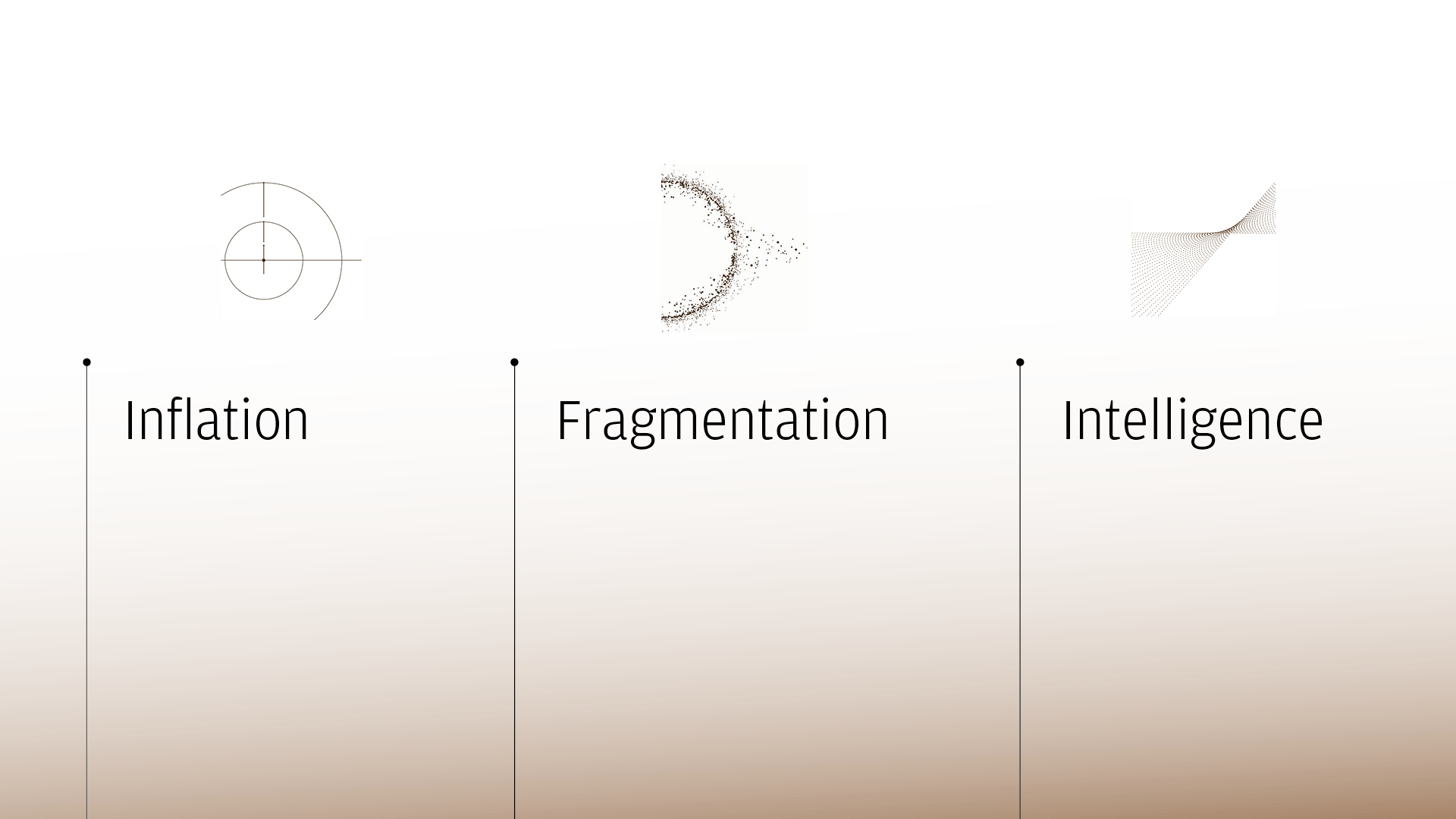
So Steve, 2026 has been a year that's somewhat the expecting of the unexpected. You've been saying all year long that this is going to be one characterized by the artificial intelligence trade, by global fragmentation, by persistent inflation. And yet when we saw events like Venezuela and Iran, midterm elections, tech IPOs, so many of these events felt like surprises. So how is it that we saw this coming, yet we were constantly surprised?
STEPHEN PARKER: Yeah, I think the reality, Clay, is that the themes themselves that we thought would define markets through the end of this decade were not a surprise. I think what did surprise markets was the magnitude, and the impact, and the speed at which those themes drove what we saw in the economy and financial markets.
Think about AI capital spending. In 2026, it looks like we're going to have about $800 billion of capital spending. That's 50% higher than where we were in January. Most people recognized that energy security was important in an increasingly fragmented world, but few expected to see energy prices double. And for the inflation that came with that, to shift the market's view from a world where the Fed was going to cut rates three times, to a world where the Fed was going to hike rates four or five times.
Now, the thing that we did expect, the consumer, particularly at the high end, would remain resilient. And importantly, the corporate sector would continue to deliver on an earnings boom, the likes of which we haven't seen outside of recoveries from recessions. And we think that theme continues into 2027.
CLAY ERWIN: Excellent, so I know we're going to talk a little bit more about AI, and energy, and some of the impacts on consumer from higher prices for the rest of this morning. But maybe before we get into that, Steve, if you could just summarize, let's cut to the punchline here, in a sentence, how would you describe your outlook for 2027?
STEPHEN PARKER: Yeah so the title of this year's outlook is the price of progress. And when we think about the world that we're entering in, the reality is capital finally has a real price. And that has implications for your portfolio.
Last year, we talked about those three themes as sort of independent ideas. What we've seen increasingly is that those themes are converging. And the demand for capital has exploded, whether it's to fund AI-related CapEx, whether it's governments needing to fund security, resilience, and infrastructure, or central banks being forced to raise rates to address inflation concerns.
That's a higher cost of capital, which can be a challenge if you're looking to access capital. But for so many of you on the call today, it's a great thing as a provider of capital. And you now have more options than you've had in a very long time.
CLAY ERWIN: It is interesting that it wasn't that long ago, if you go back only six years, that interest rates were at 0. In some cases, they were negative. And so that provision of capital didn't have the expected returns that we might be looking forward to in 2027 and beyond. So maybe you could jump right into that. What are our high-level capital market assumptions for the primary asset classes in the year to be?
STEPHEN PARKER: Yeah, let's talk about some of the numbers to as it relates to our 2027 outlook. So starting with growth, we expect another year of trend-like growth. Call it 1.5% to 2% here in the US. We think the higher end consumer remains resilient. Tech capital spending continues to push forward despite some of the uncertainty post the midterms.
But we think inflation pressures are likely to ease. We've already seen energy prices decline by nearly 20% this month alone. We think that they're going lower. And when you look at that, that's an environment where the 3 plus percent PCE numbers that we're seeing today probably falls to something closer to 2.25 to 2.5.
That doesn't get us to the Fed target, but it gets us a lot closer, which means we think the Fed hikes once more in December, once more in the first quarter of next year. And then that brings us to the end of the Fed cycle.
For bonds, that means that unlike this year, where we saw the sharp move higher in rates, it's more range bound. And at higher rates, you're being compensated for those risks. And you can be paid to wait. And then finally, on equity markets, I touched on the earnings boom. We think that continues. And our S&P base case target, 8,600 based entirely on earnings growth, rather than multiples.
CLAY ERWIN: So in summary, it's inflation should moderate, but we recognize that there's multiple types of inflation. Sitara, I think you're going to touch on this in a minute, that the pricing pressure on vegetables versus vacations might be different. But when you think about the primary asset classes, you're thinking mid-single digits for fixed income like returns and perhaps low double digits on the equity space is what I'm hearing from you.
STEPHEN PARKER: Correct.
CLAY ERWIN: All right, excellent, well, maybe we transition then to a brief conversation about artificial intelligence. It's hard to open a newspaper or to look at markets and not be part of the artificial intelligence conversation. Talk a little bit about that evolution that we saw this year, as well as the opportunities that we think we'll see in the year to come.
SITARA SUNDAR: Yeah, I think the biggest shift that we've seen is 2026 was the major risk was not owning any part of the artificial intelligence value chain at all. And so when we came into 2026, we had the idea of broad-based exposure across the value chain. So what is that value chain?
Think about the infrastructure builders, and that means power. That means data centers. That means the semiconductors or the chips that are used to fuel the computation that is necessary for these frontier models in terms of integration of what democratized intelligence could mean for our day-to-day existence. It was owning the breadth of that value chain.
This year, and what we're thinking about going into next year is this idea that we're moving from a broad-based market to a more discerning one. And we've seen that in a couple of different ways. One, it's knowing where within that value chain you want to lend versus own.
So for us, given that we're mid-innings on the infrastructure build-out, which we've started to see as hyperscalers or these mega-cap tech companies who have been building out the AI infrastructure have been funding a lot of this CapEx from free cash flow to now issuing in the debt market. So we still feel really strongly about lending into that infrastructure build-out, but through the companies that have the strong balance sheets that can weather the higher cost of capital today.
And then on the flip side of that, we think that we're still in the early innings of the integration of artificial intelligence into businesses outside of technology. And the people who are at the leading edge and the companies at the leading edge of that integration layer, so think about industry-specific automation, think about companies with proprietary data sets, purpose-built workflows, and a real right to win, a lot of those companies still exist within the private markets today, so venture capital.
So for us, when we're thinking about the opportunity set moving forward, it's a mix of public and private exposure, but lending to the infrastructure players, owning selectively within the public equity markets, hyperscalers versus the semiconductors, and then leading into private markets.
CLAY ERWIN: All right, so this is the part where I want to cut through the jargon a little bit. So there's two ecosystems that I heard you talk about, those businesses that are benefiting from this new technology that can extract efficiencies, margins, perhaps even higher sales.
But there's the whole ecosystem behind artificial intelligence as well. Only two years ago, artificial intelligence was starting from a standing position. There was no real revenue associated with it yet. This year, even utility businesses that are just at the early part of that value chain of providing power benefited from some of this rise in that AI enthusiasm. And so what I'm hearing you say is that no longer is it everything from electrician-- sorry, electricity to frontier models, but more specificity within that ecosystem that's going to define positive returns for 2027?
SITARA SUNDAR: Yes, and the fine point to that, because you know that I'm a data person, what you started to see is even within the companies within the S&P 500 that have reported, we've actually started to see stronger margin and earnings growth reports from the companies that have talked about using artificial intelligence in their day-to-day businesses, even outside of just the tech sector, versus those who don't. So we're still at the early innings, but the potential and the opportunity set moving forward from a long-term perspective is something that we're still constructive on today.
CLAY ERWIN: Great, we'll come back to that in just a moment. Steve, let's transition to the other big topic of the year. So you talked a little bit about energy and energy prices. We talked a little bit about artificial intelligence and the market developments there within.
All of this leads to a geopolitical conversation, especially today with all the headlines that we're seeing, and who has access to the technology and the information. Zoom out for a moment and talk about geopolitics writ large, the opportunities as well as the challenges.
STEPHEN PARKER: Yeah, Clay, we like to say that geopolitics creates-- geopolitical shocks create volatility. Geopolitical shifts create opportunity. And that's the world that we're living in right now. So even if we and markets expect a de-escalation in the Middle East, which should ease some pressures on energy prices, the reality is we're not going back to that world of globalization.
This fragmentation theme is here to stay. That means that fiscal spending is likely to remain robust, which is a positive for growth. But supply shocks and inflation are likely to remain sticky and a part of our day-to-day lives. So how do we think about that in the context of a portfolio when we talk about those opportunities? Three things specifically that we want to call out.
One, and this is one of our top calls coming into this year, was this idea around names related to security and defense. I'd specifically call out cybersecurity, which is a theme that's totally top of mind, and a focus on national champions around the world who are going to be the biggest beneficiaries of this spend.
Number two, think about the regions that benefit from this rewiring of global supply chains. So specifically, we like opportunities in places like Korea and Taiwan, but also in markets like Mexico and Japan, as the US looks to reshape the relationships that they have with players around the world.
And then, finally, this increasingly fragmented world means that the potential for inflation volatility and shocks is higher than it has been. And that means that you need to think beyond traditional stocks and bonds. Think about alternatives that can help buffer some of that volatility, so things like infrastructure, real assets, gold, and diversified hedge funds.
CLAY ERWIN: I love the way that you started this conversation by describing the opportunities in these geopolitical shifts. When money is in motion, there are opportunities. But I think it's worth us just pausing for a moment in recognition of the fact that we, as economists, investors, and market specialists, tend to focus on the movement of money and the opportunities for portfolios.
But it's important that we recognize that some of these things have real, massive, tangible impacts on lives and communities. And so it's hard sometimes for us to think about the role that we serve of maximizing the returns in our client portfolios versus recognizing all of the other impacts from some of the geopolitical shocks and concerns in the world that we live in today.
Anyway, let's move on. Let's spend a second on inflation itself. So some of the geopolitical shocks have led to this higher level of energy input and base material costs. But not all parts of the economy have been impacted equally by inflation. Talk a little bit about some of the pricing pressures that you've seen, the impact on interest rates around the world, and maybe the different impact on different levels of consumption activity as well.
SITARA SUNDAR: Yeah, I think the tagline as it relates to inflation is that we expect it to moderate over the next year or so, but still above central bank targets pretty much globally. So what that means is when you're thinking from a portfolio perspective on how to hedge against many of those risks on this idea of persistent inflation, things like real assets alternatives come into play.
On the what to do about it in terms of what we're actually seeing on a day-to-day basis, one of the most fascinating things, in my opinion, as it relates to inflation is what you mentioned is this divergence that we're seeing in areas where inflation has been higher than what we've seen, higher than that 3% core PCE versus not.
And what we've seen, and I think as it pertains to a lot of us as we think about the high-end consumer and even the health of the balance sheets there is this idea that ticket prices for luxury items has actually been accelerating at a faster pace. In your idea of vacations versus vegetables, the vacation costs a little bit more than some of these core food groups.
So this idea that when we looked and did all this analysis with many of our partners within JPMorgan and the Chase Institute, it's this idea that luxury ticket prices have been increasing 6% year over year versus core PCE at 3%.
And what that means is your portfolio doesn't just have to withstand the volatility that we're seeing in core good prices, but it also needs to withstand the volatility that we're seeing in luxury prices as well. So that your income that you're getting from that portfolio, the returns that you're generating from that portfolio, retains the same purchasing power.
CLAY ERWIN: Purchasing power. I think that that's exactly the right-- so the ability to maintain the same lifestyle based on the returns of your portfolio is going to, of course, vary by the consumption patterns of the individual themself. Could you talk a little bit about that pass through, then, from this higher level of inflation, and the impact on interest rates itself, and the expected returns that we could see there?
SITARA SUNDAR: Yeah, I think one of the things that we all to be true in Economics 101 is usually when inflation is higher, central banks are going to try to do something to stave off that from reaccelerating. We saw it in 2022. And we've seen it in periods of time in the past.
So what we know to be true in today's environment is that the cost of capital, that rates are likely going to stay elevated, which was a shift from where we were at the beginning of the year, which is what Steve alluded to, which is we went from an environment where there was an expectation of cuts to an expectation of hikes, to now the idea is the magnitude with which those hikes are going to come to fruition. So what--
CLAY ERWIN: Higher interest rates versus lower interest rates.
SITARA SUNDAR: Correct. So what that means is that for the first time since the global financial crisis, there are certain pockets of bonds in core fixed income that are posing a real alternative to what you're getting in risk assets.
You don't have to take the same amount of risk to generate a pretty decent return. So for example, investment grade credit, you're getting yields at around 6%, which is the highest that we've seen since the global financial crisis, which is meaningful.
And then the other part of it is outside of just locking in yields from where they are today, the contra to that, obviously, because before you ask me the question, which is who would we need to avoid in that period of time? Because a higher cost of capital, obviously, is good for those yields in those balance sheets that are strong and are able to withstand that higher cost of capital, that higher interest expense--
CLAY ERWIN: Or the providers of capital.
SITARA SUNDAR: Or the providers of capital. And then the flip side of it is the lower quality balance sheets where the free cash flow is not that strong, where they're a little bit more levered. And where the underlying business opportunity, there's a little bit more hesitation or volatility around that.
And for us, when we think about putting all of these themes together, when you're thinking about funding the AI build-out, the neo clouds, especially within public markets, are starting to--
CLAY ERWIN: Help me with that.
SITARA SUNDAR: Yeah, so these companies where the majority of their customers, when they're helping build out this infrastructure and helping build out the data centers, where the majority of their customers are just AI-native businesses or AI-native startups, where there's more variability on what that potential revenue generation is going to be like in the future. And they're more highly levered.
CLAY ERWIN: I see. I'll say back to you what I'm hearing. So fixed income has traditionally served multiple purposes in a portfolio. Two of the primary are the ballast in the portfolio, they should maintain their value or perhaps go up when there are moments of volatility. And also, of course they provide fixed income, or income, just like it says on the tin.
And so now, for the first time in a long time, you get these 6% yields using your level, where you can actually be paid while you're maintaining this balance in your portfolio, something we haven't seen in a period of time.
SITARA SUNDAR: Yeah, and then when you think about what your long term-goals are, and when you think about what long-term returns you need to reach those goals, that 6%, when you think about to a certain extent within pockets of equity markets, you're getting equity like returns in a credit instrument. So it's idea, the tagline in all of it, is actually getting paid in a risk-adjusted way to be a lender in this market versus just an owner.
CLAY ERWIN: I love it. And so interesting, you said equity-like returns. Let's transition the conversation to equity expected returns. We just heard that high quality fixed income of a moderate duration could yield perhaps as high as a 6%. What is the equity expected return? And where within the equity markets are you focused?
STEPHEN PARKER: Yeah, so we think the story that we've seen over the last couple of years continues, and that equity market upside continues to be driven entirely by strong earnings growth. So when you think about our 8,600 target on the S&P, which is about 16% higher than where we are today, the expectation there is fully that that's going to be driven by earnings.
We like the fact that we have seen a rerating in multiples. And valuations have come down, which gives us more of a cushion. And I think also reflects a degree of skepticism that the current pace of earnings growth can continue. We expect it to slow down, but we still think it's going to be robust and drive that mid-teens type of total return.
CLAY ERWIN: So you used two words, "multiple" And "valuation." Just for the benefit of everybody on the call, what you're saying is prices. Multiples and valuation, another way of saying stock prices. Stock prices could change simply because the market is willing to pay more for those stocks or stock prices could go up because their fundamental underlying earnings are going up.
We saw a decline in valuations this year, which all else equal, people would anticipate means prices decline. But what we've actually seen is valuations decline because earnings have gone up. Could you develop that a little further for me?
STEPHEN PARKER: Yeah, so it's interesting, because we've talked a lot about the higher cost of capital. And we tend to think about that through the lens of interest rates or credit spreads. But the reality is the higher cost of capital is also coming into play in the equity market. How? Because valuations have come down.
The amount that investors are willing to pay per dollar of earnings is lower today than where it was at the start of the year. And I think that that is a reflection of all of this uncertainty from a macro perspective. And when clients push back and say, shouldn't we see a bigger decline in equity markets? I say we have seen a decline, but it's come in terms of valuations.
As you referred to, Clay, it's that earnings strength that we are seeing. And by the way, it's not just earnings strength from the tech sector, which has been a big catalyst to this. But we've also seen a broadening in earnings.
In fact, the average stock in the S&P 500 grew earnings at something like 15% so far this year. That broadening theme is really important. And that earnings growth story has overwhelmed the valuation contraction that we've seen, which has led to higher equity markets.
CLAY ERWIN: It's what we want to see. Earnings growth feels durable and could provide continued strength in 2027. So great. What we have there, the combination of broad equity exposure plus core fixed income exposure in the right combination for the individual investor is a balanced portfolio.
Sitara, you've talked about-- or you constantly remind me that the balanced portfolio is just the beginning. What do you mean by that? And where else are we going for opportunities?
SITARA SUNDAR: I think that there's two things that I would bring up. One, it's this idea that within client portfolios today, to lean into the concept of broadening your growth drivers or your ability to generate returns outside of just US technology or US mega-cap tech. You heard from me even earlier in this call on our constructive outlook on artificial intelligence from here.
But the idea there are other pockets of not just global equity markets, public and private, that can get you strong returns without taking the same amount of tech risk. Options there are private equity. Especially when you think about global private equity, 75% of global private equity is outside of technology. And we still expect private equity, on a risk-adjusted return basis, over the long run, to be able to outperform public markets.
And then two, this idea of leaning into the next wave of artificial intelligence, which is primarily located within venture capital and growth. That's what? Broadening your growth engine, private equity, venture capital, growth. The second is something that we talked about quite a lot in this call is this idea of expanding your drivers of diversification beyond just core fixed income.
In a higher inflation environment or higher inflation shock environment, what we know to be true is that usually in those environments, stocks and bonds can move together, so having other parts of your portfolio that can enhance the income that you're getting to be a little bit more resilient in those types of shocks.
So one, alternative sources of income and inflation-resilient income, think about real assets, infrastructure, real estate, and even areas and pockets of private credit. And then most acutely, leaning into less correlated return streams, pockets of hedge funds, less directional hedge funds, usually relative value in macro.
CLAY ERWIN: Excellent, well, look, I want to shift the conversation a little bit to some of the things that could go wrong. I've recognized over time that the markets are not unlike people. When there is a difference between expectation and reality, good or bad things can follow.
So when you think about the things that could go wrong, help us identify what might not be expected. And what I mean is the knowledge that there's risk of politics, the knowledge that there's risk of global wars, the knowledge of the risk of inflation are known and digested by the market. Something would have to change with respect to those expectations to have an impact on the market. So what are you thinking about? What are you looking for that might cause us to actually revisit our expectations for 2027?
SITARA SUNDAR: Look, the number one, we started the call with this too, is thinking about where we are in the artificial intelligence cycle. And I mean both cycles, the infrastructure build-out and the application and the integration of it.
On the infrastructure side, this idea of a meaningful deceleration in the amount of CapEx or capital expenditure that is being used to build out the data centers, to build out the end-to-end compute that is needed for artificial intelligence, that's meaningful. And that's a risk that we have to watch just given how much of economic growth we know to have been supported by the amount of CapEx that's come from corporations as it relates to this build-out.
That's one. Two, we've talked a little bit about this and skirted around this, but this idea that the AI cycle right now is shifting from, OK, investment, and then show me the return on the investment. And if we don't see a meaningful acceleration in adoption, and I mean enterprise oriented adoption, right now, a lot of the adoption is in a handful of players that needs to broaden.
And if we don't see an acceleration from a revenue generation perspective that justifies the amount of CapEx that has already been put into the ground, those are two risks that we have to watch as it relates to artificial intelligence.
The other as it relates to inflation and geopolitical fragmentation is this idea of what happens if we end up in an environment where economic growth moderates for a multitude of different reasons, but inflation stays sticky, and we end up in a stagflationary oriented environment. What does that mean for risk assets? Those are the two things that I think from a market perspective, we're watching, because those risks are not fully priced into every part of the market thus far.
CLAY ERWIN: OK, well, it's perfectly reasonable. And we'll have to come back and maintain everybody aware of the shifting views in the event that we see conflicting information with what our expectations are right now. Steve, maybe we'll go to you for the final question.
And it really is to help us summarize. We've talked a lot on this call about opportunities and outlooks. If you were to tie it all together into a couple of concrete recommendations, what would you leave our audience with?
STEPHEN PARKER: Yeah, so I'll leave you with three specific calls to action. The first one, lock in yields within fixed income markets and credit, both public and private markets. Take advantage of the fact that rates have repriced to the most attractive levels in over two decades.
Number two, within the AI space, and Sitara has spent a lot of time touching on this, be more selective. Last year, we felt the AI story was underappreciated and thought you should own all parts of the value chain. As the capital spending cycle matures, we think you want to shift your focus towards the hyperscalers who have a closer path to a return to stronger free cash flow that we think markets will like.
And then finally, when you think about this confluence of these three themes of AI, fragmentation, and inflation, remember that even with our positive view on public market stocks and bonds, a traditional public market balanced portfolio is only the beginning. You need to think about alternatives to both help enhance returns in your portfolio, and diversify against some of those risks that are harder to navigate in public markets.
CLAY ERWIN: Excellent. Steve, Sitara, thank you very much. And for everybody on the call, thanks for sharing part of your day with us. You heard it here. The cost of capital is changing. And we hope that some of the insights that we share with you today will help you maximize the return on your capital. If you have questions about this or anything else that we covered today, please reach out to your JPMorgan representative. As always, thank you for the confidence that you put in JPMorgan.
[MUSIC PLAYING]
(SPEECH)
[MUSIC PLAYING]
(DESCRIPTION)
A shimmering strip of gold-plated handwriting swirls elegantly across a dark surface. It spells JP Morgan. Title card: Outlook 2027, The Price of Progress. Thin translucent waves ripple above and below a horizontal line on a cream background. Clay Erwin has short gray hair and wears a dark gray blazer over a light blue shirt in a room with wood-paneled walls. Text: Clay Erwin, Global Head of Investment Sales and Trading.
(SPEECH)
CLAY ERWIN: Good morning. My name is Clay Erwin. On behalf of all of my colleagues at JPMorgan, we welcome you to our call today. And thank you for sharing part of your days with us.
So full disclosure, this is one of my favorite times of the year. It is that opportunity that we have to reflect on the year that was and lean into that year which is coming. And
(DESCRIPTION)
Text: Outlook 2027, The Price of Progress.
(SPEECH)
over the next 30 minutes, we aim to share with you our core convictions and opportunities for 2027.
And to help me with that objective, today, I'm joined by Steve Parker, our co-head of global investment strategy and Sitara Sundar, your head of alternative investment strategy. And
(DESCRIPTION)
Stephen Parker is bald with a beard and wears a dark blazer, a light blue shirt, and an orange bow tie. Sitara Sundar has shoulder-length black hair and wears a bright blue blazer over a light gray top with drop earrings.
(SPEECH)
as I said at the top, I am Clay Erwin, global head of investment sales and trading.
My role today is simple. I get to ask the questions and to help define the jargon. Their role is a little more complex. They are here to share their expertise with us. Steve, Sitara, welcome. And thanks for joining. Now,
(DESCRIPTION)
The three sit at a curved wooden desk with white mugs and papers. Behind them, tall windows between wood-paneled walls look out on the Manhattan skyline, the Empire State Building, and the Hudson River.
(SPEECH)
before we jump in, I'd love to spend a second on today before we talk about what's going to come tomorrow.
So Steve, 2026 has been a year that's somewhat the expecting of the unexpected. You've been saying all year long that this is going to be one characterized by the artificial intelligence trade, by global fragmentation, by persistent inflation. And yet when we saw events like Venezuela and Iran, midterm elections, tech IPOs, so many of these events felt like surprises. So how is it that we saw this coming, yet we were constantly surprised?
STEPHEN PARKER:
(DESCRIPTION)
Text: Stephen Parker, Co-Head of Global Investment Strategy.
(SPEECH)
Yeah, I think the reality, Clay, is that the themes themselves that we thought would define markets through the end of this decade were not a surprise. I think what did surprise markets was the magnitude, and the impact, and the speed at which those themes drove what we saw in the economy and financial markets.
Think about AI capital spending. In 2026, it looks like we're going to have about $800 billion of capital spending. That's 50% higher than where we were in January. Most people recognized that energy security was important in an increasingly fragmented world, but few expected to see energy prices double. And for the inflation that came with that, to shift the market's view from a world where the Fed was going to cut rates three times, to a world where the Fed was going to hike rates four or five times.
Now, the thing that we did expect, the consumer, particularly at the high end, would remain resilient. And importantly, the corporate sector would continue to deliver on an earnings boom, the likes of which we haven't seen outside of recoveries from recessions. And we think that theme continues into 2027.
CLAY ERWIN: Excellent, so I know we're going to talk a little bit more about AI, and energy, and some of the impacts on consumer from higher prices for the rest of this morning. But maybe before we get into that, Steve, if you could just summarize, let's cut to the punchline here, in a sentence, how would you describe your outlook for 2027?
STEPHEN PARKER:
(DESCRIPTION)
Text: Our 2027 Base Case.
(SPEECH)
Yeah so the title of this year's outlook is the price of progress. And when we think about the world that we're entering in, the reality is capital finally has a real price. And that has implications for your portfolio.
Last year, we talked about those three themes as sort of independent ideas. What we've seen increasingly is that those themes are converging. And the demand for capital has exploded, whether it's to fund AI-related CapEx, whether it's governments needing to fund security, resilience, and infrastructure, or central banks being forced to raise rates to address inflation concerns.
That's a higher cost of capital, which can be a challenge if you're looking to access capital. But for so many of you on the call today, it's a great thing as a provider of capital. And you now have more options than you've had in a very long time.
CLAY ERWIN: It is interesting that it wasn't that long ago, if you go back only six years, that interest rates were at 0. In some cases, they were negative. And so that provision of capital didn't have the expected returns that we might be looking forward to in 2027 and beyond. So maybe you could jump right into that. What are our high-level capital market assumptions for the primary asset classes in the year to be?
STEPHEN PARKER: Yeah, let's talk about some of the numbers to as it relates to our 2027 outlook. So starting with growth, we expect another year of trend-like growth. Call it 1.5% to 2% here in the US. We think the higher end consumer remains resilient. Tech capital spending continues to push forward despite some of the uncertainty post the midterms.
But we think inflation pressures are likely to ease. We've already seen energy prices decline by nearly 20% this month alone. We think that they're going lower. And when you look at that, that's an environment where the 3 plus percent PCE numbers that we're seeing today probably falls to something closer to 2.25 to 2.5.
That doesn't get us to the Fed target, but it gets us a lot closer, which means we think the Fed hikes once more in December, once more in the first quarter of next year. And then that brings us to the end of the Fed cycle.
For bonds, that means that unlike this year, where we saw the sharp move higher in rates, it's more range bound. And at higher rates, you're being compensated for those risks. And you can be paid to wait. And then finally, on equity markets, I touched on the earnings boom. We think that continues. And our S&P base case target, 8,600 based entirely on earnings growth, rather than multiples.
CLAY ERWIN: So in summary, it's inflation should moderate, but we recognize that there's multiple types of inflation. Sitara, I think you're going to touch on this in a minute, that the pricing pressure on vegetables versus vacations might be different. But when you think about the primary asset classes, you're thinking mid-single digits for fixed income like returns and perhaps low double digits on the equity space is what I'm hearing from you.
STEPHEN PARKER: Correct.
CLAY ERWIN: All right, excellent, well, maybe we transition then to a brief conversation about artificial intelligence. It's hard to open a newspaper or to look at markets and not be part of the artificial intelligence conversation. Talk
(DESCRIPTION)
Text: Investing in the AI Build-Out.
(SPEECH)
a little bit about that evolution that we saw this year, as well as the opportunities that we think we'll see in the year to come.
SITARA SUNDAR:
(DESCRIPTION)
Text: Sitara Sundar, Head of Alternative Investment Strategy and Market Intelligence.
(SPEECH)
Yeah, I think the biggest shift that we've seen is 2026 was the major risk was not owning any part of the artificial intelligence value chain at all. And so when we came into 2026, we had the idea of broad-based exposure across the value chain. So what is that value chain?
Think about the infrastructure builders, and that means power. That means data centers. That means the semiconductors or the chips that are used to fuel the computation that is necessary for these frontier models in terms of integration of what democratized intelligence could mean for our day-to-day existence. It was owning the breadth of that value chain.
This year, and what we're thinking about going into next year is this idea that we're moving from a broad-based market to a more discerning one. And we've seen that in a couple of different ways. One, it's knowing where within that value chain you want to lend versus own.
So for us, given that we're mid-innings on the infrastructure build-out, which we've started to see as hyperscalers or these mega-cap tech companies who have been building out the AI infrastructure have been funding a lot of this CapEx from free cash flow to now issuing in the debt market. So we still feel really strongly about lending into that infrastructure build-out, but through the companies that have the strong balance sheets that can weather the higher cost of capital today.
And then on the flip side of that, we think that we're still in the early innings of the integration of artificial intelligence into businesses outside of technology. And the people who are at the leading edge and the companies at the leading edge of that integration layer, so think about industry-specific automation, think about companies with proprietary data sets, purpose-built workflows, and a real right to win, a lot of those companies still exist within the private markets today, so venture capital.
So for us, when we're thinking about the opportunity set moving forward, it's a mix of public and private exposure, but lending to the infrastructure players, owning selectively within the public equity markets, hyperscalers versus the semiconductors, and then leading into private markets.
CLAY ERWIN: All right, so this is the part where I want to cut through the jargon a little bit. So there's two ecosystems that I heard you talk about, those businesses that are benefiting from this new technology that can extract efficiencies, margins, perhaps even higher sales.
But there's the whole ecosystem behind artificial intelligence as well. Only two years ago, artificial intelligence was starting from a standing position. There was no real revenue associated with it yet. This year, even utility businesses that are just at the early part of that value chain of providing power benefited from some of this rise in that AI enthusiasm. And so what I'm hearing you say is that no longer is it everything from electrician-- sorry, electricity to frontier models, but more specificity within that ecosystem that's going to define positive returns for 2027?
SITARA SUNDAR: Yes, and the fine point to that, because you know that I'm a data person, what you started to see is even within the companies within the S&P 500 that have reported, we've actually started to see stronger margin and earnings growth reports from the companies that have talked about using artificial intelligence in their day-to-day businesses, even outside of just the tech sector, versus those who don't. So we're still at the early innings, but the potential and the opportunity set moving forward from a long-term perspective is something that we're still constructive on today.
CLAY ERWIN: Great, we'll come back to that in just a moment. Steve, let's transition to the other big topic of the year. So you talked a little bit about energy and energy prices. We talked a little bit about artificial intelligence and the market developments there within.
All of this leads to a geopolitical conversation, especially today with all the headlines that we're seeing, and who has access to the technology and the information. Zoom
(DESCRIPTION)
Text: Geopolitical Shifts, New Opportunities.
(SPEECH)
out for a moment and talk about geopolitics writ large, the opportunities as well as the challenges.
STEPHEN PARKER: Yeah, Clay, we like to say that geopolitics creates-- geopolitical shocks create volatility. Geopolitical shifts create opportunity. And that's the world that we're living in right now. So even if we and markets expect a de-escalation in the Middle East, which should ease some pressures on energy prices, the reality is we're not going back to that world of globalization.
This fragmentation theme is here to stay. That means that fiscal spending is likely to remain robust, which is a positive for growth. But supply shocks and inflation are likely to remain sticky and a part of our day-to-day lives. So how do we think about that in the context of a portfolio when we talk about those opportunities? Three things specifically that we want to call out.
One, and this is one of our top calls coming into this year, was this idea around names related to security and defense. I'd specifically call out cybersecurity, which is a theme that's totally top of mind, and a focus on national champions around the world who are going to be the biggest beneficiaries of this spend.
Number two, think about the regions that benefit from this rewiring of global supply chains. So specifically, we like opportunities in places like Korea and Taiwan, but also in markets like Mexico and Japan, as the US looks to reshape the relationships that they have with players around the world.
And then, finally, this increasingly fragmented world means that the potential for inflation volatility and shocks is higher than it has been. And that means that you need to think beyond traditional stocks and bonds. Think about alternatives that can help buffer some of that volatility, so things like infrastructure, real assets, gold, and diversified hedge funds.
CLAY ERWIN: I love the way that you started this conversation by describing the opportunities in these geopolitical shifts. When money is in motion, there are opportunities. But I think it's worth us just pausing for a moment in recognition of the fact that we, as economists, investors, and market specialists, tend to focus on the movement of money and the opportunities for portfolios.
But it's important that we recognize that some of these things have real, massive, tangible impacts on lives and communities. And so it's hard sometimes for us to think about the role that we serve of maximizing the returns in our client portfolios versus recognizing all of the other impacts from some of the geopolitical shocks and concerns in the world that we live in today.
Anyway, let's move on. Let's spend a second on inflation itself. So some of the geopolitical shocks have led to this higher level of energy input and base material costs. But not all parts of the economy have been impacted equally by inflation. Talk a little bit about some of the pricing pressures that you've seen, the impact on interest rates around the world, and maybe the different impact on different levels of consumption activity as well.
SITARA SUNDAR: Yeah, I think the tagline as it relates to inflation is that we expect it to moderate over the next year or so, but still above central bank targets pretty much globally. So what that means is when you're thinking from a portfolio perspective on how to hedge against many of those risks on this idea of persistent inflation, things like real assets alternatives come into play.
On the what to do about it in terms of what we're actually seeing on a day-to-day basis, one of the most fascinating things, in my opinion, as it relates to inflation is what you mentioned is this divergence that we're seeing in areas where inflation has been higher than what we've seen, higher than that 3% core PCE versus not.
And what we've seen, and I think as it pertains to a lot of us as we think about the high-end consumer and even the health of the balance sheets there is this idea that ticket prices for luxury items has actually been accelerating at a faster pace. In your idea of vacations versus vegetables, the vacation costs a little bit more than some of these core food groups.
So this idea that when we looked and did all this analysis with many of our partners within JPMorgan and the Chase Institute, it's this idea that luxury ticket prices have been increasing 6% year over year versus core PCE at 3%.
And what that means is your portfolio doesn't just have to withstand the volatility that we're seeing in core good prices, but it also needs to withstand the volatility that we're seeing in luxury prices as well. So that your income that you're getting from that portfolio, the returns that you're generating from that portfolio, retains the same purchasing power.
CLAY ERWIN: Purchasing power. I think that that's exactly the right-- so the ability to maintain the same lifestyle based on the returns of your portfolio is going to, of course, vary by the consumption patterns of the individual themself. Could you talk a little bit about that pass through, then, from this higher level of inflation, and the impact on interest rates itself, and the expected returns that we could see there?
SITARA SUNDAR: Yeah, I think one of the things that we all to be true in Economics 101 is usually when inflation is higher, central banks are going to try to do something to stave off that from reaccelerating. We saw it in 2022. And we've seen it in periods of time in the past.
So what we know to be true in today's environment is that the cost of capital, that rates are likely going to stay elevated, which was a shift from where we were at the beginning of the year, which is what Steve alluded to, which is we went from an environment where there was an expectation of cuts to an expectation of hikes, to now the idea is the magnitude with which those hikes are going to come to fruition. So what--
CLAY ERWIN: Higher interest rates versus lower interest rates.
SITARA SUNDAR: Correct. So what that means is that for the first time since the global financial crisis, there are certain pockets of bonds in core fixed income that are posing a real alternative to what you're getting in risk assets.
You
(DESCRIPTION)
Text: Bonds Are Paying Again.
(SPEECH)
don't have to take the same amount of risk to generate a pretty decent return. So for example, investment grade credit, you're getting yields at around 6%, which is the highest that we've seen since the global financial crisis, which is meaningful.
And then the other part of it is outside of just locking in yields from where they are today, the contra to that, obviously, because before you ask me the question, which is who would we need to avoid in that period of time? Because a higher cost of capital, obviously, is good for those yields in those balance sheets that are strong and are able to withstand that higher cost of capital, that higher interest expense--
CLAY ERWIN: Or the providers of capital.
SITARA SUNDAR: Or the providers of capital. And then the flip side of it is the lower quality balance sheets where the free cash flow is not that strong, where they're a little bit more levered. And where the underlying business opportunity, there's a little bit more hesitation or volatility around that.
And for us, when we think about putting all of these themes together, when you're thinking about funding the AI build-out, the neo clouds, especially within public markets, are starting to--
CLAY ERWIN: Help me with that.
SITARA SUNDAR: Yeah, so these companies where the majority of their customers, when they're helping build out this infrastructure and helping build out the data centers, where the majority of their customers are just AI-native businesses or AI-native startups, where there's more variability on what that potential revenue generation is going to be like in the future. And they're more highly levered.
CLAY ERWIN: I see. I'll say back to you what I'm hearing. So fixed income has traditionally served multiple purposes in a portfolio. Two of the primary are the ballast in the portfolio, they should maintain their value or perhaps go up when there are moments of volatility. And also, of course they provide fixed income, or income, just like it says on the tin.
And so now, for the first time in a long time, you get these 6% yields using your level, where you can actually be paid while you're maintaining this balance in your portfolio, something we haven't seen in a period of time.
SITARA SUNDAR: Yeah, and then when you think about what your long term-goals are, and when you think about what long-term returns you need to reach those goals, that 6%, when you think about to a certain extent within pockets of equity markets, you're getting equity like returns in a credit instrument. So it's idea, the tagline in all of it, is actually getting paid in a risk-adjusted way to be a lender in this market versus just an owner.
CLAY ERWIN: I love it. And so interesting, you said equity-like returns. Let's transition the conversation to equity expected returns. We just heard that high quality fixed income of a moderate duration could yield perhaps as high as a 6%. What
(DESCRIPTION)
Text: High Conviction Equity Opportunities.
(SPEECH)
is the equity expected return? And where within the equity markets are you focused?
STEPHEN PARKER: Yeah, so we think the story that we've seen over the last couple of years continues, and that equity market upside continues to be driven entirely by strong earnings growth. So when you think about our 8,600 target on the S&P, which is about 16% higher than where we are today, the expectation there is fully that that's going to be driven by earnings.
We like the fact that we have seen a rerating in multiples. And valuations have come down, which gives us more of a cushion. And I think also reflects a degree of skepticism that the current pace of earnings growth can continue. We expect it to slow down, but we still think it's going to be robust and drive that mid-teens type of total return.
CLAY ERWIN: So you used two words, "multiple" And "valuation." Just for the benefit of everybody on the call, what you're saying is prices. Multiples and valuation, another way of saying stock prices. Stock prices could change simply because the market is willing to pay more for those stocks or stock prices could go up because their fundamental underlying earnings are going up.
We saw a decline in valuations this year, which all else equal, people would anticipate means prices decline. But what we've actually seen is valuations decline because earnings have gone up. Could you develop that a little further for me?
STEPHEN PARKER: Yeah, so it's interesting, because we've talked a lot about the higher cost of capital. And we tend to think about that through the lens of interest rates or credit spreads. But the reality is the higher cost of capital is also coming into play in the equity market. How? Because valuations have come down.
The amount that investors are willing to pay per dollar of earnings is lower today than where it was at the start of the year. And I think that that is a reflection of all of this uncertainty from a macro perspective. And when clients push back and say, shouldn't we see a bigger decline in equity markets? I say we have seen a decline, but it's come in terms of valuations.
As you referred to, Clay, it's that earnings strength that we are seeing. And by the way, it's not just earnings strength from the tech sector, which has been a big catalyst to this. But we've also seen a broadening in earnings.
In fact, the average stock in the S&P 500 grew earnings at something like 15% so far this year. That broadening theme is really important. And that earnings growth story has overwhelmed the valuation contraction that we've seen, which has led to higher equity markets.
CLAY ERWIN: It's what we want to see. Earnings growth feels durable and could provide continued strength in 2027. So great. What we have there, the combination of broad equity exposure plus core fixed income exposure in the right combination for the individual investor is a balanced portfolio.
Sitara, you've talked about-- or you constantly remind me that the balanced portfolio is just the beginning. What do you mean by that? And where else are we going for opportunities?
SITARA SUNDAR: I think that there's two things that I would bring up. One, it's this idea that within client portfolios today, to lean into the concept of broadening your growth drivers or your ability to generate returns outside of just US technology or US mega-cap tech. You heard from me even earlier in this call on our constructive outlook on artificial intelligence from here.
But the idea there are other pockets of not just global equity markets, public and private, that can get you strong returns without taking the same amount of tech risk. Options there are private equity. Especially when you think about global private equity, 75% of global private equity is outside of technology. And we still expect private equity, on a risk-adjusted return basis, over the long run, to be able to outperform public markets.
And then two, this idea of leaning into the next wave of artificial intelligence, which is primarily located within venture capital and growth. That's what? Broadening your growth engine, private equity, venture capital, growth. The second is something that we talked about quite a lot in this call is this idea of expanding your drivers of diversification beyond just core fixed income.
In a higher inflation environment or higher inflation shock environment, what we know to be true is that usually in those environments, stocks and bonds can move together, so having other parts of your portfolio that can enhance the income that you're getting to be a little bit more resilient in those types of shocks.
So
(DESCRIPTION)
Text: Diversifying with Alternatives.
(SPEECH)
one, alternative sources of income and inflation-resilient income, think about real assets, infrastructure, real estate, and even areas and pockets of private credit. And then most acutely, leaning into less correlated return streams, pockets of hedge funds, less directional hedge funds, usually relative value in macro.
CLAY ERWIN: Excellent, well, look, I want to shift the conversation a little bit to some of the things that could go wrong. I've
(DESCRIPTION)
Text: What could go wrong.
(SPEECH)
recognized over time that the markets are not unlike people. When there is a difference between expectation and reality, good or bad things can follow.
So when you think about the things that could go wrong, help us identify what might not be expected. And what I mean is the knowledge that there's risk of politics, the knowledge that there's risk of global wars, the knowledge of the risk of inflation are known and digested by the market. Something would have to change with respect to those expectations to have an impact on the market. So what are you thinking about? What are you looking for that might cause us to actually revisit our expectations for 2027?
SITARA SUNDAR: Look, the number one, we started the call with this too, is thinking about where we are in the artificial intelligence cycle. And I mean both cycles, the infrastructure build-out and the application and the integration of it.
On the infrastructure side, this idea of a meaningful deceleration in the amount of CapEx or capital expenditure that is being used to build out the data centers, to build out the end-to-end compute that is needed for artificial intelligence, that's meaningful. And that's a risk that we have to watch just given how much of economic growth we know to have been supported by the amount of CapEx that's come from corporations as it relates to this build-out.
That's one. Two, we've talked a little bit about this and skirted around this, but this idea that the AI cycle right now is shifting from, OK, investment, and then show me the return on the investment. And if we don't see a meaningful acceleration in adoption, and I mean enterprise oriented adoption, right now, a lot of the adoption is in a handful of players that needs to broaden.
And if we don't see an acceleration from a revenue generation perspective that justifies the amount of CapEx that has already been put into the ground, those are two risks that we have to watch as it relates to artificial intelligence.
The other as it relates to inflation and geopolitical fragmentation is this idea of what happens if we end up in an environment where economic growth moderates for a multitude of different reasons, but inflation stays sticky, and we end up in a stagflationary oriented environment. What does that mean for risk assets? Those are the two things that I think from a market perspective, we're watching, because those risks are not fully priced into every part of the market thus far.
CLAY ERWIN: OK, well, it's perfectly reasonable. And we'll have to come back and maintain everybody aware of the shifting views in the event that we see conflicting information with what our expectations are right now. Steve, maybe we'll go to you for the final question.
And it really is to help us summarize. We've talked a lot on this call about opportunities and outlooks. If you were to tie it all together into a couple of concrete recommendations, what would you leave our audience with?
STEPHEN PARKER: Yeah, so I'll leave you with three specific calls to action. The first one, lock in yields within fixed income markets and credit, both public and private markets. Take
(DESCRIPTION)
Text: Building Your 2027 Portfolio.
(SPEECH)
advantage of the fact that rates have repriced to the most attractive levels in over two decades.
Number two, within the AI space, and Sitara has spent a lot of time touching on this, be more selective. Last year, we felt the AI story was underappreciated and thought you should own all parts of the value chain. As the capital spending cycle matures, we think you want to shift your focus towards the hyperscalers who have a closer path to a return to stronger free cash flow that we think markets will like.
And then finally, when you think about this confluence of these three themes of AI, fragmentation, and inflation, remember that even with our positive view on public market stocks and bonds, a traditional public market balanced portfolio is only the beginning. You need to think about alternatives to both help enhance returns in your portfolio, and diversify against some of those risks that are harder to navigate in public markets.
CLAY ERWIN: Excellent. Steve, Sitara, thank you very much. And for everybody on the call, thanks for sharing part of your day with us. You heard it here. The cost of capital is changing. And we hope that some of the insights that we share with you today will help you maximize the return on your capital. If you have questions about this or anything else that we covered today, please reach out to your JPMorgan representative. As always, thank you for the confidence that you put in JPMorgan.
(DESCRIPTION)
Title card: Outlook 2027, The Price of Progress. Thin translucent waves ripple above and below a horizontal line on a cream background.
(SPEECH)
[MUSIC PLAYING]
(DESCRIPTION)
Text: J.P. Morgan. Investing in alternative assets involves higher risks than traditional investments and is suitable only for sophisticated investors. Alternative investments involve greater risks than traditional investments and should not be deemed a complete investment program. They are not tax efficient and an investor should consult with his/her tax advisor prior to investing. Alternative investments have higher fees than traditional investments and they may also be highly leveraged and engage in speculative investment techniques, which can magnify the potential for investment loss or gain. The value of the investment may fall as well as rise and investors may get back less than they invested. Investing in fixed income products is subject to certain risks, including interest rate, credit, inflation, call, prepayment and reinvestment risk. Any fixed income security sold or redeemed prior to maturity may be subject to substantial gain or loss. The price of equity securities may rise or fall due to the changes in the broad market or changes in a company's financial condition, sometimes rapidly or unpredictably. Equity securities are subject to stock market risk meaning that stock prices in general may decline over short or extended periods of time. Investments in commodities may have greater volatility than investments in traditional securities, particularly if the instruments involve leverage. The value of commodity-linked derivative instruments may be affected by changes in overall market movements, commodity index volatility, changes in interest rates, or factors affecting a particular industry or commodity, such as drought, floods, weather, livestock disease, embargoes, tariffs and international economic, political and regulatory developments. Use of leveraged commodity-linked derivatives creates an opportunity for increased return but, at the same time, creates the possibility for greater loss.
Text: Key Risks. This material is for information purposes only, and may inform you of certain products and services offered by private banking businesses, part of JPMorgan Chase & Co. (JPM). Products and services described, as well as associated fees, charges and interest rates, are subject to change in accordance with the applicable account agreements and may differ among geographic locations. Not all products and services are offered at all locations. If you are a person with a disability and need additional support accessing this material, please contact your J.P. Morgan team or email us at accessibility.support@jpmorgan.com for assistance. Please read all Important Information. General Risks & Considerations. Any views, strategies or products discussed in this material may not be appropriate for all individuals and are subject to risks. Investors may get back less than they invested, and past performance is not a reliable indicator of future results. Asset allocation/diversification does not guarantee a profit or protect against loss. Nothing in this material should be relied upon in isolation for the purpose of making an investment decision. You are urged to consider carefully whether the services, products, asset classes (e.g. equities, fixed income, alternative investments, commodities, etc.) or strategies discussed are suitable to your needs. You must also consider the objectives, risks, charges, and expenses associated with an investment service, product or strategy prior to making an investment decision. For this and more complete information, including discussion of your goals/situation, contact your J.P. Morgan team.
Text: Non-Reliance. Certain information contained in this material is believed to be reliable. However, JPM does not represent or warrant its accuracy, reliability or completeness, or accept any liability for any loss or damage (whether direct or indirect) arising out of the use of all or any part of this material. No representation or warranty should be made with regard to any computations, graphs, tables, diagrams or commentary in this material, which are provided for illustration/ reference purposes only. The views, opinions, estimates and strategies expressed in this material constitute our judgment based on current market conditions and are subject to change without notice. JPM assumes no duty to update any information in this material in the event that such information changes. Views, opinions, estimates and strategies expressed herein may differ from those expressed by other areas of JPM, views expressed for other purposes or in other contexts, and this material should not be regarded as a research report. Any projected results and risks are based solely on hypothetical examples cited, and actual results and risks will vary depending on specific circumstances. Forward-looking statements should not be considered as guarantees or predictions of future events. Nothing in this document shall be construed as giving rise to any duty of care owed to, or advisory relationship with, you or any third party. Nothing in this document shall be regarded as an offer, solicitation, recommendation or advice (whether financial, accounting, legal, tax or other) given by J.P. Morgan and/or its officers or employees, irrespective of whether or not such communication was given at your request. J.P. Morgan and its affiliates and employees do not provide tax, legal or accounting advice. You should consult your own tax, legal and accounting advisors before engaging in any financial transactions.
Text: Your Investments and Potential Conflicts of Interest. Conflicts of interest will arise whenever JPMorgan Chase Bank, N.A. or any of its affiliates (together, J.P. Morgan) have an actual or perceived economic or other incentive in its management of our clients' portfolios to act in a way that benefits J.P. Morgan. Conflicts will result, for example (to the extent the following activities are permitted in your account): (1) when J.P. Morgan invests in an investment product, such as a mutual fund, structured product, separately managed account or hedge fund issued or managed by JPMorgan Chase Bank, N.A. or an affiliate, such as J.P. Morgan Investment Management Inc., (2) when a J.P. Morgan entity obtains services, including trade execution and trade clearing, from an affiliate, (3) when J.P. Morgan receives payment as a result of purchasing an investment product for a client's account, or (4) when J.P. Morgan receives payment for providing services (including shareholder servicing, recordkeeping or custody) with respect to investment products purchased for a client's portfolio. Other conflicts will result because of relationships that J.P. Morgan has with other clients or when J.P. Morgan acts for its own account. Investment strategies are selected from both J.P. Morgan and third-party asset managers and are subject to a review process by our manager research teams. From this pool of strategies, our portfolio construction teams select those strategies we believe fit our asset allocation goals and forward-looking views in order to meet the portfolio's investment objective. As a general matter, we prefer J.P. Morgan managed strategies. We expect the proportion of J.P. Morgan managed strategies will be high (in fact, up to 100 percent) in strategies such as, for example, cash and high-quality fixed income, subject to applicable law and any account-specific considerations.
Text: Your Investments and Potential Conflicts of Interest. While our internally managed strategies generally align well with our forward-looking views, and we are familiar with the investment processes as well as the risk and compliance philosophy of the firm, it is important to note that J.P. Morgan receives more overall fees when internally managed strategies are included. We offer the option of choosing to exclude J.P. Morgan managed strategies (other than cash and liquidity products) in certain portfolios. The Six Circles Funds are U.S.-registered mutual funds managed by J.P. Morgan and sub-advised by third parties. Although considered internally managed strategies, JPMC does not retain a fee for fund management or other fund services. Legal Entity, Brand & Regulatory Information. In the United States, bank deposit accounts and related services, such as checking, savings and bank lending, are offered by JPMorgan Chase Bank, N.A. Member FDIC. JPMorgan Chase Bank, N.A. and its affiliates (collectively JPMCB) offer investment products, which may include bank managed investment accounts and custody, as part of its trust and fiduciary services. Other investment products and services, such as brokerage and advisory accounts, are offered through J.P. Morgan Securities LLC (JPMS), a member of FINRA and SIPC. Insurance products are made available through Chase Insurance Agency, Inc. (CIA), a licensed insurance agency, doing business as Chase Insurance Agency Services, Inc. in Florida. JPMCB, JPMS and CIA are affiliated companies under the common control of JPM. Products not available in all states.
Text: Legal Entity, Brand & Regulatory Information. In Germany, this material is issued by J.P. Morgan SE, with its registered office at Taunustor 1 (TaunusTurm), 60310 Frankfurt am Main, Germany, authorized by the Bundesanstalt für Finanzdienstleistungsaufsicht (BaFin) and jointly supervised by the BaFin, the German Central Bank (Deutsche Bundesbank) and the European Central Bank (ECB). In Luxembourg, this material is issued by J.P. Morgan SE – Luxembourg Branch, with registered office at European Bank and Business Centre, 6 route de Treves, L-2633, Senningerberg, Luxembourg, authorized by the Bundesanstalt für Finanzdienstleistungsaufsicht (BaFin) and jointly supervised by the BaFin, the German Central Bank (Deutsche Bundesbank) and the European Central Bank (ECB). J.P. Morgan SE – Luxembourg Branch is also supervised by the Commission de Surveillance du Secteur Financier (CSSF). Registered under R.C.S Luxembourg B255938. In the United Kingdom, this material is issued by J.P. Morgan SE – London Branch, registered office at 25 Bank Street, Canary Wharf, London E14 5JP, authorized by the Bundesanstalt für Finanzdienstleistungsaufsicht (BaFin) and jointly supervised by the BaFin, the German Central Bank (Deutsche Bundesbank) and the European Central Bank (ECB). J.P. Morgan SE – London Branch is also supervised by the Financial Conduct Authority and Prudential Regulation Authority. In Spain, this material is distributed by J.P. Morgan SE, Sucursal en España, with registered office at Paseo de la Castellana, 31, 28046 Madrid, Spain, authorized by the Bundesanstalt für Finanzdienstleistungsaufsicht (BaFin) and jointly supervised by the BaFin, the German Central Bank (Deutsche Bundesbank) and the European Central Bank (ECB). J.P. Morgan SE, Sucursal en España is also supervised by the Spanish Securities Market Commission (CNMV). Registered with Bank of Spain as a branch of J.P. Morgan SE under code 1567. In Italy, this material is distributed by J.P. Morgan SE – Milan Branch, with its registered office at Via Cordusio, n.3, Milan 20123, Italy, authorized by the Bundesanstalt für Finanzdienstleistungsaufsicht (BaFin) and jointly supervised by the BaFin, the German Central Bank (Deutsche Bundesbank) and the European Central Bank (ECB). J.P. Morgan SE – Milan Branch is also supervised by Bank of Italy and the Commissione Nazionale per le Società e la Borsa (CONSOB). Registered with Bank of Italy as a branch of J.P. Morgan SE under code 8076. Milan Chamber of Commerce Registered Number: REA MI 2536325.
Text: Legal Entity, Brand & Regulatory Information. In the Netherlands, this material is distributed by J.P. Morgan SE – Amsterdam Branch, with registered office at World Trade Centre, Tower B, Strawinskylaan 1135, 1077 XX, Amsterdam, The Netherlands, authorized by the Bundesanstalt für Finanzdienstleistungsaufsicht (BaFin) and jointly supervised by the BaFin, the German Central Bank (Deutsche Bundesbank) and the European Central Bank (ECB). J.P. Morgan SE – Amsterdam Branch is also supervised by De Nederlandsche Bank (DNB) and the Autoriteit Financiële Markten (AFM) in the Netherlands. Registered with the Kamer van Koophandel as a branch of J.P. Morgan SE under registration number 72610220. In Denmark, this material is distributed by J.P. Morgan SE – Copenhagen Branch, filial af J.P. Morgan SE, Tyskland, with registered office at Kalvebod Brygge 39-41, 1560 København V, Denmark, authorized by the Bundesanstalt für Finanzdienstleistungsaufsicht (BaFin) and jointly supervised by the BaFin, the German Central Bank (Deutsche Bundesbank) and the European Central Bank (ECB). J.P. Morgan SE – Copenhagen Branch, filial af J.P. Morgan SE, Tyskland is also supervised by Finanstilsynet (Danish FSA) and is registered with Finanstilsynet as a branch of J.P. Morgan SE under code 29010. In Sweden, this material is distributed by J.P. Morgan SE – Stockholm Bankfilial, with registered office at Hamngatan 15, Stockholm, 11147, Sweden, authorized by the Bundesanstalt für Finanzdienstleistungsaufsicht (BaFin) and jointly supervised by the BaFin, the German Central Bank (Deutsche Bundesbank) and the European Central Bank (ECB). J.P. Morgan SE – Stockholm Bankfilial is also supervised by Finansinspektionen (Swedish FSA). Registered with Finansinspektionen as a branch of J.P. Morgan SE. In Belgium, this material is distributed by J.P. Morgan SE – Brussels Branch with registered office at 35 Boulevard du Régent, 1000, Brussels, Belgium, authorized by the Bundesanstalt für Finanzdienstleistungsaufsicht (BaFin) and jointly supervised by the BaFin, the German Central Bank (Deutsche Bundesbank) and the European Central Bank (ECB). J.P. Morgan SE Brussels Branch is also supervised by the National Bank of Belgium (NBB) and the Financial Services and Markets Authority (FSMA) in Belgium. Registered with the NBB under registration number 0715.622.844.
In Greece, this material is distributed by J.P. Morgan SE – Athens Branch, with its registered office at 3 Haritos Street, Athens, 10675, Greece, authorized by the Bundesanstalt für Finanzdienstleistungsaufsicht (BaFin) and jointly supervised by the BaFin, the German Central Bank (Deutsche Bundesbank) and the European Central Bank (ECB). J.P. Morgan SE – Athens Branch is also supervised by Bank of Greece. Registered with Bank of Greece as a branch of J.P. Morgan SE under code 124. Athens Chamber of Commerce Registered Number 158683760001. VAT Number 99676577. In France, this material is distributed by JPMorgan Chase Bank, N.A. Paris Branch, registered office at 14, Place Vendome, Paris 75001, France, registered at the Registry of the Commercial Court of Paris under number 712 041 334 and licensed by the Autorité de contrôle prudentiel et de resolution (ACPR) and supervised by the ACPR and the Autorité des Marchés Financiers. In Switzerland, this material is distributed by J.P. Morgan (Suisse) SA, with registered address at rue du Rhône, 35, 1204, Geneva, Switzerland, which is authorised and supervised by the Swiss Financial Market Supervisory Authority (FINMA) as a bank and a securities dealer in Switzerland.
Text: Legal Entity, Brand & Regulatory Information. This communication is an advertisement for the purposes of the Markets in Financial Instruments Directive (MIFID II) and the Swiss Financial Services Act (FINSA). Investors should not subscribe for or purchase any financial instruments referred to in this advertisement except on the basis of information contained in any applicable legal documentation, which is or shall be made available in the relevant jurisdictions (as required). In Hong Kong, this material is distributed by JPMCB, Hong Kong branch. JPMCB, Hong Kong branch is regulated by the Hong Kong Monetary Authority and the Securities and Futures Commission of Hong Kong. In Hong Kong, we will cease to use your personal data for our marketing purposes without charge if you so request. In Singapore, this material is distributed by JPMCB, Singapore branch. JPMCB, Singapore branch is regulated by the Monetary Authority of Singapore. Dealing and advisory services and discretionary investment management services are provided to you by JPMCB, Hong Kong/Singapore branch (as notified to you). Banking and custody services are provided to you by JPMCB Singapore Branch. The contents of this document have not been reviewed by any regulatory authority in Hong Kong, Singapore or any other jurisdictions. You are advised to exercise caution in relation to this document. If you are in any doubt about any of the contents of this document, you should obtain independent professional advice. For materials which constitute product advertisement under the Securities and Futures Act and the Financial Advisers Act, this advertisement has not been reviewed by the Monetary Authority of Singapore. JPMorgan Chase Bank, N.A., a national banking association chartered under the laws of the United States, and as a body corporate, its shareholder's liability is limited.
With respect to countries in Latin America, the distribution of this material may be restricted in certain jurisdictions. We may offer and/or sell to you securities or other financial instruments which may not be registered under, and are not the subject of a public offering under, the securities or other financial regulatory laws of your home country. Such securities or instruments are offered and/or sold to you on a private basis only. Any communication by us to you regarding such securities or instruments, including without limitation the delivery of a prospectus, term sheet or other offering document, is not intended by us as an offer to sell or a solicitation of an offer to buy any securities or instruments in any jurisdiction in which such an offer or a solicitation is unlawful. Furthermore, such securities or instruments may be subject to certain regulatory and/or contractual restrictions on subsequent transfer by you, and you are solely responsible for ascertaining and complying with such restrictions. To the extent this content makes reference to a fund, the Fund may not be publicly offered in any Latin American country, without previous registration of such fund's securities in compliance with the laws of the corresponding jurisdiction.
Text: Legal Entity, Brand & Regulatory Information. JPMorgan Chase Bank, N.A., a national banking association chartered under the laws of the United States, and as a body corporate, its shareholder's liability is limited. It is registered as a foreign company in Australia with the Australian Registered Body Number 074 112 011. J.P. Morgan Securities LLC (JPMS) is a registered foreign company (overseas) (ARBN 109293610) incorporated in Delaware, U.S.A. Under Australian financial services licensing requirements, carrying on a financial services business in Australia requires a financial service provider, such as JPMS, to hold an Australian Financial Services Licence (AFSL), unless an exemption applies. JPMS is exempt from the requirement to hold an AFSL under the Corporations Act 2001 (Cth) (Act) in respect of financial services it provides to you, and is regulated by the SEC, FINRA and CFTC under US laws, and its shareholder's liability is limited. Material provided by JPMS in Australia is to wholesale clients only. The information provided in this material is not intended to be, and must not be, distributed or passed on, directly or indirectly, to any other class of persons in Australia. For the purposes of this paragraph the term wholesale client has the meaning given in section 761G of the Act. Please inform us immediately if you are not a Wholesale Client now or if you cease to be a Wholesale Client at any time in the future. JPMS is a registered foreign company (overseas) (ARBN 109293610) incorporated in Delaware, U.S.A. Under Australian financial services licensing requirements, carrying on a financial services business in Australia requires a financial service provider, such as J.P. Morgan Securities LLC (JPMS), to hold an Australian Financial Services Licence (AFSL), unless an exemption applies. JPMS is exempt from the requirement to hold an AFSL under the Corporations Act 2001 (Cth) (Act) in respect of financial services it provides to you, and is regulated by the SEC, FINRA and CFTC under US laws, which differ from Australian laws. Material provided by JPMS in Australia is to wholesale clients only. The information provided in this material is not intended to be, and must not be, distributed or passed on, directly or indirectly, to any other class of persons in Australia. For the purposes of this paragraph the term wholesale client has the meaning given in section 761G of the Act. Please inform us immediately if you are not a Wholesale Client now or if you cease to be a Wholesale Client at any time in the future. This material has not been prepared specifically for Australian investors. It: may contain references to dollar amounts which are not Australian dollars, may contain financial information which is not prepared in accordance with Australian law or practices, may not address risks associated with investment in foreign currency denominated investments, and does not address Australian tax issues.
Text: Legal Entity, Brand & Regulatory Information. References to J.P. Morgan are to JPM, its subsidiaries and affiliates worldwide. J.P. Morgan Private Bank is the brand name for the private banking business conducted by JPM. This material is intended for your personal use and should not be circulated to or used by any other person, or duplicated for non-personal use, without our permission. If you have any questions or no longer wish to receive these communications, please contact your J.P. Morgan team. Copyright 2026 JPMorgan Chase & Co. All rights reserved.
The J.P. Morgan logo on a white background.