Oct 23, 2026
Credit markets look for AI’s weak links
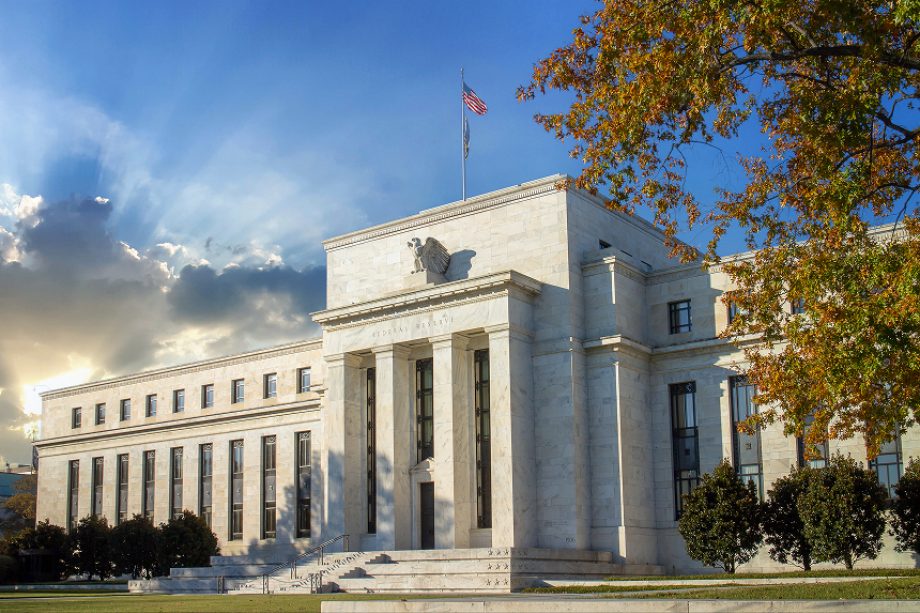
New evidence of higher U.S. inflation—with consumer prices rising at a 3.8% annual pace in April—has revived an old concern: Might the Federal Reserve (Fed) decide to raise rates?
The concern is understandable. Investors well remember the 60% jump in oil prices sparked by Russia’s invasion of Ukraine in February 2022—and the Fed’s subsequent decision to raise interest rates 425bps over that calendar year. More recently, mainly in the wake of the U.S.-Iran conflict, the Fed’s reaction function seems to be shifting to a slightly more hawkish stance.1
Yet today’s macro backdrop is very different than it was in 2022. As we explore in our Mid-Year Outlook, inflation will likely be more volatile than it was pre-pandemic. But our base case scenario assumes inflationary pressures will abate this year, amid a de-escalation in the Iran conflict and lower energy prices.
Even if markets flirt with hike pricing during moments of acute stress in the U.S.-Iran conflict (a distinct possibility), we see a high threshold for the Fed to actually move.
Here we explore the three key reasons we don’t think the Fed will raise rates in 2026.
Our view, we note, is slightly more dovish than current market pricing:
Inflation is multifaceted, but it falls broadly into two categories. Demand-driven inflation (also known as cyclical inflation) is sensitive to measures of demand and labor market slack. Supply-driven inflation (also known as acyclical inflation) is generally insensitive to those measures. Instead it is driven primarily by sector-specific, institutional or supply-side forces that are not reliably tied to the business cycle.
So far, at least, demand-driven cyclical inflation remains tame. Supply-driven acyclical inflation is less tame. That largely reflects supply-driven shocks including higher tariff rates, a shortage of semiconductors and a spike in energy prices amid the Iran conflict.
Here’s the key takeaway for Fed policy: When inflation is acyclical, a central bank’s tools are less effective. Higher interest rates can’t produce oil, unclog supply chains, or unwind tariffs. Higher rates and tighter financial conditions mainly slow demand.
Hiking rates in the face of weak demand is risky: The Fed could unintentionally depress economic growth and still not address the source of inflation. In our view, this is why the Fed will require clear evidence that inflation is spreading through higher wages and increased inflation expectations before it decides to raise rates.
Long-run inflation expectations, both market-based and survey-based, continue to be anchored. That’s important. When expectations move higher, households plan for permanently higher prices, firms preemptively raise prices and workers demand higher wages to keep up. This is the inflation regime that most alarms policymakers.
The Fed can tolerate uncomfortable inflation if it believes that expectations are well anchored. Anchored expectations can prevent high inflation from becoming embedded in wage-setting and long-term corporate decision making. Currently, longer‑term inflation expectations are relatively stable.
Note: Uses 5y5y USD inflation swap rate and UMich expected change in prices during next 5-10 years (median) for long term market implied and survey based, respectively.
Source: Bloomberg Finance L.P. Data as of May 14, 2026 for market implied, May 2026 for Umich survey.
Some market participants point to 2022 as evidence that supply-driven (acyclical) inflation can still become broad-based and spread through the economy.
In considering policy decisions in 2026 versus 2022, one question is particularly relevant: What converts a price shock into sustained inflation? Usually the answer is ongoing wage growth sparked by a tight labor market. Wages are the channel through which inflation becomes self-reinforcing.
Work by economists Ben Bernanke (Fed Chair during the global financial crisis) and Oliver Blanchard proves this point. Looking at pandemic‑era inflation, they find the early surge was driven largely by goods/products market shocks.
Labor market tightness mattered more for inflation persistence because wage-driven inflation tends to build slowly and linger. In the Bernanke-Blanchard framework, goods shocks can fade, but a tight labor market can keep inflation pressure alive over time.2
As we noted in our Mid-Year Outlook, we see little evidence of a wage-price spiral today. Compared with 2022, labor-market pressure looks benign and unlikely to drive persistent inflation.
As a result, we track labor market tightness alongside inflation. We pay particular attention to a metric we call a pressure gauge (quits rate divided by layoffs rate), which has historically mapped closely to wage dynamics. It captures worker confidence and bargaining power (quits) as well as firms’ willingness to reduce labor demand (layoffs).
Today, the gauge is well below the 2022 peak. It is also not re-accelerating, which would typically be the case in a tightening labor market. Without greater labor market pressure, we think the wage-price channel—the factor that typically forces the Fed to hike—will not present a cause for concern.
As we’ve discussed, we think the Fed will see a fairly high bar to raise rates. The Fed hikes when inflation spreads and persists, not, as today, when it’s noisy, episodic or tied to shocks (like an energy price spike) that monetary policy can’t “fix.”
Market pricing for rate hikes may shift in the coming months. But absent clear evidence that higher prices are spilling over into wages and expectations, we expect no Fed hike in 2026.
You’ll want to be prepared for a range of inflation scenarios, whether inflation worsens or remains benign, and whatever the Fed decides to do. To mitigate inflation risk, we believe investors should consider focusing on commodities, real assets and certain alternative strategies. As always, you’ll want to intentionally design an asset allocation to best achieve your goals.

We can help you navigate a complex financial landscape. Reach out today to learn how.
Contact usLEARN MORE About Our Firm and Investment Professionals Through FINRA BrokerCheck
To learn more about J.P. Morgan’s investment business, including our accounts, products and services, as well as our relationship with you, please review our J.P. Morgan Securities LLC Form CRS and Guide to Investment Services and Brokerage Products.
JPMorgan Chase Bank, N.A. and its affiliates (collectively "JPMCB") offer investment products, which may include bank-managed accounts and custody, as part of its trust and fiduciary services. Other investment products and services, such as brokerage and advisory accounts, are offered through J.P. Morgan Securities LLC ("JPMS"), a member of FINRA and SIPC. Insurance products are made available through Chase Insurance Agency, Inc. (CIA), a licensed insurance agency, doing business as Chase Insurance Agency Services, Inc. in Florida. JPMCB, JPMS and CIA are affiliated companies under the common control of JPMorgan Chase & Co. Products not available in all states.
Please read the Legal Disclaimer for J.P. Morgan Private Bank regional affiliates and other important information in conjunction with these pages.
Bank deposit products, such as checking, savings and bank lending and related services are offered by JPMorgan Chase Bank, N.A. Member FDIC.
Not a commitment to lend. All extensions of credit are subject to credit approval.