

Oct 16, 2026
Investing in venture capital and growth equity today
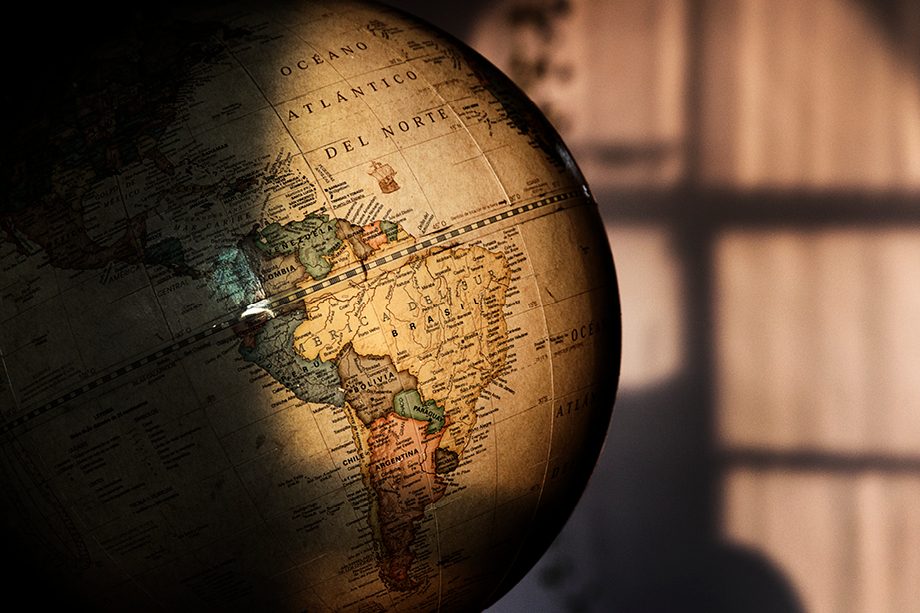
Latin America's 2026 electoral cycle represents a historic inflection point where the possibility of a rightward political pendulum, combined with peaking interest rates, global demand for critical minerals, and nascent commitments to fiscal reform, creates unprecedented optionality for the region to finally translate its natural resource endowments into sustained economic growth.
Four major presidential elections are scheduled to take place between February and October 2026 in Costa Rica, Colombia, Peru and Brazil, and they could fundamentally reshape policy landscapes across the region's largest economies. Financial markets and international investors are steadily betting on pro-market administrations that could break the region's cycle of political volatility, fiscal mismanagement, and underinvestment. The convergence of structural economic opportunity, demographic tailwinds, technological demand for Latin American minerals, and a shift in voter preference for stability and security over populism creates an opening for the region to transition from commodity supplier and labor exporter to a capital-intensive, investment-driven growth engine that could deliver meaningful long-term value creation for both regional and international investors.
The fundamental paradox of Latin America has long been that it possesses extraordinary natural endowments yet systematically underperforms relative to its resources. The region is home to over 40% percent of the world's copper reserves1, more than half of known lithium reserves2 and vast stores of agricultural and energy resources. Countries such as Brazil, Argentina, Chile and Peru serve as global powerhouses in soybeans, beef, coffee, copper, silver and rare earth elements. Yet despite this abundance of extraordinary natural resources, its share of global GDP and manufacturing value added remains modest at approximately 7.1 percent and 7.5 percent, respectively.3
This underperformance has deep structural roots. Political instability and frequent policy reversals have undermined long-term investment, while fiscal deficits and procyclical spending have left countries vulnerable to external shocks. Inequality has fueled social unrest while limiting the development of a robust middle class. The legacy of colonialism and persistent inequality have also enabled violent actors to capture parts of the state, transforming insecurity into a self-reinforcing equilibrium that shapes both political stability and economic incentives.
The 2026 election cycle is taking place against the convergence of three global and regional structural forces.
Critical minerals demand: The global transition to digital and green economies has placed an unprecedented premium on critical minerals Latin America possesses in extraordinary abundance: Chile and Peru as the two largest copper producers; Chile and Argentina with huge lithium and nickel reserves; and Brazil with the second-largest rare-earth assets. Driven by AI infrastructure deployment and the green energy transition, this demand is structural rather than cyclical, meaning Latin America's resource wealth has become strategically indispensable to global technology and energy supply chains.
Interest rate easing: This monetary easing cycle arrives just as Latin American governments and corporations need cheaper capital to finance infrastructure and industrial investments. After tightening early—starting in 2021 and ahead of most developed markets—regional central banks have built a cushion that now allows gradual easing, while remaining restrictive. Moreover, several nations have maintained tight policies despite political pressure, helping to preserve credibility. As rates continue to drift lower into 2026, the region can unlock cheaper financing for capital intensive infrastructure, manufacturing and industrial expansion, aligning monetary conditions with the critical minerals investment window.
Political pendulum swing: The electoral pendulum is swinging away from populism toward more centrist/right-leaning leadership. This is, in part, due to voter fatigue with macro instability and a growing demand for security and growth. Recent elections in Argentina, Chile, Bolivia and Ecuador have installed administrations explicitly committed to market-friendly policies, fiscal consolidation and institutional reform, while in Costa Rica's February 2026 election voters rewarded continuity with pro-market agendas—even in the face of economic complexity.
The merging of these structural forces occurs alongside favorable market mechanics that amplify Latin America's current positioning. The region's heavy-asset, low-obsolescence (HALO) profile has become particularly attractive in an era where physical infrastructure and tangible resource assets command premium valuations compared to technology-driven businesses facing rapid obsolescence.
Overlaying these structural forces is a geopolitical catalyst that has fundamentally reordered the region's strategic landscape: the January 2026 transition in Venezuela. Maduro's exit eliminated a hostile actor that, for over two decades, provided safe havens for Colombian guerrillas, bankrolled authoritarian movements across the continent and served as a strategic beachhead for Chinese and Russian influence. The resulting power vacuum has created both an opportunity and imperative for the United States to accelerate Latin America's integration into U.S.-aligned trade, security and technology architectures. In particular, the electoral outcomes in Colombia, Peru and Brazil will determine whether this alignment crystallizes into sustained policy reform, or fractures under the weight of fiscal constraints, social resistance, and institutional inertia.
The stakes are asymmetric. If pro-market forces consolidate power across the major economies, Latin America could experience a multi-year rerating, rivaling the BRICS optimism of the 2000s. But if they falter, the region risks another lost decade of political volatility and capital flight.
The following country-by-country analysis examines where these forces are most likely to translate into actionable investment opportunities—and where risks remain too elevated to justify exposure.
Costa Rica's February presidential election provided the opening contest of Latin America's 2026 electoral cycle and delivered an unambiguous verdict on voter preferences. Laura Fernández, the 39-year-old conservative candidate of the ruling Partido Pueblo Soberano, won with approximately 48.3% of the vote—clearing the threshold required to avoid a second-round runoff.4 This first-round victory was particularly significant given that Costa Rica had not seen such an outcome in over a decade. Moreover, Fernández secured a historic legislative majority, winning 31 of 57 seats in the Asamblea Legislativa5, giving her the governmental capacity to advance significant policy initiatives without constant negotiation with fragmented opposition blocs.
Fernández campaigned on hardline law-and-order policies modeled explicitly on El Salvador's controversial approach under President Nayib Bukele, including states of exception in gang-controlled zones and expanded port monitoring. Despite warnings from international human rights observers, her security agenda resonated powerfully with voters prioritizing personal safety over economic concerns. On economic policy, Fernández signaled continuity with market-friendly reforms including infrastructure investment and deeper integration into global value chains through trade liberalization.
Costa Rica's outcome establishes a critical precedent for the 2026 cycle. Security messaging can overcome economic discontent if executed credibly, and voters will deliver strong mandates to candidates offering institutional continuity and clear problem-solving approaches. This dynamic will likely influence campaign strategies in Colombia, Peru and Brazil, where crime and violence are equally salient concerns. The tenfold increase in security prioritization in just four years suggests that even modest improvements in citizen safety can generate substantial political capital—and by extension, policy stability that markets reward.
Peru's April presidential election epitomizes the region's governance paradox: a resource-rich economy with world-class mining assets trapped in a cycle of political dysfunction that somehow fails to derail macroeconomic stability. A record 36 presidential candidates have entered the race, up from 18 in 2021,7 and together they represent the full breadth of the political spectrum—including populists, traditionalists, establishment figures and high-profile outsiders such as a comedian and a former footballer who is also an ex-mayor. Current predictions suggest no candidate consistently polls above 12%, and undecided voters comprise 42% of the electorate.8 This fragmentation is not an anomaly. It is the crystallization of a decade-long institutional collapse that has produced eight presidents in ten years, including four in the single five-year term that began with Pedro Castillo's 2021 election.9
Leading most polls is Rafael López Aliaga, former Lima mayor and candidate of the right-wing Popular Renewal party, whose confrontational style has drawn comparisons to Donald Trump. Behind him is Keiko Fujimori of the conservative People's Force, making her fourth presidential run after reaching the last three runoffs. Fujimori's party leads a right-wing bloc in Congress, giving her legislative influence regardless of the presidential outcome. No other candidate consistently polls above 6%, and with such high voter indecision, any candidate could emerge as a last-minute surprise—paralleling Pedro Castillo's unexpected 2021 victory.
Proposed institutional reforms, including a transition from unicameral to bicameral legislature, aim to reduce micro-party proliferation by raising electoral thresholds. However, implementation remains uncertain, and critics warn that adding a second chamber could produce gridlock rather than stability.
Peru is the "defensive play" in Latin America's 2026 cycle. Despite extraordinary political volatility, the country remains attractive to emerging market investors due to structural factors that transcend electoral outcomes. Peru maintains an independent central bank insulated from political pressure, possesses copper and gold reserves that generate foreign exchange regardless of policy drift, and benefits from mining economics that operate independently of Lima's political theater. A right-wing victory under López Aliaga would likely accelerate pro-business reforms and tighten security ties with the United States, while a Fujimori victory would leverage her congressional influence to maintain legislative stability. Even a left-wing outcome would face constraints from Peru's institutionally independent central bank and the reality that mining revenues fund government operations. Regardless of who wins, Peru's mining engine will continue operating and generating export revenues, making it the rare Latin American market where political fragmentation is priced in, and structural economic drivers remain stable.
Colombia's presidential election in May represents the most consequential vote in the 2026 Latin American electoral cycle beyond Brazil, constituting a binary choice on the country's credit rating, fiscal trajectory and security relationship with the United States. The January 2026 transition in Venezuela has reshaped the electoral landscape, creating unprecedented security pressures while offering Colombia an opportunity to reassess its counternarcotics strategy and regional alignment. Economic deterioration under Petro's administration has created substantial vulnerability for the incumbent left.
The March 8 coalition primaries fundamentally reset the race, delivering a result that few polls anticipated. Senator Paloma Valencia of the Democratic Center won the center-right primary with 3.2 million votes—representing 55% of all ballots cast across the three coalition primaries. Her coalition's aggregate tally of 5.8 million votes dwarfed the centrist primary (616,000 votes) and the leftist Front for Life primary (596,000 votes)12 combined, delivering a nearly 10:1 advantage that signals a decisive rightward shift. Valencia, a close ally of former President Álvaro Uribe, campaigned on battling organized crime and proposing "a new Plan Colombia" with the United States—emphasizing aggressive counternarcotics efforts and deepening security cooperation with Washington. Her economic agenda centers on restoring fiscal discipline, reopening channels with the private sector and attracting foreign investment through regulatory reform. Valencia's message resonates with voters who prioritize security (31% cite public security as the top issue)13 and view Petro's administration as having undermined both macroeconomic stability and Colombia's strategic relationship with the United States.
The leftist primary's modest turnout should not be mistaken for left-wing weakness. Iván Cepeda, disqualified from competing, remains the de facto candidate of Petro's Historic Pact. His platform centers on expanded social spending, rapid wage growth, pension and health reform, and a strong state role in the economy—positioning him as the ideological continuity candidate. Cepeda emphasizes environmental sovereignty over resource extraction and has characterized recent U.S. military cooperation as violations of international law, advocating instead for negotiated peace with armed groups and reduced dependence on U.S. security frameworks. Having won 25 seats in the Senate, The Historic Pact's mobilization capacity remains formidable.
Fiscal accounts have deteriorated to a deficit of 6.9%14 and inflation remains stubbornly high despite monetary tightening. The government's approval of a minimum wage increase far above inflation has amplified cost pressures, while the central bank's divided board has undermined monetary policy credibility, producing incremental moves that fail to anchor expectations.
The 2026-30 Congress will remain fragmented, with no party holding a majority. Historic Pact won the most Senate seats (25 of 103), followed by Democratic Center (17 seats, up from 13). Traditional factions—such as the Liberal Party (13 seats), Conservative Party (11 seats)—are natural coalition partners for a center-right president, providing a clearer path to governability than a leftist administration would face.15
Colombia offers asymmetric risk/reward, but the outcome remains genuinely uncertain. Meanwhile, elections in Colombia have the greatest potential to deliver large financial market moves. A left-wing victory under Cepeda would likely perpetuate fiscal expansion, continued monetary policy uncertainty and deteriorating investor confidence, potentially resulting in sovereign credit downgrades. A Valencia victory would likely trigger sovereign spread compression and currency appreciation establishing fiscal orthodoxy that prevents credit downgrades. The 10:1 primary vote ratio suggests this outcome is more probable than pre-March polling indicated. However, the Historic Pact's Senate performance shows Cepeda retains formidable mobilization capacity.
Brazil's October general election will determine the future course of Latin America's largest economy, with stakes that transcend beyond the country and encompass the continent's geopolitical alignment and economic trajectory. President Luiz Inácio Lula da Silva is seeking an unprecedented fourth term at age 80, competing against Senator Flávio Bolsonaro of the Liberal Party, son of imprisoned former President Jair Bolsonaro. The fundamental question is whether Brazil will remain a leader of the Global South and maintain state-led growth models, or pivot toward US-integrated trade architecture and market-aligned policies.
Lula has recently been viewed as the frontrunner, with unemployment at record lows, the stock market at record highs and low inflation bolstering his chances of reelection. However, the race has since tightened dramatically. A Datafolha survey showed Lula has just a 6% lead in a hypothetical runoff against Flávio Bolsonaro, down from a 23% advantage16 in December, suggesting a return to the razor-thin margins of the 2022 election which Lula won by just 51%-49%.17
The eruption of the Banco Master scandal, involving a small bank with extensive ties throughout the Brazilian establishment, has revived memories of the mensalão and “Car Wash” scandals that plagued the Workers' Party in the 2010s. While Lula himself has not been implicated, the barrage of revelations continues to take a toll. Additionally, Lula's age—80 on Election Day and running for the seventh time since 1989—has become a subtle liability, with his campaign appearing less adapted to the digital era in a country with some of the world's highest social media use.
Brazil's center-right opposition coalition proposes a return to fiscal discipline alongside a fundamental shift away from anti-U.S. rhetoric. The opposition platform suggests reducing ties with BRICS and China, while fully ratifying the EU-Mercosur trade deal and aligning with U.S. nearshoring initiatives to replace Chinese supply chains with Brazil-based manufacturing. The opposition argues that alignment with the United States in the post-Maduro era represents the fastest pathway to attract the technology and energy investments necessary for Brazil's industrial modernization.
Following Jair Bolsonaro's imprisonment in September 2025 for plotting a coup, the 38th President endorsed his son Flávio as the Liberal Party candidate. Flávio lacks his father's confrontational energy, but his relative blandness may appeal to voters aligned with the family's conservative agenda but put off by Jair's divisive rhetoric and pandemic mismanagement. São Paulo Governor Tarcísio de Freitas has declared support for Flávio, helping consolidate the opposition.
Brazil is experiencing a structural rightward shift. Evangelical Christianity has grown from 7% of the population four decades ago to 30% today, with many converts in working-class periferias that were once Lula strongholds.19 Polls show 45% of Brazilians would never vote for Lula compared with 50% rejecting Flávio. Both, it appears, face high opposition and the race will be decided by a narrow slice of persuadable voters.
Brazil offers the highest opportunity given its size and resource wealth—leading oil production in Latin America20, developing new copper and lithium mining projects, possessing the world's second-largest rare earth reserves and maintaining an 88% renewable energy matrix.21 The approaching easing cycle amplifies this opportunity, as no other major economy will cut rates to the extent of Brazil. Market expectations currently assume easing of more than 150 basis points, yet the potential exists for cuts closer to 300 basis points or more22, particularly as currency strength provides disinflationary cover. Such a move would unlock financing capacity for the capital-intensive infrastructure investments required to fully monetize the country's resource endowments. Furthermore, secure access to Brazil's resources is critical for U.S. technology firms seeking to stabilize green-tech and AI supply chains.
The Brazilian election outcome will determine not merely the domestic policy trajectory but the geopolitical positioning of Latin America's resource superpower within the broader global competition for supply chain security.
The path toward progressive shift in Latin America faces substantial challenges that could reassert the region's historical patterns of policy reversal and institutional dysfunction. Pro-market victories must translate into implementation, requiring coalitions capable of sustaining reform despite social resistance. For example, Brazil's new government would inherit an 8.5% fiscal deficit—requiring politically difficult spending restraint that no prior Brazilian administration has successfully achieved.
Similarly, the political capital required for pension reform, subsidy reduction and tax increases may exceed what newly elected governments can muster. It is a challenge shared across the continent; Colombia faces fiscal constraints alongside security challenges requiring sustained investment, while Peru's fragmentation could produce weak coalition governments incapable of decisive reform, with proposed bicameral legislative reform potentially creating near-term gridlock. Weak governments may resort to populist measures to maintain viability, undermining investor confidence and triggering capital flight.
While U.S. engagement has intensified, there is a potential for backlash if perceived as heavy-handed. Left-wing opposition movements could mobilize around anti-U.S. sentiment if economic conditions fail to improve rapidly. What’s more, as Venezuelan crude returns to the market and caps long-term oil prices, fiscal revenues for oil exporters like Brazil and Colombia could be significantly limited.
Lastly, law-and-order approaches in Costa Rica, Colombia and Peru carry risks of human rights violations that could trigger domestic fallout. If security crackdowns fail to reduce violence, voter support for pro-market administrations could evaporate, creating openings for populist challengers.
Latin America's 2026 electoral cycle arrives at an unusual moment. Stronger demand for critical minerals, shifting global supply chains and the gradual easing of financial conditions have raised the strategic importance of several economies across the region just as major political transitions are unfolding within them. The convergence is consequential; the administrations that take shape this year will set the policy terms for fiscal management, resource development and international economic engagement during a period when the region's commodity and energy assets carry more global weight than at any point in recent decades.
Nevertheless, Latin America's structural constraints remain in place. Fiscal limitations, fragmented legislatures and persistent security challenges will narrow the space for ambitious reform, regardless of who wins. Electoral mandates alone will not be enough. What matters is whether incoming governments can translate them into credible, sustained policy frameworks—the kind that signal macroeconomic stability to investors and trading partners over a horizon longer than a single political cycle.
The significance of this electoral year, then, lies less in the results themselves than in what follows: the early appointments, budget signals, and regulatory choices. These are the factors that will determine whether Latin America's growing resource relevance becomes a foundation for durable economic transformation or remains, as it has before, an opportunity the region's politics could not fully convert.
Key dates for the 2026 Latin American electoral cycle:
The following dates represent critical inflection points for investors and analysts monitoring the 2026 Latin American electoral cycle:
The 2026 electoral cycle represents a rare confluence of favorable structural factors, receptive voter preferences and genuine policy opportunity that could enable Latin America to transition from chronically underperforming to becoming a capital-intensive, investment-driven growth engine.
For investors, the optionality is genuine but not automatic. Pro-market victories must translate into policy implementation despite social and institutional resistance. Yet this moment is genuinely different. Global demand for critical minerals is structural, not cyclical, while declining interest rates have arrived precisely when capital is needed for infrastructure. Voter preferences have also shifted toward pragmatic governance, international investors are reallocating at scale and U.S. geopolitical commitment provides credible backing for reforms.
The 2026 cycle will determine whether Latin America breaks historical patterns and captures the wealth its resource endowments should generate. Disciplined investors willing to navigate short-term volatility while maintaining conviction in these structural forces may find that 2026 marks the beginning of a genuine rerating of Latin American assets from commodity supplier to investment-driven growth engine.
IDB Invest - Latin America and the Caribbean: At the forefront of energy and technological progress.

We can help you navigate a complex financial landscape. Reach out today to learn how.
Contact usWe can help you navigate a complex financial landscape. Reach out today to learn how.
Contact usLEARN MORE About Our Firm and Investment Professionals Through FINRA BrokerCheck
To learn more about J.P. Morgan’s investment business, including our accounts, products and services, as well as our relationship with you, please review our J.P. Morgan Securities LLC Form CRS and Guide to Investment Services and Brokerage Products.
JPMorgan Chase Bank, N.A. and its affiliates (collectively "JPMCB") offer investment products, which may include bank-managed accounts and custody, as part of its trust and fiduciary services. Other investment products and services, such as brokerage and advisory accounts, are offered through J.P. Morgan Securities LLC ("JPMS"), a member of FINRA and SIPC. Insurance products are made available through Chase Insurance Agency, Inc. (CIA), a licensed insurance agency, doing business as Chase Insurance Agency Services, Inc. in Florida. JPMCB, JPMS and CIA are affiliated companies under the common control of JPMorgan Chase & Co. Products not available in all states.
Please read the Legal Disclaimer for J.P. Morgan Private Bank regional affiliates and other important information in conjunction with these pages.
Bank deposit products, such as checking, savings and bank lending and related services are offered by JPMorgan Chase Bank, N.A. Member FDIC.
Not a commitment to lend. All extensions of credit are subject to credit approval.

