Opportunities we see in health and wellness investing today
For many sophisticated investors, the healthcare sector has long been seen as a durable investment in good times and bad. But Health & Wellness is now experiencing a renaissance fueled by several converging, growth-oriented trends.
Introduction of GLP-1 drugs, an aging global population, the expanded use of telehealth, changing approaches to mental health, shifting consumption patterns, and breakthroughs in wearable and fitness technology are all driving new opportunities. The Health & Wellness space is poised to benefit from all of these changes, with global spending projected to nearly double from $4.6 trillion in 2020 to $8.99 trillion by 2028.1
Each of these developments contribute to public health and improve quality of life globally — all while offering compelling investment opportunities. By strategically investing in leaders within the Health & Wellness space, investors can capture upside in a volatile market and support ongoing improvements in longevity.
Consumers are spending more than ever on health-conscious choices
Eighty-two percent of US consumers now consider Health & Wellness a top or important priority in their everyday lives, which is driving Americans to spend more than ever on wearable technology, at-home fitness equipment, and organic food choices.2
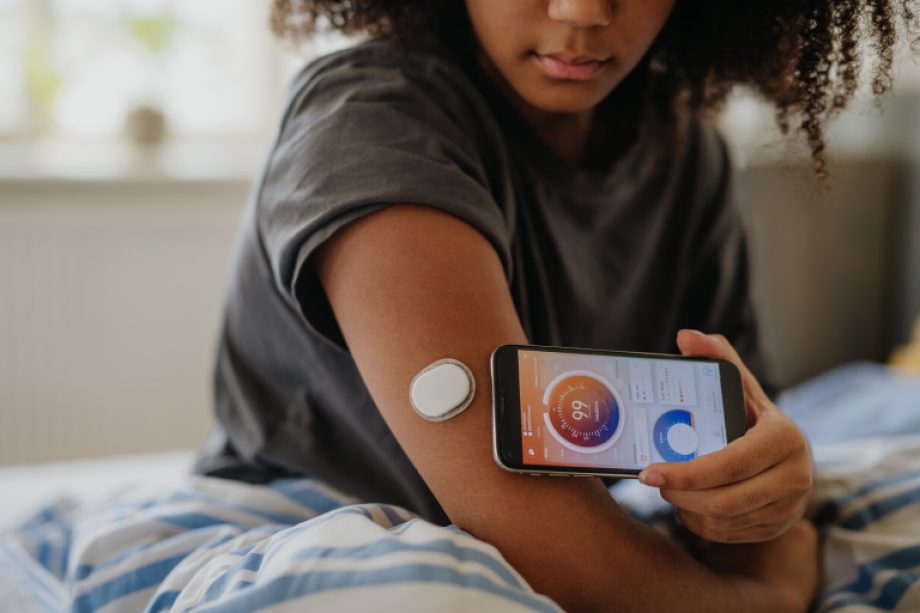
- Wearable Tech and Medical Devices: Ever since the Apple Watch, wearable technologies has become ubiquitous in the United States.3 Smart devices are now capable of tracking fertility, monitoring sleep quality, and mapping both pulse and breathing patterns. The wearable medical technology sector is expected to grow at 25% CAGR over the next 5 years, and the companies who are participating span the globe from Palo Alto to Tokyo.4 Artificial Intelligence promises to increase the range of wearables by enabling them with new diagnostic and imaging technologies.
- At-Home Fitness Equipment: While pandemic-era enthusiasm for at home fitness equipment came and went quickly, we see the seeds of a sustained at-home exercise revolution. Smart fitness mirrors are already making inroads among fitness-minded consumers, and AI has the potential to connect smart mirrors, smart scales, and smart workout devices with your health records to provide responsive fitness coaching and nutrition advice.5 Virtual reality also presents opportunities to gamify and enhance the at-home workout experience.6
- Organic Foods: The organic food market has been growing for years, but it has recently been jumpstarted by Millennials who are reaching parenthood and are spending more money to find organic options for their children (favoring foods with fewer preservatives and natural ingredients).7 In turn, companies are working to establish loyal, lifelong relationships with children and families. Some companies are organized as Benefit Corporations (which are for-profit companies that are focused on social impact, where shareholder benefits are balanced against the needs of other stakeholders like employees and consumers). Other players are more traditional packaged foods companies that have growing sub-brands focused on organic credentials.
Across each of these segments, consumers have consistently demonstrated a willingness to pay more out of pocket than markets had previously anticipated.
Shifting insurance models are also expanding coverage and market size
One of the unique things about the Health & Wellness space is that consumers are not always the ones paying for services – public and private insurance have helped to expand the market as well. Telemedicine and mental health support are both good examples of this shift.
- Telemedicine: The COVID-19 pandemic kicked off a drive to improve access to telemedicine in the United States. Since then, we have seen sustained global growth in telemedicine through the proliferation of smart phones and tablets connected to new payment models. In China alone, the telemedicine market is expected to hit $36 billion by 2030, driven by an aging population and supportive government initiatives.8 Globally, insurance companies are among the biggest players in the telemedicine space — some having decided to “build it” themselves by creating internal telemedicine teams from scratch and others having decided to “buy it” by acquiring promising start-ups with telemedicine capabilities.
- Mental health: Outside of physical healthcare, younger generations (especially Generation Z) are more comfortable seeking mental health services proactively — and insurance companies (as well as Employee Assistance Programs) are more frequently covering the costs.9 Pharmaceutical companies have reaped the downstream benefits as medication for anxiety and depression become less stigmatized and more commonplace.
For both telemedicine and mental health, a sustained increase in public and private cost coverage has helped to drive global growth.
Opportunity across asset classes
Health and wellness opportunities can be found in both public markets and private equity, depending on your risk tolerance and liquidity needs.
In the public markets, for example, well-known brands in consumer electronics, packaged foods, pharmaceuticals, and insurance are finding new life by tapping into these trends and reaping the benefits relative to their less proactive peers.
In other sectors (such as wearables and fitness tech), innovation is primarily happening in private markets. Investments in these companies are higher-risk because the technology (and the companies themselves) are at earlier stages in their life cycles. However, the payoffs can potentially be greater as well.
The combination of greater life expectancies, breakthroughs in healthcare technology, and shifting consumer patterns are all powerful trends supporting healthcare spending and contributing to better outcomes.
We can help
For more information on our views on health and wellness, and how to invest in these industries in ways that can achieve your aims, contact your J.P. Morgan team.
1“The Global Wellness Economy Reaches a New Peak of $6.3 Trillion––And Is Forecast to Hit $9 Trillion by 2028,” Global Wellness Institute, November 5, 2024. https://globalwellnessinstitute.org/press-room/press-releases/the-global-wellness-economy-reaches-a-new-peak-of-6-3-trillion-and-is-forecast-to-hit-9-trillion-by-2028/
2https://www.mckinsey.com/industries/consumer-packaged-goods/our-insights/the-trends-defining-the-1-point-8-trillion-dollar-global-wellness-market-in-2024
3“U.S. wearable devices ownership by age,” Statista, March 10, 2023. https://www.statista.com/statistics/1310364/wearable-devices-ownership-age-us/.
4https://www.grandviewresearch.com/industry-analysis/wearable-technology-market
5https://www.cognitivemarketresearch.com/smart-fitness-mirror-market-report
6https://www.forbes.com/councils/forbesbusinesscouncil/2022/09/09/the-future-of-at-home-fitness-when-hybrid-becomes-the-standard/
7https://www.mckinsey.com/featured-insights/sustainable-inclusive-growth/charts/millennials-go-organic
8https://www.grandviewresearch.com/horizon/outlook/telehealth-market/china
9https://www.forbes.com/sites/bernhardschroeder/2024/04/22/mental-health-anxiety-stress-loneliness-gen-z-is-driving-growth-of-27-billion-industry/
Key Risks
Sustainable investing (“SI”) and investment approaches that incorporate environmental social and governance (“ESG”) objectives may include additional risks. SI strategies, including ESG separately managed accounts (“SMAs”), mutual funds and exchange-traded funds (“ETFs”), may limit the types and number of investment opportunities and, as a result, could underperform other strategies that do not have an ESG or sustainable focus. Certain strategies focused on particular sectors may be more concentrated in particular industries that share common factors and can be subject to similar business risks and regulatory burdens. Investing on the basis of sustainability/ESG criteria can involve qualitative and subjective analysis and there can be no assurance that the methodology utilized, or determinations made, by the investment manager will align with the beliefs or values of the investor. Investment managers can have different approaches to ESG or sustainable investing and can offer strategies that differ from the strategies offered by other investment managers with respect to the same theme or topic. ESG or sustainable investing is not a uniformly defined concept and scores or ratings may vary across data providers that use similar or different screens based on their process for evaluating ESG characteristics. Additionally, when evaluating investments, an investment manager is dependent upon information and data that may be incomplete, inaccurate or unavailable, which could cause the manager to incorrectly assess an investment’s ESG/SI performance.
The evolving nature of sustainable finance regulations and the development of jurisdiction-specific legislation setting out the regulatory criteria for a “sustainable investment” or “ESG” investment mean that there is likely to be a degree of divergence as to the regulatory meaning of such terms. This is already the case in the European Union where, for example, under the Sustainable Finance Disclosure Regulation (EU) (2019/2088) (“SFDR”) certain criteria must be satisfied in order for a product to be classified as a “sustainable investment.” Unless otherwise specified, any references to “sustainable investing” or “ESG” in this material are intended as references to our internally developed criteria only and not to any jurisdiction-specific regulatory definition.
Important Information

EXPERIENCE THE FULL POSSIBILITY OF YOUR WEALTH
We can help you navigate a complex financial landscape. Reach out today to learn how.
Contact us