

Apr 15, 2024
The Private Bank’s mission is to build, preserve & transform our client’s wealth.
We work with a variety of clients to help them achieve their unique ambitions.
Our world-class economists, strategists, and investment specialists share their timely ideas and perspectives.
We have worked with clients for more than 200 years to help them achieve their unique ambitions.
00:00:25.760 — 00:01:43.600 · Speaker 2
But most people I see in their career don't set goals in their 20% will be making an impact. What goals do they set? They have these corporate goals, which are, I think, create mediocrity. The goal is you guys, you need to have something to lose. Setting that goal create a whole new world for me. I felt it publicly in a humiliating way, but I promise you it was life changing.
The definitive issue of why is it that some people make a difference, make an impact, and others similar to them, don't you know? And that's been like in my head for a long, long time. And we are coded to seek legacy. That's how we survived. There were some great people who were very happy back then. They died.
They were eaten, right. But amazingly, in difficult times, people are focused on the negative. Prices are down. Opportunities are wide open. And if you're starting an insurance company, it sounds almost, you know, bizarre, because some insurance company, no one's thinking that way. And I've always seen that the ability to start a business in difficult times is much easier.
Interesting. Optimism is a sophisticated emotion because it's not you're not coding for it. It's primitive to just focus on the negative. But it's a hard job. Pessimists will eat when things don't go bad. They just call the next catastrophe and the next one adventure when something goes wrong. Well, I told you so.
You see.
00:01:47.080 — 00:02:46.400 · Speaker 1
So this is the Performance People podcast brought to you in partnership with JP Morgan private Bank. And today we're going to talk to a founder whose book I've had by my bedside for quite some time. And in the office, I seem to have multiple versions of it all over the place and in front of me. Adrian Gore. Um, it's written on the principles, and it is about the four principles.
Multiply your impact in life and leadership. Now, Adrian is the founder and CEO of discovery Group. Um, and it breaks down, really, the framework from which that company was built from the sort of single idea into what's become a group serving 50 million plus customers across multiple marketplaces.
So we're going to talk about how, in fact, we do multiply our impact in life and leadership. I guess the single question, Adrian comes back to impact and who is able to have impact and who isn't necessarily able to make the most of their impact? Why did you become sort of so fixated on this idea of impact?
00:02:46.640 — 00:05:28.190 · Speaker 2
You know, we built our business on actually not a lot of capital. You know, the business was started by raising capital as as always. But it's been a story of quality of people in their talent. And early in that journey. I became obsessed with this idea of this greatness in people. You know, how do you bring that out in a way?
And one of our values is deliberately based on our people. So that was kind of a cornerstone of our, our thinking. And I became kind of obsessed with this issue of how do you bring that greatness out in people? And I induction classes and the early days, a lot of people is their greatness. Everyone believes there is.
And then you say, well, have you used it yet? And the answer is typically no. But they kind of go through life generally not using it. You know, and people are kind of sanguine about it. It's too late. So I, you know, I talk about it in the book, but I attended a conference as part of an entrepreneurial Ernst and Young.
They have this global conference once a year. This is like in the late 90s, a long time ago. But I was a fire letting me about some research. I saw online researchers. Unbelievable. But they kind of lit a fire in me around that. Actually, success is not a function of our brains looks, race, IQ, the other factors.
You know, other attributes. And that kind of put me on a journey of trying to find out what are those things. You know, certainly IQ, privilege, um, education, those are multipliers. But there are a lot of definitive multipliers. You know, all the others that, you know, you could access. And that led to the four principles, you know.
So it's been it's been a journey. The book is the book is actually, um, it's been 30 years of working, observing. I've had a wonderful, um, privilege of working really smart people, partners around the world that we work with. You know, our business is actuarial, clinical, you know, vitality here. So there's a lot of clinical issues.
So I was amazing people to observe and ask and research. And our business is primarily behavioral, you know, behavioral economics kind of that that synthesis with financial services. So understanding how people are behaving why they behave. And I kind of, with my team, got it down to four principles, you know, that I you know, I've seen I believe deeply and I think to you earlier.
But I think people all can have an impact, you know, and it's not an impact about making money or building a big business. It could be being a better parent. It could be building an NGO. It could be charity. It could be politics leading a country, whatever that may be. It's kind of just the definitive, definitive issue of why is it that some people, you know, uh, make a difference, make an impact and others similar to them don't?
Now, what is that difference? You know, and that's been like kind of in my head for a long, long time.
00:05:28.230 — 00:05:31.510 · Speaker 1
Yeah. You've been living. You've been living and breathing these principles for a long time.
00:05:31.550 — 00:06:02.190 · Speaker 2
Yeah, absolutely. And I'm I'm more and more convinced, you know, kind of just anecdotally how powerful they are and then doing the research to actually understand them. And, uh, the principal issues are most coding. That's why it's so exciting. We must code it. And if you can remedy that plus coding the multiplier, you know, I'll come up at the end of this 2020 plus multiply.
We actually got to call the book, you know, the multiplier and have this 20 times. It doesn't seem plausible if you say to people you've got a 20 times multiply, but if you do the mathematics, then there's an appendix on the maths.
00:06:02.230 — 00:06:04.230 · Speaker 1
The I know you have done the mathematics.
00:06:04.590 — 00:06:23.750 · Speaker 2
I the, the publisher or I had to convince them, you know, it's er it looks dry, but I want you to be clear. There's rigor behind it. Yeah. And the 20 X is actually real. And I think of my own journey, you know, I'm 20 x where I would have been except for a few things. You know, that's the difference. So that's kind of where it got to.
00:06:23.790 — 00:07:26.710 · Speaker 1
That's kind of the point of the point of difference though is in this book, isn't it. It's almost its USP is that you've got sort of this anecdotal storyline, but you're backing it up with actually some, some hard mathematical fact that's in there as well. And it sort of pulls on the science a little bit as well.
So let's talk about these, these four principles that sort of guide everything that end up with this 2024 plus multiplier at the end, because I think, you know, breaking those down for people is is going to chime with some people, especially where they think they can they can do that. So it breaks down into four different areas.
We've got disciplined optimism. And we're going to we're going to talk about these in much more detail as we go. But disciplined optimism, focused urgency, declared goals and the Pareto tail as well. So we're going to get to we're going to get to that because we're going to talk about Stanley the dog. Because Stanley the dog was your version of that.
I do, I do believe, but talk to me about why these four are the four that you have chosen and why the relevancy of those four above anything else.
00:07:27.190 — 00:09:02.900 · Speaker 2
Well, firstly, to get the most coding is important, right? I'll, I'll talk a lot about that in the book. But the, the evolutionary biology, if you think about we evolved on the savannas like over 2.5 million years ago, um, scarcity of, of food and resources, physical threats. So, you know, if you look at our fossil history, it's a record of catastrophe.
You know, the tank child was eaten by an eagle. You know, terrible deaths that people faced. Um, and we lived in simple, small, linear clans. You know what I mean? Now we've gone through a change, and there's an abundance of resources. There is threat of physical and systemic breakdown of government, breakdown of governance, you know, organizational failure, healthcare systems failing, you know, complexities of the NHS, blah, blah in every country.
So systemic threats. And then we live in massive cities London. Millions of people work at organizations or tens of thousands. It's completely different. The problem is that this only happened like 12,000 years ago. Agricultural revolution became live in cities, then the industrial revolution, then technology, now AI.
These are dramatic changes in how we have created these differences. But, you know, 5000 years ago, you know, did the numbers, you know, if you take your generation, you're your lineage. That's 150 people. You go to your your parents and their parents, 150 people in a line. That takes you back 5000 years.
That's 4000 word of the numbers. Maybe. But that's not enough to get genetic change. Change takes place over millions of years, so we are coded for a scarce a.
00:09:02.900 — 00:09:03.260 · Speaker 1
Different.
00:09:03.260 — 00:09:42.340 · Speaker 2
Time at different time. And it primarily affects four areas in in in my research. One is attitudinal. The other is how we use time. The other is is kind of our motivation and drive. And the last one is kind of actions and decisions how we take them in the impact. So you know it's kind of undermining in those four.
It's it's not doesn't mean that, you know there's not tragedy. And it's just simply if you can recode or if you can remedy those that miss coding, the affecting impact is, is is a massive multiplier. And the fourth principles, you know, get to that in my view remedy a lot of that, you know, in a very powerful way.
00:09:42.380 — 00:09:44.980 · Speaker 1
So how do you do that in a practical sense?
00:09:45.180 — 00:12:18.180 · Speaker 2
Um, well, I think each is different. Each is different. So I'm happy to talk through them if you want. But but each of them is quite different. I mean, firstly, maybe start with the fourth one, the Pareto tail. Okay. It sounds the most obscure of all, but it is. It is this this interesting statistical kind of error we make.
We kind of taught that things are bullshit, you know what I mean? We taught that in every discipline there's a normal distribution. It talks about a desire for fairness. You know, there's an average. Things are scattered around the average, you know, and your tales of good and bad or high and low, etc. but in a network world, there is nothing Gaussian or normal.
Things become a power or long tail. There's nothing. You'll find any independent variables. The hearts of females in London has a certain average, you know, the independent. Yeah, but as soon as you come to anything that's natural to each other, you get this long tail for me. You sit down in, in. It's always been the case.
But in capital markets, you know, a few companies today, the big giants in AR, whatever the market values are, just father them or aren't a big percentage of the entire index of the stock exchange or the Nasdaq or whatever it may be. You know, look at our business health claims, the sickest 20% of the people, you know consume 80% of the claims.
You're not 82. That's that's the principal. Yeah. It's amazing about it is in the tail. There's a tail. So if you like sick as people, the 20% of those seekers people, you're with me. If you put a magnifying glass in the tail, you find small tails. You can't stop it happening. So you get this power law happening.
It's not something that we all we think about. But the point is, this is maybe the principle. The point is your own life is a complex network, right? And if you plot your decisions and actions around, you know, impact from low to high, what you find is a power. Law forms. There's a whole lot of small things we'll talk about this morning.
You know what's Utah? I'm having a coffee. Hayden got me a coffee. I thought about water, too. Yeah, I'm saying there's a lot of actions I've done. They relevant? You know what I mean? Yeah, but there are a few things in the tale that determine the impact. That's a fantastic outcome because your life can be changed in the tale.
It's never too late. You know, my Ted events are sort of discovery. One day, I had an epiphany in the bath about fertility. You know what I mean? There are few things that I've done. I married my wife, I had children, a few tale events. And the question is, impact is about being in the tail. How do you get to that tail?
You learn. How do you push that tail to the right?
00:12:19.700 — 00:12:40.780 · Speaker 1
Before we carry on a teeny tiny favor from me to ask of you. If you like what you hear or see in this episode, please can you subscribe to our channels? It makes all the difference to have your support. It means the algorithms pick that up and send it to everyone else who gets something from this episode two.
plus. Of course, it means we can get the very best guess in the studio. Thank you.
00:12:42.020 — 00:12:46.740 · Speaker 1
So ultimately, the decisions that influence things in a major way.
00:12:47.260 — 00:12:48.660 · Speaker 2
Yes. And the actions.
00:12:48.660 — 00:12:49.660 · Speaker 1
And the actions from that.
00:12:49.660 — 00:12:56.060 · Speaker 2
Because ultimately impact is about action. You know, you can you can procrastinate all you like, but you've got to actually take action.
00:12:56.100 — 00:12:59.060 · Speaker 1
You know, can we talk about the decision that came to you in the bath?
00:12:59.820 — 00:13:00.260 · Speaker 2
Yes.
00:13:00.300 — 00:13:54.370 · Speaker 1
So so this is this is relating to vitality, which, you know, people will know here as vitality, health. Okay. Which is part of your discovery. Yeah. Group and obviously around health insurance. And there was, there's I mean there's, there's a few different things I suppose around that. There's sort of the optimism piece about what you saw as an opportunity within that as well, which we can sort of come back to.
But this idea that you were presented with different advertising campaigns or solutions to really boost vitality, um, impact and awareness to a wider audience. And you were leaning towards one particular path, and somebody in your advisory group was leaning towards another path and just explain sort of what those two things were and why the decision got taken to go down the Stanley the Dog route, which ultimately ended up being a really successful decision.
00:13:54.690 — 00:15:03.210 · Speaker 2
So so we were a small, fast growing health insurer in our home market in South Africa. And we were really we were really growing quickly, a lot of hype around it, etc.. You had this health and record club chain that was massive 100 or so gyms became Virgin actually. Yeah, Richard Branson bought it and became part of the Virgin Active piece.
And, and um, one of their executives, when they approached our CEO of the UK network was around. Couldn't we why don't we sell a health insurance into their gym chain? It's like a perfect cross sell. You know me. Healthy young people. But we were. And this is the point about the tail. Because the other principles get you in the tail.
We were, like, absolutely driven about a certain goal. Make people healthier. We're pushing hard about about how to get to that goal. And we're working with, you know, is it really going to work? And I, I mean, I had this epiphany in the bath. It sounds ridiculous now, but I'll talk about it in the book of and it wasn't my I'm saying it was that team jockeying and pushing and debating that, you know, if you could make those gyms free.
So if you joined discovery, our health plans, a health insurance product and these journals are very expensive. Uh. We're free.
00:15:04.250 — 00:15:29.210 · Speaker 2
It's it's a it's a no brainer. We make people healthier. But how do you actually how could we afford them? So then we had this idea of you could earn them through getting points, a reward system, a reward system. Right. And and that was kind of the embryonic idea of kind of shared value insurance of the alarm between us and our customers.
And the healthier we're more profitable. So we can share the incentives. There was no data then, but then.
00:15:29.210 — 00:15:30.490 · Speaker 1
This had not been done before?
00:15:30.530 — 00:16:06.770 · Speaker 2
No. And that led to a different kind of health insurance. Life insurance we took around the world with the prudential religion in the UK, that became vitality. We acquired that back with partners in Asia, Air Ping on in the US. Um, you know, I've morphed into health insurance, life insurance, banking.
We have a shared value bank where if you manage your money well, you kind of get lower rates of interest on borrowings and, you know, kind of the same. But it took us on the most remarkable journey, you know, and Stanley the dog became actually was something I thought would never work. So so I that's clear.
I thought this is a terrible idea. The stock but but amazingly.
00:16:06.810 — 00:16:08.050 · Speaker 1
He was a little dachshund.
00:16:08.370 — 00:16:27.490 · Speaker 2
Yes, absolutely. And this dog was the idea, uh, Neville, our CEO, who's absolutely brilliant, him and our advisers. The idea was this dog would be the antagonist, you know, the lazy. Whenever the person wants to exercise and they want to do great stuff, this dog would be, oh, God, I don't want to do this, you know what I mean?
00:16:27.530 — 00:16:30.410 · Speaker 1
And I made a dachshund or two. I know exactly what you mean.
00:16:30.490 — 00:16:36.010 · Speaker 2
Yeah, but he's changed personality that he's become a protagonist. He's only too happy. You know what I mean?
00:16:36.050 — 00:16:38.490 · Speaker 1
But he's got he's got the disciplined optimism.
00:16:38.730 — 00:17:18.490 · Speaker 2
Actually took a while. Took ten years of work on him. But. But amazing. But it's kind of like it. Um, the point is, what's interesting about that epiphany in the boff is actually not is not the The Amazing Story poster, but it's the three principles that got me into the boss. You know what I mean? Because the question I've had, which is obvious, the Pareto tail is, I get it, but how do you get into the tail?
Well, let's the other three principles. The brighter tail is really the organizing idea that once you realize that life is a few things in the tail, you only get into tail the more you're in the tail. It's an interesting contradiction. The more you're in the tail, the more the tail moves. Yeah, yeah.
00:17:18.490 — 00:17:20.370 · Speaker 1
That is in contradiction because yeah.
00:17:20.449 — 00:17:29.050 · Speaker 2
You always form a tail. So you're just pushing the whole thing towards higher impact. Your life becomes just, you know. But how do you get into tell? That's the other three principals.
00:17:29.090 — 00:18:03.650 · Speaker 1
Okay. So let's go back to the other three principals and start at the beginning with this disciplined optimism. Because actually when you started your company, it feels like, you know, you started it in South Africa at a time where there was real uncertainty, upheaval, um, politically, I suspect. Um, and, and yet, you know, you had a vision.
Um, so that feels like it personifies the optimism piece, but a lot of people are optimistic. What's the difference between being optimistic about something and having disciplined optimism?
00:18:04.090 — 00:18:11.490 · Speaker 2
Well, the key thing is it's not about being optimistic. You know, being happy. And you know, life's great. It's it's it's actually more tactical.
00:18:11.530 — 00:18:12.170 · Speaker 1
It's focused.
00:18:12.210 — 00:21:29.280 · Speaker 2
Principle. The issue is I mean, just go back to coding. You know, as I said, if you look at our history, we had a terrible revolver. Real danger. You know, the the 50% of children died before they were five, which means there probably. Virtually every mother experienced the loss of a child. You know, that's probably what we live through.
And that means we're probably looking around every corner for danger, you know, absolute seeking out of danger. And we are coded to seek negative. That's how we survived. There were some great people who were very happy back then. They died. They were eaten. Right. You and I are probabilistically the children of people that see danger all the time.
And so we coded for looking for negatives. That's why the press are really journalists. It's not the case. People are not interested in positive stories or really what we coded for us to see danger, to worry about things. That's how we are. And that's a that's been a very powerful thing. But in a world where you've got where success and impact is about seeing opportunities, not avoiding danger, it's about the ability to execute in a team of people that are on a small plane.
You'll be running a company of 50,000 people. How do you execute an idea? And if you look at the research, the, um, it's interesting we see in this good. With good research, some of the papers in the, in the book show that we, you know, if we if there's 100 stimuli out there that we're facing 50 or good, 50 or 50 or -50 are positive, we'll see the negative, but we'll only see 50% of the positive.
So we'll see 50 units of -25 or positive, which means we're missing out on 25 opportunities that are there in your face because we consume by the negative. Right. And then the other thing, once you actually execute, you're working through you're not working through a small family, you know, working through a company.
We hire 15,000 people. So how do you get those ideas through a team? Right. Research shows in a network to get kind of participation, to get collaboration, to get diffusion of ideas, positive signaling, you know, positive feedback loops. Yeah. Actually has measurable effect on it. So so the idea of discipline, optimism is the discipline of seeking positive opportunities in every situation.
Is there positive here the story of discovery? Exactly right. This was the time that Nelson Mandela had come out of prison. The country was going from apartheid to democracy. It was a scary time, you know, and people were justifiably worried. Would they be kind of real political, political unrest? We had the Bishop massacre.
There was a lot of real change. But amazingly, in difficult times, people are focused on the negative. Prices are down, opportunities are wide open. And if you're starting an insurance company, that sounds almost, you know, bizarre because some insurance company, no one's thinking that way. So the opportunities are massive.
And I've always seen that the ability to start a business in difficult times is much easier. Interesting people will say, you know, if you can raise a capital, you can actually do it. But starting in, in very frothy times is much more difficult. People are much more optimistic that pursuing a building, your ability to spot the positive signals when others are negative is a powerful, Powerful.
You know, that's a relative issue. But if you're not disciplined in that optimism seeking positive, you missed opportunities. And that's the that's one of the key things of impact.
00:21:29.320 — 00:21:33.240 · Speaker 1
So what did you see in that moment as your opportunity.
00:21:33.640 — 00:22:58.600 · Speaker 2
It was maybe an intellectual reality that as a country went from apartheid to democracy, as it went from serving a small portion of the population. Government resources would be focused on the entire country, which means that you need a much more complicated insurers that could kind of provide the social safety net full of balance in healthcare.
That's a complicated thing to do. Yeah. You know, so it was kind of a it was a it was kind of a real, I think, into myself and my team and our original shareholders that there's going to be an opportunity here, you know, but it's only works to be negative. You know, if you believe Armageddon is coming, you know.
But if it isn't, things will return. But the key thing with this, with issue of optimism is people often and I talk a lot about in the book, we currently think that pessimism, Pessimism is sophisticated. I don't how many times people tell me you need to be realistic. You know what I mean? Yeah. You know, it's got, like, sex appeal to be pessimistic and whatever the point is.
You see the rose anyway, you coded for it. I'm an actuary about training. I can tell you the ten things our organization has at risk. I know them, I'm coded for it, but I'm not coded for these opportunities. That's where the impact is. And if you can do that, you can two x because you can actually see the empirical.
It's the same as Kahneman work on loss aversion. It's a two time slope I'll talk about in the book. There two times is quite an interesting identity. We are twice we're motivated by potential loss much more than potential gain. We're looking for loss. We're worried about it. You know.
00:22:58.640 — 00:23:21.830 · Speaker 1
So interesting because I'm just thinking about how this relates also to, you know, our world of athletes and sport. And there isn't an athlete that I've had on the podcast that's talked about the fear of, you know, not winning. Sorry. It's rather about the fear of failure than it is actually the moment of success is what's driving it all and what's driving that sort of determination, which comes back to a similar.
00:23:22.630 — 00:23:26.270 · Speaker 2
Principle of to clear goals. That's the entire issue. Yeah, yeah.
00:23:26.310 — 00:23:53.110 · Speaker 1
It's really no, it's it's it's fascinating. But when you're when you see that opportunity and you've got that opportunity, presumably you also need to surround yourself with people that are that you're happy to have that competitive conversation with, if they perhaps giving you an alternative version of events, but also how do you take those people with you that are perhaps negative about your about your optimism for a situation or an opportunity and take them on that journey with you?
00:23:54.510 — 00:25:04.270 · Speaker 2
Listen, I think there's no there's no solvability. That's a complicated leadership issue. But my my experience is that an authentic purpose with a will, the positive signaling and, uh, you know, creates a network of people that are committed. And you will get those debates. You know, I've been involved.
For example, in the book we talk about Earth's complicated things. Our country nearly ran out of power. It's quite well known as a mining industry. The power. The power requirements are huge. Through many years of difficulties, the power utility almost failed. Um, and as organized business, we kind of wanted to meet with government to work out how we can help.
And we created this business government partnership. And it may sound like a naive issue, but at the time, every CEO in their in their kind of in their results, presentations and speaking the capital markets would be clear about the futility, what's going on with, you know, et cetera, etc.. But the one thing that I shared was an issue of hope, the potential of the country.
It's a beautiful country. So so we formed a pledge for this partnership that people signed, right. That I believe in the potential of our country and I'm committed to helping.
00:25:04.310 — 00:25:07.590 · Speaker 1
Sounds like you've come back to time and time again.
00:25:08.230 — 00:25:16.270 · Speaker 2
And it's those kind of mechanisms that shifted the narrative from the reality of the present to the hope and potential of the future.
00:25:16.310 — 00:25:17.110 · Speaker 1
That's really interesting.
00:25:17.150 — 00:25:39.430 · Speaker 2
The amazing ways to do that are authentic, and what's amazing about them was how contagious it was. You know, CEOs from all different kind of global companies that had work in South Africa. You know what? Where can I sign this pledge? So we've used a number of those framing techniques in the third phase of the partnership.
Now it's remarkably well. The country is you know, it's not all our work to be.
00:25:39.550 — 00:25:57.550 · Speaker 1
But it's so interesting that, isn't it, because. Because that's a very simple mechanism to to actually use hope as a lever, which in business you wouldn't necessarily use as a word in sort of terms that would make would shift the dial and make the difference. But in that, in that regard, it really obviously.
00:25:57.550 — 00:26:53.430 · Speaker 2
Has people hope is a wonderful motivator. You know, it really is. And leading in a country like South Africa where people go from hope to despair to anything in any economy, any world issues, that is a critical. So again, the it's not a simple. It's not about being happy. It's about a process of seeking the positive.
Creating positive feedback loops, but all the time being realistic because you've got 50 things on the table that you know about or risky, and 50 that are positive. Having them all on the table, that's realism. If you're missing the 50% that are positive, you don't have the full picture, you know? So I'll argue the fact that that optimism is, is a sophisticated emotion because there's not you're not coded for it.
It's primitive to just focus on the negative. But it's a hard job because people, pessimists will when things don't go bad, they just call the next catastrophe and the next one. Eventually something goes wrong. Now, I told you so, you see, you know. But of course, that's not realistic.
00:26:53.790 — 00:26:55.630 · Speaker 1
An optimist. More intelligent.
00:26:55.990 — 00:27:10.630 · Speaker 2
No, no, no, I don't think so. I don't. In fact, I think that's maybe my argument. It's not the optimist or the pessimist. It's about the individual or whatever the context is seeking the positive as well as the negative. That's. That's the principle.
00:27:10.910 — 00:27:27.750 · Speaker 1
Okay. We move on to focused urgency, which is this shortened time frames and actually using those for motivation because we are all on the planet for a certain amount of time and that is finite. So just, just just explain to me why this is a guiding principle.
00:27:28.310 — 00:30:25.340 · Speaker 2
Because we make the mistake that we think time is longer than it is. We think time is linear. So if I said a 40 year old, you know, how much of your life have you lived? They say 50%. How they worked it out is they have lived for 40 years and I'm going to live for 80. So 40/80 is 50%. But the problem with that, that is that I assume every year is the same.
Mhm. But I'll argue in the book that life, the perception of time is not linear as you get all the time gets faster because when you're a year old you're is 100% of your life. Yeah. When you're two years old you use 50% of your life. When you 40 a year is 1/40, 2.5%. So if you redo that calculation, it's actually one plus one half plus a third all the way to one plus one over 40 divided by that.
All at one over 80 we should find is that 80%. So in one logarithmic scale, if I break up your life into being educated, working and then retiring, it's not, it's not, it's not in a linear sense. It's actually a talk about a rule of 20% in the book, 75% getting educated, 20% in your work career where we are now and 5% in retirement.
And the issue is that 20%, if you make an impact, it doesn't matter what you did at university, you went to Oxford and you got 5000 A's and you did this and the other. At the end of the day, you present yourself in the workplace and you got 20% of your life to make a difference. And people make that mistake. They think time is forever, you know?
So kind of inculcating a sense of urgency is a fundamental attribute towards actually getting making impact for some reason, time just and it's too late. You look up and it's gone, you know. So it's a very it's one of the most powerful things I find in dialog with teams is getting them to understand you're close to death.
Yeah. You need to understand you don't have time. So if you want to get moving, you better do that. You want to build a business. You don't have time. You know you want to take a year off or a gap year. You know it's okay. But just bear in mind, you better get going. So. So I'm kind of like, that's a critical principle.
But the principle talks about remedies like knowledge. Knowledge is the opposite. The more you acquire knowledge, the easier it is to acquire the next unit of knowledge. Yes. So it's you feel that about your first year in university, for example, you're struggling and then, you know, you read three books a week and then, you know, so knowledge is exponential.
You know, time is the opposite and impact is a function of both for a given ability. That's all you've got. How much knowledge and how much time. If you had infinite knowledge you didn't have time. You do it now. If at infinite time you can be a fool, at some point you'll have a breakthrough. You know what I mean?
Yeah. It's optimization of both. So. So, you know, health. Keeping yourself healthy means at the time doesn't degenerate as quickly because you've got energy. And keeping learning is critical. But if you don't have an if you don't have a sense of urgency, you will burn that 20% with that impact. I don't know your experience.
Most people I know with or with potential don't end up using it at some point.
00:30:25.340 — 00:30:25.980 · Speaker 1
Frustrating.
00:30:26.020 — 00:30:28.020 · Speaker 2
Life is, you know, I've missed it.
00:30:28.140 — 00:30:30.940 · Speaker 1
What about experience though? Because that plays a role.
00:30:31.740 — 00:30:53.620 · Speaker 2
It does. It makes it isn't. Maybe it isn't exponential, but knowledge and experience are kind of great. And that's you of it. You know, that experience gives you more if you can't get the time back. That's a given. It's existential, but you can make it more effective. So while that 40th year accounts 1/40, whereas when you're 30 is 1/30, you're getting more, as you say, with more knowledge, more experiences, you're more effective.
00:30:53.820 — 00:31:01.940 · Speaker 1
So if you say to your team, urgency is of the utmost importance, what how does that sit with decision making?
00:31:03.260 — 00:31:16.180 · Speaker 1
So I read in your book that sometimes you take a while to make a decision because you want to make the right the right play. But then if there's urgency in the mix as well, how do you marry those two things up?
00:31:17.140 — 00:32:36.740 · Speaker 2
I mean, that's the trade off. I'm a believer, you know, time is value. So if you don't make decisions until you really you don't need to make the decisions till you have to because you're giving up optionality. You know, you should wait till. Yeah. You know, there's value in that. Um, but I don't procrastinate.
That's not a great quality. Frankly, I think you need to be you need to use the time better. But we've got the ways and I talk about in the book of creating kind of an event based, a time based company that you set time based. You know, Apple did as well their launches once a year. You know, there's a launch coming up.
I mean, you know, what are they going to do that I can tell you that stuff creates an urgency in the company. It does. And you're right, it does rub up against decision making. It rubs up against risk management and responsible people saying, you know, we need to be ready for this, and then that's fine. But the cadence of of things is different.
If you don't have that, then you're event based. Then you simply respond to, you know, hey, something came up. Things don't come out. My experience. I've never seen pilot tests work. I've never, you know, things just come up. They come up when you say in four weeks time, you're going to be on the stage telling a story.
You know, you better do some work. So creating those deadlines, I think is incredible. We see that in Raw. Unfortunately, we see the rate of technology change because the deadline is imposed on you. If you don't do this, you know.
00:32:37.100 — 00:32:37.940 · Speaker 1
So has to happen.
00:32:37.980 — 00:32:38.940 · Speaker 2
Has to happen. So the ways.
00:32:38.940 — 00:32:46.140 · Speaker 1
Are in a strange way, it forces people. It's a bit like having a budget for a renovation. Yeah. It actually forces you to make.
00:32:46.180 — 00:32:46.700 · Speaker 2
Absolutely.
00:32:46.740 — 00:32:49.220 · Speaker 1
Key decisions and sometimes better decisions based on.
00:32:49.300 — 00:32:49.980 · Speaker 2
Can you imagine?
00:32:50.020 — 00:32:50.940 · Speaker 1
Got a time frame.
00:32:50.940 — 00:33:31.500 · Speaker 2
But that's a great analog. I mean, time is something you never get back. Money is you can always earn back. But if you've never had a budget for a project, it's the same as just burning time without a, you know. But the point I'm making the book, the work life balance that's the focused issue, is that you've got to decide what's important for you and build your time around that.
There's no eight, you know, eight hours sleeping. Eight. That's simplistic. The work life balance is an optimization problem based on what you want to achieve. So my view is if you want to create the greatest NGO in the world, or whatever it may be, you should be spending most of your time on that. You know, so I've been very careful in my own journey to focus on what I think is critical.
00:33:31.500 — 00:33:33.780 · Speaker 1
And has that changed for you over time?
00:33:34.500 — 00:33:48.740 · Speaker 2
No, it actually hasn't. I've just learned, to your point. I've learned how to pack in more. You know what I can do? Like writing a book during running my business. It's not an easy thing to do, but it's amazing how you can bend time. You know, if you know that it's limited.
00:33:48.860 — 00:33:51.020 · Speaker 1
Yeah, because you're entirely focused on what the.
00:33:51.020 — 00:34:17.929 · Speaker 2
Yeah, those are things that are not in my I want to be with my kids and my my wife. I want to make sure I'm at work completely on it, and I want to be physically fit because I know that's a critical thing to being, you know, uh, to keeping it going. So I've learned how to pack in those things carefully. Let's say I'm a model.
There may be better ways of doing it, but I have applied my mind to what is important to me and focus that urgency on it. I'm not wasting time and stuff I don't do.
00:34:17.970 — 00:34:33.490 · Speaker 1
So what does your what does your typical day look like? Which I know is a difficult question because you're all over the place at different periods of time doing different things. But actually one of the things I did read about you, which was fascinating, is that you get up at 230 in the morning to do some work.
00:34:33.530 — 00:34:36.810 · Speaker 2
I work at 230 to about 330, and I'll sleep again for so.
00:34:36.810 — 00:34:42.210 · Speaker 1
So hang on, let's unpack that. So you go to bed at say ten, 11:00 at night.
00:34:42.370 — 00:34:43.610 · Speaker 2
Work up at 230.
00:34:44.010 — 00:34:46.450 · Speaker 1
But does your body clock just do that or do you set your alarm.
00:34:46.690 — 00:34:46.770 · Speaker 2
A.
00:34:46.770 — 00:34:47.970 · Speaker 1
Habit? It's a habit. You just.
00:34:47.970 — 00:34:59.930 · Speaker 2
Do it. Do it. It's not I don't think it's great for a you know, the data shows you should sleep fully. But and I believe that sleep is critical for my data. But I wait for an hour. I find it a golden hour. There's nothing around. You know what I mean?
00:34:59.970 — 00:35:02.330 · Speaker 1
You can just completely zone in the haze.
00:35:02.330 — 00:35:07.130 · Speaker 2
I get you in the hour. I can't replicate in the day. You know what I mean? I mean.
00:35:07.130 — 00:35:09.530 · Speaker 1
What do you spend your time on in that hour?
00:35:09.730 — 00:35:37.050 · Speaker 2
Different ideas. You're responding to different things in the business. Writing notes, a team I work with, and they get this whatever from me at three in the morning. You know what I mean? Some lunatics get better notifications. Yeah, yeah, the smart ones turn it off. But but that's a good time for me. But I'll see you again to, like, 530.
Yeah. And then I exercise kind of a very hard kilometer. I bolt out at the door, and I get it. You know, I do a bit of warm, so this is bad advice, but I'll do a fast kilometer.
00:35:37.090 — 00:35:37.850 · Speaker 1
And it's what works for.
00:35:37.850 — 00:35:50.050 · Speaker 2
You. It works for me. And I come back and I'm really worn out. And then I always take. I've still got a young son at home. I'll take him to school. I found that as a parent for anybody, I've never mistaken my kids to school. And then by 705.
00:35:50.410 — 00:36:04.410 · Speaker 1
Isn't it that time in the car that you have? It's just. I don't know what you've got, but I've got 20 minutes in the car just. And you're both sitting, looking forward. So anything awkward that needs to get said can kind of get scared without any kind of like, you know, sort of. Yeah.
00:36:04.450 — 00:36:33.290 · Speaker 2
Intensity type. Yeah. And then by 705 I'm doing calls, but I'm in the office at 740. I'm up to date, and then I work and I tell someone this, you know, oh, that sounds dry. You're working all the time, but, you know, that's just my work. I'm writing a book I'm dealing with exciting, amazing. You know, I'm trying to say to you, it's not.
And I don't think you should be doing stuff you're not. You don't want to do. You're doing work that is really boring. You gotta find something. You know, you need to do something.
00:36:33.330 — 00:36:43.090 · Speaker 1
And how important to you is that routine that you have that sort of that, that focused routine. When you have to travel like you do for your work, does it just throw everything?
00:36:43.330 — 00:37:07.610 · Speaker 2
No. I've learned to keep that routine as it is. I landed here in London yesterday morning. I'm on the road doing a run as I get here. Try switching to the time zone quickly. I don't. For me, I'm quite. I'm very. I'm a disciplined I'm but inflexible in that way. It's worked for me. People are different. Some people are much more flexible.
I stay in that routine, you know, but I like it. I'm not doing anything that I'm a victim of. No, I don't work hard.
00:37:07.650 — 00:37:08.130 · Speaker 1
It works for.
00:37:08.130 — 00:37:21.410 · Speaker 2
You. I resent this. You know, it's like works for me, I love it, I feel productive about it. That's for me. How it works. Yeah, but that's that's the issue of focus. It's a focus. It's a requirement of discipline in that because time is your most valuable commodity.
00:37:21.490 — 00:37:46.970 · Speaker 1
Yeah. Can't get it back and we don't have enough of it. Yeah a lot of the time. And actually that plays very well to the vitality piece doesn't it. I mean, you know, this world that we're living in right now where everyone is becoming much more knowledgeable, much more interested in their own metrics, their own data longevity.
Absolutely. You know, I don't think necessarily people want to live to 120, but they definitely want to play tennis in their 80s. Yeah. Which didn't used to be a thing at all.
00:37:47.290 — 00:38:15.290 · Speaker 2
And for us and for societies. Virtually every country is aging, depopulating. Government has massive debt. They can't. They can't fund healthcare systems like the NHS. All around the world, it's a challenge. So one of the biggest things for us is actually compress morbidity, compress sickness, make people live longer.
I can lift 150 and drop dead the next day. You know that's the optimizing point. So their productive society can't afford for people to live longer and sicker.
00:38:15.290 — 00:38:16.210 · Speaker 1
And be less productive.
00:38:16.410 — 00:38:26.410 · Speaker 2
So all these trends are absolutely wonderful. You know, if we can get people healthier to live longer, that health span is a fundamental, fundamental individual issue, but a fundamental societal.
00:38:26.450 — 00:38:33.890 · Speaker 1
Well, you can only really do that if people are proactive about their own. Yeah, situations as well, which needs incentives.
00:38:33.930 — 00:38:48.640 · Speaker 2
You know, that's where our model comes in because people often, you know, the future so far away that, well, why am I doing it now? You know, it's hyperbolic discounting. You just don't feel the need to do it. So, you know, we've learned how to incentivize people, how to contextualize stuff.
00:38:49.200 — 00:39:00.560 · Speaker 1
And also people tend to sort of have those conversations when something goes wrong, as opposed to being proactive about something before that might happen. Right. They sort of they, they wait for a situation to occur and then act.
00:39:00.600 — 00:39:21.160 · Speaker 2
But I will tell you, I think just just at one point, the data is amazing. It shows that when we started out, the kind of the view is, oh, this is great for young, healthy people. It turns out it's more powerful for all the sicker people. Yeah. You get someone in this, you know, late 60s or 70s with the chronic illness.
You get them physically active. The effect and health span is massive. Yeah. It's never too late. Quite the opposite.
00:39:21.400 — 00:40:06.320 · Speaker 1
Yeah. No, 100%. We had a lady on the podcast a while back who was 75 and had discovered fitness for the first time, and her daughter was a personal trainer. So put her through sort of, you know, the cycle that she believed was right for her. And she's now got an Instagram account for 3 million people, and she feels amazing.
And before all of those health complaints that were a real issue have just sort of faded away into the background. That's amazing what you can do with the power of some positive thinking as much as anything else. Um. Declared goals. So this is the third one. So if we're talking about discipline, we've got this now disciplined optimism, focused urgency.
We've talked about the protocol and declared goals. So why are declared goals important as opposed to just goals?
00:40:06.360 — 00:42:24.880 · Speaker 2
Because one of the most powerful things we've learned was a Nobel Prize. Uh, work by Daniel Kahneman about economics and Amos Tversky was prospect theory. You should have loss aversion. The point you made earlier, we were motivated by potential loss much more. Twice as much as our potential gain. So potential loss is a fundamental issue.
And therefore when you set a goal, you've got something to lose. As soon as you state a goal, you put something out there. Your point about sports people? Yeah, that goal of winning that trophy or winning that league or whatever, losing that feels much. So as soon as you set a goal. You create something to lose.
And the truth is that in that first 75% of life in my scale, your education goals are put onto you. I need to do this at my last year of school to get into university. I need to pass this. I need to win this game to get in the first team. But those goals are given to you. They're kind of they imposed on you. Yeah. You know, but most people I see in their career don't set goals.
And they're 20% of your making an impact. What goals do they set. Generally not. They have these corporate goals which are I think create mediocrity. They're kind of the goals, goals. You need to have something to lose. You know, something that you actually can't get to. So the principle here is that when you set a goal, you it creates a motivation that that you can never get to that at all else you've got just a bunch of potential gains.
So you go through your career and maybe something good happens. I don't know, unless you set something out there. You know, it gives you purpose, it gives you hope, and it evokes loss aversion. That is a big issue. I talk about the amazing research on sports and on PGA golfers. I researched on how that part for a birdie versus a part.
Unbelievable, because you think at that level, people are so disciplined in their performance, it doesn't matter. But you can't trick loss aversion. Missing a putt is a potential a poor is a potential loss. Getting a birdie is a potential gain. You just can't do as well for a birdie as for a par. Even if you Tiger Woods you can't do it.
So imagine for us normal people in our career where you've got a difference between loss and potential gain, it's massive, you know. So it's a fundamental issue. It's a fundamental issue.
00:42:24.920 — 00:42:41.040 · Speaker 1
Yeah. It's interesting with the sport analogy as well because you think about the probability, especially with a golfer of winning versus losing. I mean mostly they will lose. Yeah. You know mostly they will compete and lose. And yet still their successful.
00:42:41.720 — 00:42:45.080 · Speaker 2
Cuts, though motivated by the pain of that process.
00:42:45.120 — 00:42:49.440 · Speaker 1
Yeah. Do you look to sport a lot in in your thinking?
00:42:49.720 — 00:43:14.320 · Speaker 2
Uh, yes, very much so. I mean, I, I talk about a goal. I set a goal of doing a five minute mile. It was the most idiotic thing we did. Our team had this with this brainstorm about vitality and how we kind of get a message out about goal setting. So. So I'm a runner. I'm a great runner. I'm a I'm a jogger. And I said, what could I do, a five minute mark.
And we set this goal. This is a completely declared goal on LinkedIn. And it's an amazing interview.
00:43:14.360 — 00:43:16.800 · Speaker 1
So you're you're literally hanging on in there.
00:43:16.840 — 00:43:56.720 · Speaker 2
I had I had all my, my my metrics, everything online checking everything. I had great coaching. Turns out not physically capable of. Right? Not even close. Right. But but the point is, the dialog about setting goals is was incredible. But I missed the goal, right, I got injured. But I've now ran a foster marathon post.
That and my whole physiology has changed. I said, turns out the goals, even if you miss them, you're never the same. I'm never the same. My running is. You know, I ran in London a year ago. I haven't run for 20 years. I did a Boston in a qualifier for Boston. I wasn't a runner. You know, I did a 331 in Boston. That's not.
00:43:56.720 — 00:43:56.880 · Speaker 1
Bad.
00:43:56.880 — 00:44:09.439 · Speaker 2
That's insane. It's not bad. I mean, I'm a 62 year old guy with a heavy job, but the change came from that goal setting. Setting that goal. Create a new world for me. I felt it
00:44:11.000 — 00:44:16.160 · Speaker 2
publicly in a humiliating way. But I promise you, it was life changing. You know.
00:44:16.320 — 00:44:24.040 · Speaker 1
That's so interesting, isn't it? So just by putting it out there, putting it out there and making it something that you had to own and stick to.
00:44:24.120 — 00:44:49.430 · Speaker 2
And it does mean declaring it publicly. You know, the point is, having a goal that's out there, wherever it is out there, you know, with your family or whatever, but it's something that you've put on the line. You know, I didn't realize writing a book was a very clear call. I didn't realize the finality of it, but as soon as it became real.
Myself and my team, we worked like dogs because we were starting to lose her. This is an important issue. Yeah, it's life changing.
00:44:49.510 — 00:44:58.430 · Speaker 1
Yeah, sort of reflecting on it now and promoting it and talking about it and everything else. Presumably it became a major part of your life.
00:44:59.310 — 00:45:03.470 · Speaker 2
Um, yes it did, I think. Look, the thinking is being there in our team for decades.
00:45:03.470 — 00:45:06.550 · Speaker 1
But putting it all down in the tome is is a thing.
00:45:07.070 — 00:45:11.550 · Speaker 2
It's hard work, but it's it's, um, I mean, it was a good team that did it. I mean, I took a lot of work.
00:45:11.590 — 00:45:14.430 · Speaker 1
What did you learn most about yourself from the process?
00:45:16.030 — 00:45:38.030 · Speaker 2
Um, look, a lot of work has been done, so it was more like we had this idea pulling it. Let's pull it together. Take a few months. It took two years of work. Right. And it's the selling funnel about it, you know? Yeah, that's your say and it's in print. But it's been a wonderful thing. And again, it's the same kind of thing is transformational.
All of us who worked on this will not be the same. You know.
00:45:38.070 — 00:46:00.470 · Speaker 1
When we talk about things that are transformational. Um, like you've said, there'll be key things in a lifetime that will make real big differences, um, politically, socially, economically, in, in our lifetime right now. The big talking point for many people is AI. How how do you perceive that changing things in the future for the world that you're in?
00:46:01.110 — 00:46:52.070 · Speaker 2
Look, I think it's fundamental. It's unpredictable. You know, I'm taking a positive view. And I mean that in the sense of just being, you know, of being glib about it, but kind of, again, this optimism, what opportunities does it offer? Yeah, I'm worried about the threats. Like we're all or I think there's a non-trivial chance that it could create havoc for humanity.
I think we all know that, but I'm. So again, we know the risks. But I'm looking at the positives. But I wonder for me if it gets gets us more into the tail, more of the grunt work can be done by AI, and I can focus on really stuff in the tail. You know what I mean? Yeah. I'm much more brief now on issues. Yeah, on the way to a meeting.
I can in two minutes get a briefing on the most complicated stuff I arrive at. At everything. Much more educated, much more on what I'm saying. I'm freed up to get to the tail. I'm trying to get to the tail.
00:46:52.110 — 00:47:14.070 · Speaker 1
I think that's the point about it, isn't it? Actually, it's. It's using it in a manner where it can help you rather than entirely inform you of your own. You have to step away from it and make your own opinions and judgments. And like you say, it gives you the freedom of time. We talk about time and how important that is.
It gives you the ability to use that time in a different way.
00:47:14.110 — 00:47:35.150 · Speaker 2
Absolutely. And again, to your earlier question, it's an example of where you can choose to focus on world opportunities here. The author is you know them, but what can I do to use it? And I think it's actually we're not coded for having the world's knowledge at our fingertips. Yeah. On a question. You know, it requires I think it requires an explicit.
00:47:36.430 — 00:47:45.030 · Speaker 2
How can I say a process of how you use it to make yourself more effective? I want to get into the tale. I need to be there, you know? Um. AI can help me.
00:47:45.430 — 00:47:55.390 · Speaker 1
And you've grown this company exponentially from where you started to where it is now, would you? Oh, yes. Of course, you would hopefully have an envisaged where where you are right now. But where does it go?
00:47:55.950 — 00:49:04.110 · Speaker 2
I think we can dramatically grow. Um, I mean, ignoring, you know, kind of pounds and earnings or whatever the organization just given our data and AR for us is critical ability to hyper personalize these things to tell you as a vitality main executive as yours factors what you should do and why and incentivize you based on knowing what actually moves you about.
You know what I mean? What will make this individual change? I think our industry at scale, because it's an issue of, you know, billions of people with massive economic force. We have the unlock. We're the only active Assad government that can get the whole population to be healthier. You know, we can compress sickness, and we're the only ones who have the economic means.
We share it with people as it happens. So wonderful things. So we are I'm trying to push a revolution here, you know, could we change? Are these financial models were the last studied as an actuary? You know we learned about anything is preexisting. You price risk on a preexisting basis. We now know how elastic it is.
This woman you're talking about are doing that stuff. She's probably double the house. Exactly. Double the house back and show you some of the data. Yeah. It's remarkable.
00:49:04.510 — 00:49:29.100 · Speaker 1
Yeah. It's like you say, it's sort of it's it's so extraordinary that this whole story piece isn't really told in schools. It's not really something that we grow up with as an educational piece. And yet it seemingly is so fundamental and important to every single aspect and every single decade of our life as we, as we, as we go through those different stages, but it isn't something that's been necessarily prioritized.
Well, the.
00:49:29.460 — 00:49:30.780 · Speaker 2
Age, the data wasn't there.
00:49:30.820 — 00:49:32.180 · Speaker 1
No it.
00:49:32.180 — 00:49:46.900 · Speaker 2
Isn't. I went for a run. I came home red. My mother was like, this is bad for you. You must stop doing this jogging. It's going to hurt you. I'm telling you know, it's. You know, now we know. We know the causal effect. You know the habit. You know how you create habits. I mean, it's very exciting.
00:49:47.220 — 00:50:11.140 · Speaker 1
Yeah. It's also, I'm slightly obsessed with the female aspect of this as well, because traditionally male physiology is where the data's at. Or rather, the data is that male physiology, not female physiology. So my, my own personal sort of crusade is, is to really pull that apart a bit, because at 51% of the population, it needs to be it needs to be addressed.
00:50:11.220 — 00:50:16.700 · Speaker 2
But if you run a marathon today, you'll see there more women on the. It's amazing. Yeah. When I started I was male.
00:50:16.740 — 00:50:20.260 · Speaker 1
But yet our metrics and our data and everything we're giving our advice from.
00:50:20.260 — 00:50:27.300 · Speaker 2
We have that data now. Yeah. You know, that's amazing. It's a very exciting. I think AI will help dramatically in this.
00:50:27.380 — 00:50:45.460 · Speaker 1
As long as it doesn't pull the historical data and it pulls. Yeah, real, real world new data that is informing, you know, women and female physiology. It's fascinating. Good luck with the book. I'm sure it's going to do exactly what it sets out to. Um, and yeah, the business sounds like it's going from strength to strength.
00:50:45.540 — 00:50:46.660 · Speaker 2
Appreciate that. Thank you.
00:50:46.700 — 00:51:04.460 · Speaker 1
Thank you for coming on, Adrian. Thank you.
00:00:25.760 — 00:01:43.600 · Speaker 2
But most people I see in their career don't set goals in their 20% will be making an impact. What goals do they set? They have these corporate goals, which are, I think, create mediocrity. The goal is you guys, you need to have something to lose. Setting that goal create a whole new world for me. I felt it publicly in a humiliating way, but I promise you it was life changing.
The definitive issue of why is it that some people make a difference, make an impact, and others similar to them, don't you know? And that's been like in my head for a long, long time. And we are coded to seek legacy. That's how we survived. There were some great people who were very happy back then. They died.
They were eaten, right. But amazingly, in difficult times, people are focused on the negative. Prices are down. Opportunities are wide open. And if you're starting an insurance company, it sounds almost, you know, bizarre, because some insurance company, no one's thinking that way. And I've always seen that the ability to start a business in difficult times is much easier.
Interesting. Optimism is a sophisticated emotion because it's not you're not coding for it. It's primitive to just focus on the negative. But it's a hard job. Pessimists will eat when things don't go bad. They just call the next catastrophe and the next one adventure when something goes wrong. Well, I told you so.
You see.
00:01:47.080 — 00:02:46.400 · Speaker 1
So this is the Performance People podcast brought to you in partnership with JP Morgan private Bank. And today we're going to talk to a founder whose book I've had by my bedside for quite some time. And in the office, I seem to have multiple versions of it all over the place and in front of me. Adrian Gore. Um, it's written on the principles, and it is about the four principles.
Multiply your impact in life and leadership. Now, Adrian is the founder and CEO of discovery Group. Um, and it breaks down, really, the framework from which that company was built from the sort of single idea into what's become a group serving 50 million plus customers across multiple marketplaces.
So we're going to talk about how, in fact, we do multiply our impact in life and leadership. I guess the single question, Adrian comes back to impact and who is able to have impact and who isn't necessarily able to make the most of their impact? Why did you become sort of so fixated on this idea of impact?
00:02:46.640 — 00:05:28.190 · Speaker 2
You know, we built our business on actually not a lot of capital. You know, the business was started by raising capital as as always. But it's been a story of quality of people in their talent. And early in that journey. I became obsessed with this idea of this greatness in people. You know, how do you bring that out in a way?
And one of our values is deliberately based on our people. So that was kind of a cornerstone of our, our thinking. And I became kind of obsessed with this issue of how do you bring that greatness out in people? And I induction classes and the early days, a lot of people is their greatness. Everyone believes there is.
And then you say, well, have you used it yet? And the answer is typically no. But they kind of go through life generally not using it. You know, and people are kind of sanguine about it. It's too late. So I, you know, I talk about it in the book, but I attended a conference as part of an entrepreneurial Ernst and Young.
They have this global conference once a year. This is like in the late 90s, a long time ago. But I was a fire letting me about some research. I saw online researchers. Unbelievable. But they kind of lit a fire in me around that. Actually, success is not a function of our brains looks, race, IQ, the other factors.
You know, other attributes. And that kind of put me on a journey of trying to find out what are those things. You know, certainly IQ, privilege, um, education, those are multipliers. But there are a lot of definitive multipliers. You know, all the others that, you know, you could access. And that led to the four principles, you know.
So it's been it's been a journey. The book is the book is actually, um, it's been 30 years of working, observing. I've had a wonderful, um, privilege of working really smart people, partners around the world that we work with. You know, our business is actuarial, clinical, you know, vitality here. So there's a lot of clinical issues.
So I was amazing people to observe and ask and research. And our business is primarily behavioral, you know, behavioral economics kind of that that synthesis with financial services. So understanding how people are behaving why they behave. And I kind of, with my team, got it down to four principles, you know, that I you know, I've seen I believe deeply and I think to you earlier.
But I think people all can have an impact, you know, and it's not an impact about making money or building a big business. It could be being a better parent. It could be building an NGO. It could be charity. It could be politics leading a country, whatever that may be. It's kind of just the definitive, definitive issue of why is it that some people, you know, uh, make a difference, make an impact and others similar to them don't?
Now, what is that difference? You know, and that's been like kind of in my head for a long, long time.
00:05:28.230 — 00:05:31.510 · Speaker 1
Yeah. You've been living. You've been living and breathing these principles for a long time.
00:05:31.550 — 00:06:02.190 · Speaker 2
Yeah, absolutely. And I'm I'm more and more convinced, you know, kind of just anecdotally how powerful they are and then doing the research to actually understand them. And, uh, the principal issues are most coding. That's why it's so exciting. We must code it. And if you can remedy that plus coding the multiplier, you know, I'll come up at the end of this 2020 plus multiply.
We actually got to call the book, you know, the multiplier and have this 20 times. It doesn't seem plausible if you say to people you've got a 20 times multiply, but if you do the mathematics, then there's an appendix on the maths.
00:06:02.230 — 00:06:04.230 · Speaker 1
The I know you have done the mathematics.
00:06:04.590 — 00:06:23.750 · Speaker 2
I the, the publisher or I had to convince them, you know, it's er it looks dry, but I want you to be clear. There's rigor behind it. Yeah. And the 20 X is actually real. And I think of my own journey, you know, I'm 20 x where I would have been except for a few things. You know, that's the difference. So that's kind of where it got to.
00:06:23.790 — 00:07:26.710 · Speaker 1
That's kind of the point of the point of difference though is in this book, isn't it. It's almost its USP is that you've got sort of this anecdotal storyline, but you're backing it up with actually some, some hard mathematical fact that's in there as well. And it sort of pulls on the science a little bit as well.
So let's talk about these, these four principles that sort of guide everything that end up with this 2024 plus multiplier at the end, because I think, you know, breaking those down for people is is going to chime with some people, especially where they think they can they can do that. So it breaks down into four different areas.
We've got disciplined optimism. And we're going to we're going to talk about these in much more detail as we go. But disciplined optimism, focused urgency, declared goals and the Pareto tail as well. So we're going to get to we're going to get to that because we're going to talk about Stanley the dog. Because Stanley the dog was your version of that.
I do, I do believe, but talk to me about why these four are the four that you have chosen and why the relevancy of those four above anything else.
00:07:27.190 — 00:09:02.900 · Speaker 2
Well, firstly, to get the most coding is important, right? I'll, I'll talk a lot about that in the book. But the, the evolutionary biology, if you think about we evolved on the savannas like over 2.5 million years ago, um, scarcity of, of food and resources, physical threats. So, you know, if you look at our fossil history, it's a record of catastrophe.
You know, the tank child was eaten by an eagle. You know, terrible deaths that people faced. Um, and we lived in simple, small, linear clans. You know what I mean? Now we've gone through a change, and there's an abundance of resources. There is threat of physical and systemic breakdown of government, breakdown of governance, you know, organizational failure, healthcare systems failing, you know, complexities of the NHS, blah, blah in every country.
So systemic threats. And then we live in massive cities London. Millions of people work at organizations or tens of thousands. It's completely different. The problem is that this only happened like 12,000 years ago. Agricultural revolution became live in cities, then the industrial revolution, then technology, now AI.
These are dramatic changes in how we have created these differences. But, you know, 5000 years ago, you know, did the numbers, you know, if you take your generation, you're your lineage. That's 150 people. You go to your your parents and their parents, 150 people in a line. That takes you back 5000 years.
That's 4000 word of the numbers. Maybe. But that's not enough to get genetic change. Change takes place over millions of years, so we are coded for a scarce a.
00:09:02.900 — 00:09:03.260 · Speaker 1
Different.
00:09:03.260 — 00:09:42.340 · Speaker 2
Time at different time. And it primarily affects four areas in in in my research. One is attitudinal. The other is how we use time. The other is is kind of our motivation and drive. And the last one is kind of actions and decisions how we take them in the impact. So you know it's kind of undermining in those four.
It's it's not doesn't mean that, you know there's not tragedy. And it's just simply if you can recode or if you can remedy those that miss coding, the affecting impact is, is is a massive multiplier. And the fourth principles, you know, get to that in my view remedy a lot of that, you know, in a very powerful way.
00:09:42.380 — 00:09:44.980 · Speaker 1
So how do you do that in a practical sense?
00:09:45.180 — 00:12:18.180 · Speaker 2
Um, well, I think each is different. Each is different. So I'm happy to talk through them if you want. But but each of them is quite different. I mean, firstly, maybe start with the fourth one, the Pareto tail. Okay. It sounds the most obscure of all, but it is. It is this this interesting statistical kind of error we make.
We kind of taught that things are bullshit, you know what I mean? We taught that in every discipline there's a normal distribution. It talks about a desire for fairness. You know, there's an average. Things are scattered around the average, you know, and your tales of good and bad or high and low, etc. but in a network world, there is nothing Gaussian or normal.
Things become a power or long tail. There's nothing. You'll find any independent variables. The hearts of females in London has a certain average, you know, the independent. Yeah, but as soon as you come to anything that's natural to each other, you get this long tail for me. You sit down in, in. It's always been the case.
But in capital markets, you know, a few companies today, the big giants in AR, whatever the market values are, just father them or aren't a big percentage of the entire index of the stock exchange or the Nasdaq or whatever it may be. You know, look at our business health claims, the sickest 20% of the people, you know consume 80% of the claims.
You're not 82. That's that's the principal. Yeah. It's amazing about it is in the tail. There's a tail. So if you like sick as people, the 20% of those seekers people, you're with me. If you put a magnifying glass in the tail, you find small tails. You can't stop it happening. So you get this power law happening.
It's not something that we all we think about. But the point is, this is maybe the principle. The point is your own life is a complex network, right? And if you plot your decisions and actions around, you know, impact from low to high, what you find is a power. Law forms. There's a whole lot of small things we'll talk about this morning.
You know what's Utah? I'm having a coffee. Hayden got me a coffee. I thought about water, too. Yeah, I'm saying there's a lot of actions I've done. They relevant? You know what I mean? Yeah, but there are a few things in the tale that determine the impact. That's a fantastic outcome because your life can be changed in the tale.
It's never too late. You know, my Ted events are sort of discovery. One day, I had an epiphany in the bath about fertility. You know what I mean? There are few things that I've done. I married my wife, I had children, a few tale events. And the question is, impact is about being in the tail. How do you get to that tail?
You learn. How do you push that tail to the right?
00:12:19.700 — 00:12:40.780 · Speaker 1
Before we carry on a teeny tiny favor from me to ask of you. If you like what you hear or see in this episode, please can you subscribe to our channels? It makes all the difference to have your support. It means the algorithms pick that up and send it to everyone else who gets something from this episode two.
plus. Of course, it means we can get the very best guess in the studio. Thank you.
00:12:42.020 — 00:12:46.740 · Speaker 1
So ultimately, the decisions that influence things in a major way.
00:12:47.260 — 00:12:48.660 · Speaker 2
Yes. And the actions.
00:12:48.660 — 00:12:49.660 · Speaker 1
And the actions from that.
00:12:49.660 — 00:12:56.060 · Speaker 2
Because ultimately impact is about action. You know, you can you can procrastinate all you like, but you've got to actually take action.
00:12:56.100 — 00:12:59.060 · Speaker 1
You know, can we talk about the decision that came to you in the bath?
00:12:59.820 — 00:13:00.260 · Speaker 2
Yes.
00:13:00.300 — 00:13:54.370 · Speaker 1
So so this is this is relating to vitality, which, you know, people will know here as vitality, health. Okay. Which is part of your discovery. Yeah. Group and obviously around health insurance. And there was, there's I mean there's, there's a few different things I suppose around that. There's sort of the optimism piece about what you saw as an opportunity within that as well, which we can sort of come back to.
But this idea that you were presented with different advertising campaigns or solutions to really boost vitality, um, impact and awareness to a wider audience. And you were leaning towards one particular path, and somebody in your advisory group was leaning towards another path and just explain sort of what those two things were and why the decision got taken to go down the Stanley the Dog route, which ultimately ended up being a really successful decision.
00:13:54.690 — 00:15:03.210 · Speaker 2
So so we were a small, fast growing health insurer in our home market in South Africa. And we were really we were really growing quickly, a lot of hype around it, etc.. You had this health and record club chain that was massive 100 or so gyms became Virgin actually. Yeah, Richard Branson bought it and became part of the Virgin Active piece.
And, and um, one of their executives, when they approached our CEO of the UK network was around. Couldn't we why don't we sell a health insurance into their gym chain? It's like a perfect cross sell. You know me. Healthy young people. But we were. And this is the point about the tail. Because the other principles get you in the tail.
We were, like, absolutely driven about a certain goal. Make people healthier. We're pushing hard about about how to get to that goal. And we're working with, you know, is it really going to work? And I, I mean, I had this epiphany in the bath. It sounds ridiculous now, but I'll talk about it in the book of and it wasn't my I'm saying it was that team jockeying and pushing and debating that, you know, if you could make those gyms free.
So if you joined discovery, our health plans, a health insurance product and these journals are very expensive. Uh. We're free.
00:15:04.250 — 00:15:29.210 · Speaker 2
It's it's a it's a no brainer. We make people healthier. But how do you actually how could we afford them? So then we had this idea of you could earn them through getting points, a reward system, a reward system. Right. And and that was kind of the embryonic idea of kind of shared value insurance of the alarm between us and our customers.
And the healthier we're more profitable. So we can share the incentives. There was no data then, but then.
00:15:29.210 — 00:15:30.490 · Speaker 1
This had not been done before?
00:15:30.530 — 00:16:06.770 · Speaker 2
No. And that led to a different kind of health insurance. Life insurance we took around the world with the prudential religion in the UK, that became vitality. We acquired that back with partners in Asia, Air Ping on in the US. Um, you know, I've morphed into health insurance, life insurance, banking.
We have a shared value bank where if you manage your money well, you kind of get lower rates of interest on borrowings and, you know, kind of the same. But it took us on the most remarkable journey, you know, and Stanley the dog became actually was something I thought would never work. So so I that's clear.
I thought this is a terrible idea. The stock but but amazingly.
00:16:06.810 — 00:16:08.050 · Speaker 1
He was a little dachshund.
00:16:08.370 — 00:16:27.490 · Speaker 2
Yes, absolutely. And this dog was the idea, uh, Neville, our CEO, who's absolutely brilliant, him and our advisers. The idea was this dog would be the antagonist, you know, the lazy. Whenever the person wants to exercise and they want to do great stuff, this dog would be, oh, God, I don't want to do this, you know what I mean?
00:16:27.530 — 00:16:30.410 · Speaker 1
And I made a dachshund or two. I know exactly what you mean.
00:16:30.490 — 00:16:36.010 · Speaker 2
Yeah, but he's changed personality that he's become a protagonist. He's only too happy. You know what I mean?
00:16:36.050 — 00:16:38.490 · Speaker 1
But he's got he's got the disciplined optimism.
00:16:38.730 — 00:17:18.490 · Speaker 2
Actually took a while. Took ten years of work on him. But. But amazing. But it's kind of like it. Um, the point is, what's interesting about that epiphany in the boff is actually not is not the The Amazing Story poster, but it's the three principles that got me into the boss. You know what I mean? Because the question I've had, which is obvious, the Pareto tail is, I get it, but how do you get into the tail?
Well, let's the other three principles. The brighter tail is really the organizing idea that once you realize that life is a few things in the tail, you only get into tail the more you're in the tail. It's an interesting contradiction. The more you're in the tail, the more the tail moves. Yeah, yeah.
00:17:18.490 — 00:17:20.370 · Speaker 1
That is in contradiction because yeah.
00:17:20.449 — 00:17:29.050 · Speaker 2
You always form a tail. So you're just pushing the whole thing towards higher impact. Your life becomes just, you know. But how do you get into tell? That's the other three principals.
00:17:29.090 — 00:18:03.650 · Speaker 1
Okay. So let's go back to the other three principals and start at the beginning with this disciplined optimism. Because actually when you started your company, it feels like, you know, you started it in South Africa at a time where there was real uncertainty, upheaval, um, politically, I suspect. Um, and, and yet, you know, you had a vision.
Um, so that feels like it personifies the optimism piece, but a lot of people are optimistic. What's the difference between being optimistic about something and having disciplined optimism?
00:18:04.090 — 00:18:11.490 · Speaker 2
Well, the key thing is it's not about being optimistic. You know, being happy. And you know, life's great. It's it's it's actually more tactical.
00:18:11.530 — 00:18:12.170 · Speaker 1
It's focused.
00:18:12.210 — 00:21:29.280 · Speaker 2
Principle. The issue is I mean, just go back to coding. You know, as I said, if you look at our history, we had a terrible revolver. Real danger. You know, the the 50% of children died before they were five, which means there probably. Virtually every mother experienced the loss of a child. You know, that's probably what we live through.
And that means we're probably looking around every corner for danger, you know, absolute seeking out of danger. And we are coded to seek negative. That's how we survived. There were some great people who were very happy back then. They died. They were eaten. Right. You and I are probabilistically the children of people that see danger all the time.
And so we coded for looking for negatives. That's why the press are really journalists. It's not the case. People are not interested in positive stories or really what we coded for us to see danger, to worry about things. That's how we are. And that's a that's been a very powerful thing. But in a world where you've got where success and impact is about seeing opportunities, not avoiding danger, it's about the ability to execute in a team of people that are on a small plane.
You'll be running a company of 50,000 people. How do you execute an idea? And if you look at the research, the, um, it's interesting we see in this good. With good research, some of the papers in the, in the book show that we, you know, if we if there's 100 stimuli out there that we're facing 50 or good, 50 or 50 or -50 are positive, we'll see the negative, but we'll only see 50% of the positive.
So we'll see 50 units of -25 or positive, which means we're missing out on 25 opportunities that are there in your face because we consume by the negative. Right. And then the other thing, once you actually execute, you're working through you're not working through a small family, you know, working through a company.
We hire 15,000 people. So how do you get those ideas through a team? Right. Research shows in a network to get kind of participation, to get collaboration, to get diffusion of ideas, positive signaling, you know, positive feedback loops. Yeah. Actually has measurable effect on it. So so the idea of discipline, optimism is the discipline of seeking positive opportunities in every situation.
Is there positive here the story of discovery? Exactly right. This was the time that Nelson Mandela had come out of prison. The country was going from apartheid to democracy. It was a scary time, you know, and people were justifiably worried. Would they be kind of real political, political unrest? We had the Bishop massacre.
There was a lot of real change. But amazingly, in difficult times, people are focused on the negative. Prices are down, opportunities are wide open. And if you're starting an insurance company, that sounds almost, you know, bizarre because some insurance company, no one's thinking that way. So the opportunities are massive.
And I've always seen that the ability to start a business in difficult times is much easier. Interesting people will say, you know, if you can raise a capital, you can actually do it. But starting in, in very frothy times is much more difficult. People are much more optimistic that pursuing a building, your ability to spot the positive signals when others are negative is a powerful, Powerful.
You know, that's a relative issue. But if you're not disciplined in that optimism seeking positive, you missed opportunities. And that's the that's one of the key things of impact.
00:21:29.320 — 00:21:33.240 · Speaker 1
So what did you see in that moment as your opportunity.
00:21:33.640 — 00:22:58.600 · Speaker 2
It was maybe an intellectual reality that as a country went from apartheid to democracy, as it went from serving a small portion of the population. Government resources would be focused on the entire country, which means that you need a much more complicated insurers that could kind of provide the social safety net full of balance in healthcare.
That's a complicated thing to do. Yeah. You know, so it was kind of a it was a it was kind of a real, I think, into myself and my team and our original shareholders that there's going to be an opportunity here, you know, but it's only works to be negative. You know, if you believe Armageddon is coming, you know.
But if it isn't, things will return. But the key thing with this, with issue of optimism is people often and I talk a lot about in the book, we currently think that pessimism, Pessimism is sophisticated. I don't how many times people tell me you need to be realistic. You know what I mean? Yeah. You know, it's got, like, sex appeal to be pessimistic and whatever the point is.
You see the rose anyway, you coded for it. I'm an actuary about training. I can tell you the ten things our organization has at risk. I know them, I'm coded for it, but I'm not coded for these opportunities. That's where the impact is. And if you can do that, you can two x because you can actually see the empirical.
It's the same as Kahneman work on loss aversion. It's a two time slope I'll talk about in the book. There two times is quite an interesting identity. We are twice we're motivated by potential loss much more than potential gain. We're looking for loss. We're worried about it. You know.
00:22:58.640 — 00:23:21.830 · Speaker 1
So interesting because I'm just thinking about how this relates also to, you know, our world of athletes and sport. And there isn't an athlete that I've had on the podcast that's talked about the fear of, you know, not winning. Sorry. It's rather about the fear of failure than it is actually the moment of success is what's driving it all and what's driving that sort of determination, which comes back to a similar.
00:23:22.630 — 00:23:26.270 · Speaker 2
Principle of to clear goals. That's the entire issue. Yeah, yeah.
00:23:26.310 — 00:23:53.110 · Speaker 1
It's really no, it's it's it's fascinating. But when you're when you see that opportunity and you've got that opportunity, presumably you also need to surround yourself with people that are that you're happy to have that competitive conversation with, if they perhaps giving you an alternative version of events, but also how do you take those people with you that are perhaps negative about your about your optimism for a situation or an opportunity and take them on that journey with you?
00:23:54.510 — 00:25:04.270 · Speaker 2
Listen, I think there's no there's no solvability. That's a complicated leadership issue. But my my experience is that an authentic purpose with a will, the positive signaling and, uh, you know, creates a network of people that are committed. And you will get those debates. You know, I've been involved.
For example, in the book we talk about Earth's complicated things. Our country nearly ran out of power. It's quite well known as a mining industry. The power. The power requirements are huge. Through many years of difficulties, the power utility almost failed. Um, and as organized business, we kind of wanted to meet with government to work out how we can help.
And we created this business government partnership. And it may sound like a naive issue, but at the time, every CEO in their in their kind of in their results, presentations and speaking the capital markets would be clear about the futility, what's going on with, you know, et cetera, etc.. But the one thing that I shared was an issue of hope, the potential of the country.
It's a beautiful country. So so we formed a pledge for this partnership that people signed, right. That I believe in the potential of our country and I'm committed to helping.
00:25:04.310 — 00:25:07.590 · Speaker 1
Sounds like you've come back to time and time again.
00:25:08.230 — 00:25:16.270 · Speaker 2
And it's those kind of mechanisms that shifted the narrative from the reality of the present to the hope and potential of the future.
00:25:16.310 — 00:25:17.110 · Speaker 1
That's really interesting.
00:25:17.150 — 00:25:39.430 · Speaker 2
The amazing ways to do that are authentic, and what's amazing about them was how contagious it was. You know, CEOs from all different kind of global companies that had work in South Africa. You know what? Where can I sign this pledge? So we've used a number of those framing techniques in the third phase of the partnership.
Now it's remarkably well. The country is you know, it's not all our work to be.
00:25:39.550 — 00:25:57.550 · Speaker 1
But it's so interesting that, isn't it, because. Because that's a very simple mechanism to to actually use hope as a lever, which in business you wouldn't necessarily use as a word in sort of terms that would make would shift the dial and make the difference. But in that, in that regard, it really obviously.
00:25:57.550 — 00:26:53.430 · Speaker 2
Has people hope is a wonderful motivator. You know, it really is. And leading in a country like South Africa where people go from hope to despair to anything in any economy, any world issues, that is a critical. So again, the it's not a simple. It's not about being happy. It's about a process of seeking the positive.
Creating positive feedback loops, but all the time being realistic because you've got 50 things on the table that you know about or risky, and 50 that are positive. Having them all on the table, that's realism. If you're missing the 50% that are positive, you don't have the full picture, you know? So I'll argue the fact that that optimism is, is a sophisticated emotion because there's not you're not coded for it.
It's primitive to just focus on the negative. But it's a hard job because people, pessimists will when things don't go bad, they just call the next catastrophe and the next one. Eventually something goes wrong. Now, I told you so, you see, you know. But of course, that's not realistic.
00:26:53.790 — 00:26:55.630 · Speaker 1
An optimist. More intelligent.
00:26:55.990 — 00:27:10.630 · Speaker 2
No, no, no, I don't think so. I don't. In fact, I think that's maybe my argument. It's not the optimist or the pessimist. It's about the individual or whatever the context is seeking the positive as well as the negative. That's. That's the principle.
00:27:10.910 — 00:27:27.750 · Speaker 1
Okay. We move on to focused urgency, which is this shortened time frames and actually using those for motivation because we are all on the planet for a certain amount of time and that is finite. So just, just just explain to me why this is a guiding principle.
00:27:28.310 — 00:30:25.340 · Speaker 2
Because we make the mistake that we think time is longer than it is. We think time is linear. So if I said a 40 year old, you know, how much of your life have you lived? They say 50%. How they worked it out is they have lived for 40 years and I'm going to live for 80. So 40/80 is 50%. But the problem with that, that is that I assume every year is the same.
Mhm. But I'll argue in the book that life, the perception of time is not linear as you get all the time gets faster because when you're a year old you're is 100% of your life. Yeah. When you're two years old you use 50% of your life. When you 40 a year is 1/40, 2.5%. So if you redo that calculation, it's actually one plus one half plus a third all the way to one plus one over 40 divided by that.
All at one over 80 we should find is that 80%. So in one logarithmic scale, if I break up your life into being educated, working and then retiring, it's not, it's not, it's not in a linear sense. It's actually a talk about a rule of 20% in the book, 75% getting educated, 20% in your work career where we are now and 5% in retirement.
And the issue is that 20%, if you make an impact, it doesn't matter what you did at university, you went to Oxford and you got 5000 A's and you did this and the other. At the end of the day, you present yourself in the workplace and you got 20% of your life to make a difference. And people make that mistake. They think time is forever, you know?
So kind of inculcating a sense of urgency is a fundamental attribute towards actually getting making impact for some reason, time just and it's too late. You look up and it's gone, you know. So it's a very it's one of the most powerful things I find in dialog with teams is getting them to understand you're close to death.
Yeah. You need to understand you don't have time. So if you want to get moving, you better do that. You want to build a business. You don't have time. You know you want to take a year off or a gap year. You know it's okay. But just bear in mind, you better get going. So. So I'm kind of like, that's a critical principle.
But the principle talks about remedies like knowledge. Knowledge is the opposite. The more you acquire knowledge, the easier it is to acquire the next unit of knowledge. Yes. So it's you feel that about your first year in university, for example, you're struggling and then, you know, you read three books a week and then, you know, so knowledge is exponential.
You know, time is the opposite and impact is a function of both for a given ability. That's all you've got. How much knowledge and how much time. If you had infinite knowledge you didn't have time. You do it now. If at infinite time you can be a fool, at some point you'll have a breakthrough. You know what I mean?
Yeah. It's optimization of both. So. So, you know, health. Keeping yourself healthy means at the time doesn't degenerate as quickly because you've got energy. And keeping learning is critical. But if you don't have an if you don't have a sense of urgency, you will burn that 20% with that impact. I don't know your experience.
Most people I know with or with potential don't end up using it at some point.
00:30:25.340 — 00:30:25.980 · Speaker 1
Frustrating.
00:30:26.020 — 00:30:28.020 · Speaker 2
Life is, you know, I've missed it.
00:30:28.140 — 00:30:30.940 · Speaker 1
What about experience though? Because that plays a role.
00:30:31.740 — 00:30:53.620 · Speaker 2
It does. It makes it isn't. Maybe it isn't exponential, but knowledge and experience are kind of great. And that's you of it. You know, that experience gives you more if you can't get the time back. That's a given. It's existential, but you can make it more effective. So while that 40th year accounts 1/40, whereas when you're 30 is 1/30, you're getting more, as you say, with more knowledge, more experiences, you're more effective.
00:30:53.820 — 00:31:01.940 · Speaker 1
So if you say to your team, urgency is of the utmost importance, what how does that sit with decision making?
00:31:03.260 — 00:31:16.180 · Speaker 1
So I read in your book that sometimes you take a while to make a decision because you want to make the right the right play. But then if there's urgency in the mix as well, how do you marry those two things up?
00:31:17.140 — 00:32:36.740 · Speaker 2
I mean, that's the trade off. I'm a believer, you know, time is value. So if you don't make decisions until you really you don't need to make the decisions till you have to because you're giving up optionality. You know, you should wait till. Yeah. You know, there's value in that. Um, but I don't procrastinate.
That's not a great quality. Frankly, I think you need to be you need to use the time better. But we've got the ways and I talk about in the book of creating kind of an event based, a time based company that you set time based. You know, Apple did as well their launches once a year. You know, there's a launch coming up.
I mean, you know, what are they going to do that I can tell you that stuff creates an urgency in the company. It does. And you're right, it does rub up against decision making. It rubs up against risk management and responsible people saying, you know, we need to be ready for this, and then that's fine. But the cadence of of things is different.
If you don't have that, then you're event based. Then you simply respond to, you know, hey, something came up. Things don't come out. My experience. I've never seen pilot tests work. I've never, you know, things just come up. They come up when you say in four weeks time, you're going to be on the stage telling a story.
You know, you better do some work. So creating those deadlines, I think is incredible. We see that in Raw. Unfortunately, we see the rate of technology change because the deadline is imposed on you. If you don't do this, you know.
00:32:37.100 — 00:32:37.940 · Speaker 1
So has to happen.
00:32:37.980 — 00:32:38.940 · Speaker 2
Has to happen. So the ways.
00:32:38.940 — 00:32:46.140 · Speaker 1
Are in a strange way, it forces people. It's a bit like having a budget for a renovation. Yeah. It actually forces you to make.
00:32:46.180 — 00:32:46.700 · Speaker 2
Absolutely.
00:32:46.740 — 00:32:49.220 · Speaker 1
Key decisions and sometimes better decisions based on.
00:32:49.300 — 00:32:49.980 · Speaker 2
Can you imagine?
00:32:50.020 — 00:32:50.940 · Speaker 1
Got a time frame.
00:32:50.940 — 00:33:31.500 · Speaker 2
But that's a great analog. I mean, time is something you never get back. Money is you can always earn back. But if you've never had a budget for a project, it's the same as just burning time without a, you know. But the point I'm making the book, the work life balance that's the focused issue, is that you've got to decide what's important for you and build your time around that.
There's no eight, you know, eight hours sleeping. Eight. That's simplistic. The work life balance is an optimization problem based on what you want to achieve. So my view is if you want to create the greatest NGO in the world, or whatever it may be, you should be spending most of your time on that. You know, so I've been very careful in my own journey to focus on what I think is critical.
00:33:31.500 — 00:33:33.780 · Speaker 1
And has that changed for you over time?
00:33:34.500 — 00:33:48.740 · Speaker 2
No, it actually hasn't. I've just learned, to your point. I've learned how to pack in more. You know what I can do? Like writing a book during running my business. It's not an easy thing to do, but it's amazing how you can bend time. You know, if you know that it's limited.
00:33:48.860 — 00:33:51.020 · Speaker 1
Yeah, because you're entirely focused on what the.
00:33:51.020 — 00:34:17.929 · Speaker 2
Yeah, those are things that are not in my I want to be with my kids and my my wife. I want to make sure I'm at work completely on it, and I want to be physically fit because I know that's a critical thing to being, you know, uh, to keeping it going. So I've learned how to pack in those things carefully. Let's say I'm a model.
There may be better ways of doing it, but I have applied my mind to what is important to me and focus that urgency on it. I'm not wasting time and stuff I don't do.
00:34:17.970 — 00:34:33.490 · Speaker 1
So what does your what does your typical day look like? Which I know is a difficult question because you're all over the place at different periods of time doing different things. But actually one of the things I did read about you, which was fascinating, is that you get up at 230 in the morning to do some work.
00:34:33.530 — 00:34:36.810 · Speaker 2
I work at 230 to about 330, and I'll sleep again for so.
00:34:36.810 — 00:34:42.210 · Speaker 1
So hang on, let's unpack that. So you go to bed at say ten, 11:00 at night.
00:34:42.370 — 00:34:43.610 · Speaker 2
Work up at 230.
00:34:44.010 — 00:34:46.450 · Speaker 1
But does your body clock just do that or do you set your alarm.
00:34:46.690 — 00:34:46.770 · Speaker 2
A.
00:34:46.770 — 00:34:47.970 · Speaker 1
Habit? It's a habit. You just.
00:34:47.970 — 00:34:59.930 · Speaker 2
Do it. Do it. It's not I don't think it's great for a you know, the data shows you should sleep fully. But and I believe that sleep is critical for my data. But I wait for an hour. I find it a golden hour. There's nothing around. You know what I mean?
00:34:59.970 — 00:35:02.330 · Speaker 1
You can just completely zone in the haze.
00:35:02.330 — 00:35:07.130 · Speaker 2
I get you in the hour. I can't replicate in the day. You know what I mean? I mean.
00:35:07.130 — 00:35:09.530 · Speaker 1
What do you spend your time on in that hour?
00:35:09.730 — 00:35:37.050 · Speaker 2
Different ideas. You're responding to different things in the business. Writing notes, a team I work with, and they get this whatever from me at three in the morning. You know what I mean? Some lunatics get better notifications. Yeah, yeah, the smart ones turn it off. But but that's a good time for me. But I'll see you again to, like, 530.
Yeah. And then I exercise kind of a very hard kilometer. I bolt out at the door, and I get it. You know, I do a bit of warm, so this is bad advice, but I'll do a fast kilometer.
00:35:37.090 — 00:35:37.850 · Speaker 1
And it's what works for.
00:35:37.850 — 00:35:50.050 · Speaker 2
You. It works for me. And I come back and I'm really worn out. And then I always take. I've still got a young son at home. I'll take him to school. I found that as a parent for anybody, I've never mistaken my kids to school. And then by 705.
00:35:50.410 — 00:36:04.410 · Speaker 1
Isn't it that time in the car that you have? It's just. I don't know what you've got, but I've got 20 minutes in the car just. And you're both sitting, looking forward. So anything awkward that needs to get said can kind of get scared without any kind of like, you know, sort of. Yeah.
00:36:04.450 — 00:36:33.290 · Speaker 2
Intensity type. Yeah. And then by 705 I'm doing calls, but I'm in the office at 740. I'm up to date, and then I work and I tell someone this, you know, oh, that sounds dry. You're working all the time, but, you know, that's just my work. I'm writing a book I'm dealing with exciting, amazing. You know, I'm trying to say to you, it's not.
And I don't think you should be doing stuff you're not. You don't want to do. You're doing work that is really boring. You gotta find something. You know, you need to do something.
00:36:33.330 — 00:36:43.090 · Speaker 1
And how important to you is that routine that you have that sort of that, that focused routine. When you have to travel like you do for your work, does it just throw everything?
00:36:43.330 — 00:37:07.610 · Speaker 2
No. I've learned to keep that routine as it is. I landed here in London yesterday morning. I'm on the road doing a run as I get here. Try switching to the time zone quickly. I don't. For me, I'm quite. I'm very. I'm a disciplined I'm but inflexible in that way. It's worked for me. People are different. Some people are much more flexible.
I stay in that routine, you know, but I like it. I'm not doing anything that I'm a victim of. No, I don't work hard.
00:37:07.650 — 00:37:08.130 · Speaker 1
It works for.
00:37:08.130 — 00:37:21.410 · Speaker 2
You. I resent this. You know, it's like works for me, I love it, I feel productive about it. That's for me. How it works. Yeah, but that's that's the issue of focus. It's a focus. It's a requirement of discipline in that because time is your most valuable commodity.
00:37:21.490 — 00:37:46.970 · Speaker 1
Yeah. Can't get it back and we don't have enough of it. Yeah a lot of the time. And actually that plays very well to the vitality piece doesn't it. I mean, you know, this world that we're living in right now where everyone is becoming much more knowledgeable, much more interested in their own metrics, their own data longevity.
Absolutely. You know, I don't think necessarily people want to live to 120, but they definitely want to play tennis in their 80s. Yeah. Which didn't used to be a thing at all.
00:37:47.290 — 00:38:15.290 · Speaker 2
And for us and for societies. Virtually every country is aging, depopulating. Government has massive debt. They can't. They can't fund healthcare systems like the NHS. All around the world, it's a challenge. So one of the biggest things for us is actually compress morbidity, compress sickness, make people live longer.
I can lift 150 and drop dead the next day. You know that's the optimizing point. So their productive society can't afford for people to live longer and sicker.
00:38:15.290 — 00:38:16.210 · Speaker 1
And be less productive.
00:38:16.410 — 00:38:26.410 · Speaker 2
So all these trends are absolutely wonderful. You know, if we can get people healthier to live longer, that health span is a fundamental, fundamental individual issue, but a fundamental societal.
00:38:26.450 — 00:38:33.890 · Speaker 1
Well, you can only really do that if people are proactive about their own. Yeah, situations as well, which needs incentives.
00:38:33.930 — 00:38:48.640 · Speaker 2
You know, that's where our model comes in because people often, you know, the future so far away that, well, why am I doing it now? You know, it's hyperbolic discounting. You just don't feel the need to do it. So, you know, we've learned how to incentivize people, how to contextualize stuff.
00:38:49.200 — 00:39:00.560 · Speaker 1
And also people tend to sort of have those conversations when something goes wrong, as opposed to being proactive about something before that might happen. Right. They sort of they, they wait for a situation to occur and then act.
00:39:00.600 — 00:39:21.160 · Speaker 2
But I will tell you, I think just just at one point, the data is amazing. It shows that when we started out, the kind of the view is, oh, this is great for young, healthy people. It turns out it's more powerful for all the sicker people. Yeah. You get someone in this, you know, late 60s or 70s with the chronic illness.
You get them physically active. The effect and health span is massive. Yeah. It's never too late. Quite the opposite.
00:39:21.400 — 00:40:06.320 · Speaker 1
Yeah. No, 100%. We had a lady on the podcast a while back who was 75 and had discovered fitness for the first time, and her daughter was a personal trainer. So put her through sort of, you know, the cycle that she believed was right for her. And she's now got an Instagram account for 3 million people, and she feels amazing.
And before all of those health complaints that were a real issue have just sort of faded away into the background. That's amazing what you can do with the power of some positive thinking as much as anything else. Um. Declared goals. So this is the third one. So if we're talking about discipline, we've got this now disciplined optimism, focused urgency.
We've talked about the protocol and declared goals. So why are declared goals important as opposed to just goals?
00:40:06.360 — 00:42:24.880 · Speaker 2
Because one of the most powerful things we've learned was a Nobel Prize. Uh, work by Daniel Kahneman about economics and Amos Tversky was prospect theory. You should have loss aversion. The point you made earlier, we were motivated by potential loss much more. Twice as much as our potential gain. So potential loss is a fundamental issue.
And therefore when you set a goal, you've got something to lose. As soon as you state a goal, you put something out there. Your point about sports people? Yeah, that goal of winning that trophy or winning that league or whatever, losing that feels much. So as soon as you set a goal. You create something to lose.
And the truth is that in that first 75% of life in my scale, your education goals are put onto you. I need to do this at my last year of school to get into university. I need to pass this. I need to win this game to get in the first team. But those goals are given to you. They're kind of they imposed on you. Yeah. You know, but most people I see in their career don't set goals.
And they're 20% of your making an impact. What goals do they set. Generally not. They have these corporate goals which are I think create mediocrity. They're kind of the goals, goals. You need to have something to lose. You know, something that you actually can't get to. So the principle here is that when you set a goal, you it creates a motivation that that you can never get to that at all else you've got just a bunch of potential gains.
So you go through your career and maybe something good happens. I don't know, unless you set something out there. You know, it gives you purpose, it gives you hope, and it evokes loss aversion. That is a big issue. I talk about the amazing research on sports and on PGA golfers. I researched on how that part for a birdie versus a part.
Unbelievable, because you think at that level, people are so disciplined in their performance, it doesn't matter. But you can't trick loss aversion. Missing a putt is a potential a poor is a potential loss. Getting a birdie is a potential gain. You just can't do as well for a birdie as for a par. Even if you Tiger Woods you can't do it.
So imagine for us normal people in our career where you've got a difference between loss and potential gain, it's massive, you know. So it's a fundamental issue. It's a fundamental issue.
00:42:24.920 — 00:42:41.040 · Speaker 1
Yeah. It's interesting with the sport analogy as well because you think about the probability, especially with a golfer of winning versus losing. I mean mostly they will lose. Yeah. You know mostly they will compete and lose. And yet still their successful.
00:42:41.720 — 00:42:45.080 · Speaker 2
Cuts, though motivated by the pain of that process.
00:42:45.120 — 00:42:49.440 · Speaker 1
Yeah. Do you look to sport a lot in in your thinking?
00:42:49.720 — 00:43:14.320 · Speaker 2
Uh, yes, very much so. I mean, I, I talk about a goal. I set a goal of doing a five minute mile. It was the most idiotic thing we did. Our team had this with this brainstorm about vitality and how we kind of get a message out about goal setting. So. So I'm a runner. I'm a great runner. I'm a I'm a jogger. And I said, what could I do, a five minute mark.
And we set this goal. This is a completely declared goal on LinkedIn. And it's an amazing interview.
00:43:14.360 — 00:43:16.800 · Speaker 1
So you're you're literally hanging on in there.
00:43:16.840 — 00:43:56.720 · Speaker 2
I had I had all my, my my metrics, everything online checking everything. I had great coaching. Turns out not physically capable of. Right? Not even close. Right. But but the point is, the dialog about setting goals is was incredible. But I missed the goal, right, I got injured. But I've now ran a foster marathon post.
That and my whole physiology has changed. I said, turns out the goals, even if you miss them, you're never the same. I'm never the same. My running is. You know, I ran in London a year ago. I haven't run for 20 years. I did a Boston in a qualifier for Boston. I wasn't a runner. You know, I did a 331 in Boston. That's not.
00:43:56.720 — 00:43:56.880 · Speaker 1
Bad.
00:43:56.880 — 00:44:09.439 · Speaker 2
That's insane. It's not bad. I mean, I'm a 62 year old guy with a heavy job, but the change came from that goal setting. Setting that goal. Create a new world for me. I felt it
00:44:11.000 — 00:44:16.160 · Speaker 2
publicly in a humiliating way. But I promise you, it was life changing. You know.
00:44:16.320 — 00:44:24.040 · Speaker 1
That's so interesting, isn't it? So just by putting it out there, putting it out there and making it something that you had to own and stick to.
00:44:24.120 — 00:44:49.430 · Speaker 2
And it does mean declaring it publicly. You know, the point is, having a goal that's out there, wherever it is out there, you know, with your family or whatever, but it's something that you've put on the line. You know, I didn't realize writing a book was a very clear call. I didn't realize the finality of it, but as soon as it became real.
Myself and my team, we worked like dogs because we were starting to lose her. This is an important issue. Yeah, it's life changing.
00:44:49.510 — 00:44:58.430 · Speaker 1
Yeah, sort of reflecting on it now and promoting it and talking about it and everything else. Presumably it became a major part of your life.
00:44:59.310 — 00:45:03.470 · Speaker 2
Um, yes it did, I think. Look, the thinking is being there in our team for decades.
00:45:03.470 — 00:45:06.550 · Speaker 1
But putting it all down in the tome is is a thing.
00:45:07.070 — 00:45:11.550 · Speaker 2
It's hard work, but it's it's, um, I mean, it was a good team that did it. I mean, I took a lot of work.
00:45:11.590 — 00:45:14.430 · Speaker 1
What did you learn most about yourself from the process?
00:45:16.030 — 00:45:38.030 · Speaker 2
Um, look, a lot of work has been done, so it was more like we had this idea pulling it. Let's pull it together. Take a few months. It took two years of work. Right. And it's the selling funnel about it, you know? Yeah, that's your say and it's in print. But it's been a wonderful thing. And again, it's the same kind of thing is transformational.
All of us who worked on this will not be the same. You know.
00:45:38.070 — 00:46:00.470 · Speaker 1
When we talk about things that are transformational. Um, like you've said, there'll be key things in a lifetime that will make real big differences, um, politically, socially, economically, in, in our lifetime right now. The big talking point for many people is AI. How how do you perceive that changing things in the future for the world that you're in?
00:46:01.110 — 00:46:52.070 · Speaker 2
Look, I think it's fundamental. It's unpredictable. You know, I'm taking a positive view. And I mean that in the sense of just being, you know, of being glib about it, but kind of, again, this optimism, what opportunities does it offer? Yeah, I'm worried about the threats. Like we're all or I think there's a non-trivial chance that it could create havoc for humanity.
I think we all know that, but I'm. So again, we know the risks. But I'm looking at the positives. But I wonder for me if it gets gets us more into the tail, more of the grunt work can be done by AI, and I can focus on really stuff in the tail. You know what I mean? Yeah. I'm much more brief now on issues. Yeah, on the way to a meeting.
I can in two minutes get a briefing on the most complicated stuff I arrive at. At everything. Much more educated, much more on what I'm saying. I'm freed up to get to the tail. I'm trying to get to the tail.
00:46:52.110 — 00:47:14.070 · Speaker 1
I think that's the point about it, isn't it? Actually, it's. It's using it in a manner where it can help you rather than entirely inform you of your own. You have to step away from it and make your own opinions and judgments. And like you say, it gives you the freedom of time. We talk about time and how important that is.
It gives you the ability to use that time in a different way.
00:47:14.110 — 00:47:35.150 · Speaker 2
Absolutely. And again, to your earlier question, it's an example of where you can choose to focus on world opportunities here. The author is you know them, but what can I do to use it? And I think it's actually we're not coded for having the world's knowledge at our fingertips. Yeah. On a question. You know, it requires I think it requires an explicit.
00:47:36.430 — 00:47:45.030 · Speaker 2
How can I say a process of how you use it to make yourself more effective? I want to get into the tale. I need to be there, you know? Um. AI can help me.
00:47:45.430 — 00:47:55.390 · Speaker 1
And you've grown this company exponentially from where you started to where it is now, would you? Oh, yes. Of course, you would hopefully have an envisaged where where you are right now. But where does it go?
00:47:55.950 — 00:49:04.110 · Speaker 2
I think we can dramatically grow. Um, I mean, ignoring, you know, kind of pounds and earnings or whatever the organization just given our data and AR for us is critical ability to hyper personalize these things to tell you as a vitality main executive as yours factors what you should do and why and incentivize you based on knowing what actually moves you about.
You know what I mean? What will make this individual change? I think our industry at scale, because it's an issue of, you know, billions of people with massive economic force. We have the unlock. We're the only active Assad government that can get the whole population to be healthier. You know, we can compress sickness, and we're the only ones who have the economic means.
We share it with people as it happens. So wonderful things. So we are I'm trying to push a revolution here, you know, could we change? Are these financial models were the last studied as an actuary? You know we learned about anything is preexisting. You price risk on a preexisting basis. We now know how elastic it is.
This woman you're talking about are doing that stuff. She's probably double the house. Exactly. Double the house back and show you some of the data. Yeah. It's remarkable.
00:49:04.510 — 00:49:29.100 · Speaker 1
Yeah. It's like you say, it's sort of it's it's so extraordinary that this whole story piece isn't really told in schools. It's not really something that we grow up with as an educational piece. And yet it seemingly is so fundamental and important to every single aspect and every single decade of our life as we, as we, as we go through those different stages, but it isn't something that's been necessarily prioritized.
Well, the.
00:49:29.460 — 00:49:30.780 · Speaker 2
Age, the data wasn't there.
00:49:30.820 — 00:49:32.180 · Speaker 1
No it.
00:49:32.180 — 00:49:46.900 · Speaker 2
Isn't. I went for a run. I came home red. My mother was like, this is bad for you. You must stop doing this jogging. It's going to hurt you. I'm telling you know, it's. You know, now we know. We know the causal effect. You know the habit. You know how you create habits. I mean, it's very exciting.
00:49:47.220 — 00:50:11.140 · Speaker 1
Yeah. It's also, I'm slightly obsessed with the female aspect of this as well, because traditionally male physiology is where the data's at. Or rather, the data is that male physiology, not female physiology. So my, my own personal sort of crusade is, is to really pull that apart a bit, because at 51% of the population, it needs to be it needs to be addressed.
00:50:11.220 — 00:50:16.700 · Speaker 2
But if you run a marathon today, you'll see there more women on the. It's amazing. Yeah. When I started I was male.
00:50:16.740 — 00:50:20.260 · Speaker 1
But yet our metrics and our data and everything we're giving our advice from.
00:50:20.260 — 00:50:27.300 · Speaker 2
We have that data now. Yeah. You know, that's amazing. It's a very exciting. I think AI will help dramatically in this.
00:50:27.380 — 00:50:45.460 · Speaker 1
As long as it doesn't pull the historical data and it pulls. Yeah, real, real world new data that is informing, you know, women and female physiology. It's fascinating. Good luck with the book. I'm sure it's going to do exactly what it sets out to. Um, and yeah, the business sounds like it's going from strength to strength.
00:50:45.540 — 00:50:46.660 · Speaker 2
Appreciate that. Thank you.
00:50:46.700 — 00:51:04.460 · Speaker 1
Thank you for coming on, Adrian. Thank you.
00:00:00.040 — 00:00:06.720 · Speaker 1
Standing at the top of that gate. About to take on that run. What are you thinking?
00:00:06.720 — 00:00:17.560 · Speaker 2
It's so funny. I really remember when my head was up, because normally, like, maybe you don't, but I was like at the start, and then I was like, oh my gosh, I'm leading the Olympics. How cool is it that? And I was like.
00:00:17.640 — 00:00:20.840 · Speaker 1
When did you know you had what it took to go to an Olympics?
00:00:20.880 — 00:00:25.240 · Speaker 3
When I have been down at my very bottom.
00:00:25.280 — 00:00:25.560 · Speaker 1
At the.
00:00:25.560 — 00:00:34.600 · Speaker 3
Lowest, then I knew that, okay, if I can handle this, then I can handle big challenges.
00:00:34.600 — 00:00:38.440 · Speaker 1
Winning Olympic gold in the giant slalom. What did that feel like?
00:00:38.480 — 00:01:13.900 · Speaker 2
The whole season was so special to me. Everything just turned around like I had been performing okay, but not really at the top for a long period of time. And then I made one podium, and then I had a lot of material issues, so I couldn't really find my best skiing. And there are so many things. It's a complex sport.
You need to have everything under control and especially your mind. Sometimes it's like, I think it's okay to feel a little bit fear. My coach is having a pretty good expression. Like, if you have a water glass and you drink out of it all the time, it's for sure gets empty soon, then remember to not always finish it completely, like leave some water in it.
00:01:16.900 — 00:02:36.440 · Speaker 1
So we've been working on the Performance People podcast with JP Morgan private Bank since the beginning of the year, and we've had plenty of brilliant guests in our Wimbledon studio and remote guests as well. But it's always a little bit special when we get to take the podcast live on the road, which we have done today to the JPM sponsored Aurora event, which is performance personified.
The cars that surround us here are just extraordinary. The people in the room are similarly so, and so are these two guests that I've got alongside me today. Superstar skiers on their own, in their own world. So Ebba Anderson and Sarah Hector Ebba decorated for lots of cross-country achievements down the years, multiple World championship titles and Olympic medals to Sarah, a specialist in giant slalom, eight World Cup wins, Olympic silver and gold as well to boot.
So I'm looking forward to getting stuck into the performance mindset that it takes to be in both of your worlds and what sort of pulls your worlds together. Very different disciplines of skiing, but I imagine very shared performance mindsets and experiences. You would have had highs and lows and you would have learned plenty of lessons along the way.
Can we just talk about where your stories first began? When did this become something that might be a little more than a hobby?
00:02:36.920 — 00:02:41.839 · Speaker 3
Um, I think it was when I was going to
00:02:43.440 — 00:02:46.720 · Speaker 3
become a junior at, uh. How old do.
00:02:46.720 — 00:02:46.840 · Speaker 1
You.
00:02:46.840 — 00:03:06.340 · Speaker 3
Run? 16 years old. When it was about to do a choice when it comes to school. And I went to a ski school in my hometown. And yeah, from that moment I knew that cross-country skiing is something I really can handle.
00:03:06.380 — 00:03:18.060 · Speaker 1
But I imagine there are many kids growing up in a in a ski school, as you say, who are talented around you. What sets you apart from people who are doing it well, but not at the level that you wanted to do it at?
00:03:19.460 — 00:03:42.380 · Speaker 3
Oh wow, what a question. Uh, the first thing is, uh, you really need to enjoy what you do. Uh, but then I think, uh, I really like just as many other athletes I'd like to challenge myself. And in cross-country skiing, it's a lot of challenges. Uh, so it's something that suits me. Well.
00:03:43.620 — 00:04:04.630 · Speaker 1
Before we carry on a teeny tiny favor from me to ask of you. If you like what you hear or see in this episode, please can you subscribe to our channels? It makes all the difference to have your support. It means the algorithms pick that up and send it to everyone else who gets something from this episode two.
Plus, of course, it means we can get the very best guess in the studio. Thank you.
00:04:05.990 — 00:04:13.750 · Speaker 1
What? What was it about cross country that sort of pulled you into that? Oh, relentless. It is an endurance event of the UMF degree.
00:04:13.790 — 00:04:32.150 · Speaker 3
Yeah, but the feeling I get when I really get the control of my skiing, the technique, the speed. It's an amazing feeling. You feel almost like free. And. Yeah, that's something I for sure love.
00:04:32.470 — 00:04:49.430 · Speaker 1
Now, Sarah, contrastingly, you're whipping down the mountain at crazy, crazy speeds. So it is not endurance, but it is huge, you know, very, very impressive attitude to descent at pace. So tell me where you first got the idea that that's what you wanted to do?
00:04:49.750 — 00:05:17.130 · Speaker 2
Um, well, I guess, like, my parents just took me to the slope when I was like three years old. And from that moment, I think people have had a hard time to bring me from the slope, because I really like when I was a kid, they had to like, go like they went at home and they cleaned the house when we were going to a ski resort, and they let me keep on skiing because I really like, enjoyed it so much.
So I, I guess I had a big passion for it since I was just really small.
00:05:17.410 — 00:05:27.330 · Speaker 1
And from about it, because most three year olds will take a tumble, burst into tears, not want to get back on there again. But you clearly are not that person. What was the difference there?
00:05:27.370 — 00:05:46.010 · Speaker 2
Probably. I just love the speed. You know, like, as Eva said, she feels free. But me, I also feel so free when I'm on the slope. You know, it's so much fun and it's a little bit to me. It's a little bit like going a roller coaster. It's just a lot of G-forces. And when you do a good turn, like there is nothing better.
It's like the whole body. It's it's just
00:05:47.250 — 00:05:48.690 · Speaker 2
it's such a nice feeling.
00:05:48.690 — 00:06:08.550 · Speaker 1
For both of you, I guess. You're so your early love of it would have developed into you both being very, very good in your own ways at what you were doing. But there's a step up that needs to happen from being a junior champion or whatever it might be to the next level and competing at Olympic Games. When did you know you had what it took to go to an Olympics?
00:06:09.150 — 00:06:16.590 · Speaker 3
Uh oh. I think it's, uh, when I have been down at my very bottom.
00:06:16.630 — 00:06:16.910 · Speaker 1
At the.
00:06:16.910 — 00:06:46.350 · Speaker 3
Lowest. Yeah, I feel that, uh, okay. Now, uh, I don't know how to get back up and then show to myself that it is possible. Then I knew that. Okay, if I can handle this and come back from this setback, then I can handle a big challenges. Just like a big event this Olympics.
00:06:46.390 — 00:06:50.250 · Speaker 1
When was. When was that moment? When was the rock bottom moment?
00:06:50.650 — 00:08:23.590 · Speaker 3
I think my or one of my first, uh, rock bottoms was at 2016 when I injured my knee quite bad. It's, um, very common in her sport, but in cross-country skiing, it's, uh. Yeah, it's not so usual that, uh, you get, uh, a knee injury, just like I did. Uh, so it was a lot of issues with that. And, uh, I got, uh, very, very, very frustrated at one point.
And on that point, I was, um, going by car with my father and, uh. Yeah, I was, uh, just seeing so many negative things about life and, uh, yeah, the injury. And, uh, I didn't saw any bright future ahead. Uh, and he was like, okay, but now you really need to, uh, to, uh, do a decision. Uh, one choice is to just, uh, stay where you are, keep going.
Negative. And, uh. Yeah, there might be no way back. Otherwise, you can just, uh, uh, handle the situation. Do the best out of it. And then, uh, it might be possible to be skiing again. And it's something that I have been keeping in my mind. And, uh. Yeah, I try to, um, to remember it when.
00:08:23.710 — 00:08:24.550 · Speaker 1
It's interesting, isn't it?
00:08:24.590 — 00:08:33.030 · Speaker 3
Yeah. When I have some, some challenges. Uh, nowadays, I just try to remember what he said and, uh, how that made me feel.
00:08:33.190 — 00:08:36.789 · Speaker 1
So he effectively gave you something of an ultimatum, really? Like. Yeah.
00:08:36.830 — 00:08:37.870 · Speaker 3
Yeah, it was for sure.
00:08:37.909 — 00:09:35.320 · Speaker 1
Yeah. Make a decision, either jump all in or let's not have these consistent conversations around negativity or whatever. You might not know this about me, but my husband is also an Olympian, so he has that. He heard and he had exactly the same conversation when you when you first spoke to me about this, it really did set off a lot in my mind because he had exactly the same conversation with his own father at about, I think he was about 14, and he'd come off the back of a sailing event and performed terribly busy throwing toys out of the pram and having all sorts of fits about it.
And his dad had exactly the same conversation in a car. Because you're trapped on, you know, you have to confront the conversation and, and said exactly the same thing. If you don't want to do this, this is fine. That's not a problem. But let's not take ourselves every single weekend to all of these events trying on your behalf to get there.
So I think this is a common, a common thing that happens.
00:09:35.520 — 00:09:37.640 · Speaker 3
Yeah, I was 18 at that point. Yeah.
00:09:38.400 — 00:09:51.100 · Speaker 1
A few years later, but still the same. The same theory and the same thought process, and I guess also to a degree. Does that keep you humble as well? Because you remember those thoughts and you remember not to sort of get ahead of yourself with whatever success comes.
00:09:51.140 — 00:09:55.260 · Speaker 3
Yeah, I think so. And not to take anything for granted. Yeah.
00:09:55.620 — 00:10:02.900 · Speaker 1
Is that something that you felt as well, Sarah? Was there a moment where you thought, I've got a this is all in now. I'm all in on this.
00:10:03.060 — 00:11:07.320 · Speaker 2
Um, yeah, for sure. But I think it was also growing to, like, uh, um, I was really dreaming about being very good in skiing, and I had good role models in Sweden with a passion. Had been very successful. And, uh, I was dreaming of making, like, big success. And I think I grew up in a family where both my parents are our teachers.
And I would say that, uh, we didn't have, like, alpine skiing is an expensive sport. You have to really, like, put in a lot of effort. And I knew I saw my parents were really trying to make it work. for because it's. I have a brother and a sister as well. And they were also skiing and competing and and like they really had to, to sacrifice.
Yeah. And every year they asked us like, do you guys want to keep on doing this. And in case you want to, you know, we're not going to go on vacations to south of Europe or like we never did those kind of stuff. So it was always a choice from pretty young age for me to do this.
00:11:07.320 — 00:11:14.680 · Speaker 1
Did it weigh quite heavily on you then, that this was a this was something you had to take seriously from a young age, because there was a lot at stake?
00:11:14.720 — 00:11:17.320 · Speaker 2
I don't know, more like I think,
00:11:18.680 — 00:11:48.620 · Speaker 2
um, maybe that I really appreciate that in one way like it, but for sure, I had to try or I really try to take the opportunities to do my very best. And I, I think I was pretty serious when I was also like when I came to ski gymnasium and I thought, like you said, like, well, maybe made a difference. Like when we had the council there, I took the skis, I started walking up the slope And, you know, the rest of the kids who were like waiting in the bus like, oh, please, what I started doing.
Now can we go home? And I was like, I really wanted to ski. I really wanted like to do my very best.
00:11:48.700 — 00:11:49.020 · Speaker 1
Well, that.
00:11:49.020 — 00:12:13.780 · Speaker 2
Kid. Yeah. Was that kid a little bit the special one, but I really I guess I was really, like, fighting to ski a lot and do my best. And, like, I was never slow to put on the boots to come out, like, I was always super fast so I could be the first and I could really, uh, take, uh, like really use the training fully.
So I don't know, but, uh, but I think, like, it's,
00:12:15.100 — 00:12:54.040 · Speaker 2
uh, also about this other question, like knowing if I could make it to the Olympics, like I had lots of periods where I was doubting myself, too, and especially pretty young age because there were some athletes that came so early in my, um, in my sport, uh, and performed so good super early. And then I thought like, oh, I'm too late, I will never be successful.
Uh, when I was like 24, I thought like, oh, it's over, no chance. But, uh, but in the end, sometimes you need patience also to, to get results and, and things doesn't always happen overnight and with with a good attitude and working hard. I believe there is a lot of things that's possible if you really believe in.
00:12:54.040 — 00:13:16.840 · Speaker 1
Yeah, that's a really good point to make because it's like you say, it's not an overnight success story. None of these things often are. They are years in the making. And of course, for the public consciousness, you know, it looks like it might be an overnight success story, but it isn't. But Swedish alpine skiing, like you say, you know, you've got role models there.
Does that come with sort of a weight of expectation or a pressure because you know that there's there's something to live up to?
00:13:17.320 — 00:14:12.860 · Speaker 2
Um, no, there is always a always in those big events for sure. It's, uh, it's a lot of expectations, but it's always and especially then we have the cross country team which are performing so good they may like, take all the medals at the Olympics and then it's pretty tough to build the alpine skiing next to it and try to perform as good, but for sure it's I mean, I don't ski for someone else.
I ski for myself. I ski because I love it and I ski because it's a passion of mine, and I want to do my best and achieve my best results. And so everything comes as it takes. It also in one way, I would say it's a lot of the way you frame it and like the attitude you have towards it. But of course, sometimes if you've been forming, been performing very good up onto a big event, it's uh, it might sometimes also like it's difficult to to turn off feelings.
00:14:12.900 — 00:14:33.600 · Speaker 1
So can we talk about Beijing 2022 because you're both history makers and we'll talk about ever, um, your history making event as well, of which there have been several. But we're talking about one specifically, but winning Olympic gold in the giant slalom, um, breaking a 30 year drought for Swedish women at that discipline.
And what did that feel like?
00:14:33.760 — 00:15:36.090 · Speaker 2
Yeah, that was, uh, that was just that season. The whole season was so special to me. Um, because it really everything just turned around like I had been performing. Okay, but not really at the top for a long period of time. I had a really bad injury in 2015, and and like, I was really up and coming and I had been winning.
And since then I didn't actually make any podium for six years. And then I made one podium the next like that, uh, the year before the Olympics. And then I had a lot of material issues, so I couldn't really find my best skiing. And there's so many things. It's a complex sport. You need to have everything under control and especially your mind.
And then I realized that, like, uh, I realized I really had to find a way to be more present in, in what I was doing and really believing in myself and not caring so much About what others were doing or how others were performing, or
00:15:37.930 — 00:16:01.810 · Speaker 2
the journey other other people were taking. I was really, like, better at just putting my own goal and focusing on what I really had to do. Which sometimes it's so easy to say, it's so difficult to do. But I guess, like I had, um, a good support to really find like my values. Why do I do this? And I realized I can do it because I really love it.
And and then some part of like the pressure just fell away because.
00:16:01.850 — 00:16:17.650 · Speaker 1
Well, like you say, you go back to that skiing with freedom. So just let me take you back, wind you back a few years to standing at the top of that gate, about to take on that run. What are you thinking? Where does your head go to?
00:16:17.930 — 00:16:19.130 · Speaker 3
Yeah, I wonder to say I'm.
00:16:19.130 — 00:16:25.890 · Speaker 1
A super soft skier. Where is your head at in that moment where, you know, that run could be gold.
00:16:25.930 — 00:17:01.430 · Speaker 2
But actually, it's so funny. I really remember when my head was up because normally, like, maybe you don't, but I was like at the start and then I was like, oh my gosh, I'm leading the Olympics. How cool isn't that? And I was like, who would start thinking like that? But I was. And then I was like, I felt proud.
And I think that's the reason why I was actually really able to, you know, go out. And because it was like the longest day of my life, one of the hardest days because it was normally there is like maybe three hours in between the rounds. But that day they had to put in the downhill for the men's because it was bad weather the day before.
So they took some extra time in between the.
00:17:01.790 — 00:17:03.310 · Speaker 1
Things you have to adapt to that.
00:17:03.350 — 00:17:14.990 · Speaker 2
Yes. And then a girl, she got injured. So it like took an extra 45 minutes for me waiting at the start. And I was so nervous I couldn't eat like I was crazy nervous. I've never been.
00:17:14.990 — 00:17:19.230 · Speaker 1
So now I was gonna say, is that like, a normal routine for you? Do you have those feelings ahead?
00:17:19.270 — 00:17:42.770 · Speaker 2
No, no, no, it's not normal. Absolutely not normal. And I have not been eating like I was so low on energy, which wasn't, like really optimal. I felt my brain was going a little bit like tired, but my adrenaline. Adrenaline and cortisol, I guess, was so high. So it compensated very well. Uh, and then, uh, then like the first turns, like I almost crashed the third turn, I was not so like.
But then I really.
00:17:42.810 — 00:17:50.490 · Speaker 1
Didn't have to almost crash. In order to be successful. Do you have to push it so far to the edge that almost it could go wrong?
00:17:50.530 — 00:18:43.550 · Speaker 2
Yeah, for sure. You have to be at the limit. But obviously it depends on your level. Like, I mean, sometimes if you look at Mikaela Shiffrin, who's been extremely successful the last years, she I think she's able to ski with the margin in slalom and still be extremely fast. But, uh, yes, I realized that season that I have to really, you know, just let it go and like really ski for it, like really chase it every turn because then then I'm really able to, to be there in the front and, and sometimes it's, you know, because there's, you know, that small small margin it can happen that you're on the sideline and like okay that was it.
It's like you don't have time for mistakes. There's and you don't have time to be a little bit unfocused one second. Like everything has to be so 100%. And you have to be so present in every like, every like. And it's just not like a little bit focus. It's it takes so much.
00:18:43.790 — 00:18:55.190 · Speaker 1
Well, like you say, you have to be present in like hundredths of a second sort of present. Yeah. I mean, that's the crazy margins that we're talking about here. When did you know you had it? When did you know you had gold?
00:18:55.590 — 00:18:59.590 · Speaker 2
When I crossed the finish line and I saw the time for sure. I didn't.
00:18:59.590 — 00:19:00.550 · Speaker 1
Moment before.
00:19:00.590 — 00:19:12.710 · Speaker 2
Not the moment before, for sure not. But but when I saw like actually, I just saw the reaction of the other girls and then I was like, okay, I probably won't, but I didn't know until I because it took a long time to see the time. What I.
00:19:12.710 — 00:19:14.630 · Speaker 1
Feel like. What's that feeling?
00:19:14.870 — 00:19:33.410 · Speaker 2
Oh, yeah. Well, it's, uh. Well, that was really amazing. Like I was shaking. I can't really even put it to emotions because I think also it's. The whole day was so emotional for me. So I was just like completely done after that. Like my whole body was shaking for hours. I was and that was a really
00:19:34.610 — 00:19:37.530 · Speaker 2
big, uh, a lot of emotions.
00:19:37.730 — 00:19:49.810 · Speaker 1
You will have had that too. 2026 Milan Cortina. One of the first ever women's Olympic 50 K what a moment. I mean, that must have felt extraordinary, didn't it?
00:19:50.450 — 00:20:10.890 · Speaker 3
Yeah, but I was so exhausted when I crossed the finish line, so I couldn't almost handle all the emotions. You know, uh, to be outside on the track with yourself for that long time. Uh, yeah. It really, um.
00:20:12.370 — 00:20:12.810 · Speaker 3
Uh,
00:20:14.250 — 00:20:16.610 · Speaker 3
it really gets a lot on your head.
00:20:16.650 — 00:20:28.670 · Speaker 1
Yeah. What does it what does it do to your head? Can you just explain to a layperson, both of you, where you have to go to mentally to be able to take a sport like this on and win at it.
00:20:29.150 — 00:21:40.800 · Speaker 3
Uh, for me it starts, uh, before with all the preparations and, uh, it's important to have a racing plan. But then I always know that sometimes not everything go as planned. So this time, it almost did. I had a plan to, uh, start. Um. Yeah. Quite smooth, uh, on the first laps. And then on the fourth lap, I had a plan to keep up the pace and, uh, accelerate a little and, uh, got, uh, a gap to the to the rest of the skiers.
Uh, and, um. Yeah, the Norwegian girl that was, uh, just in my back. So from that moment, it was just, uh, me, myself and I skiing out there lap by lap and, uh, just trying to be, um, sometimes on the limit and sometimes just, uh, under. So, uh, I could, uh, really handle the, the energy and, uh. Yeah. To to just, uh, ski the laps that I should.
00:21:40.840 — 00:21:41.040 · Speaker 2
Yeah.
00:21:41.040 — 00:22:06.560 · Speaker 1
But it's interesting because both of you have mentioned separately, obviously very different disciplines, but actually both of you got thrown different sort of curveballs to deal with on the day. So that necessity and that experience and understanding of needing to adapt and actually being able to do that and not being thrown off by something that may come your way, that isn't perhaps planned is probably a key attribute for any athlete at that level.
00:22:06.600 — 00:22:35.620 · Speaker 3
Yeah. And therefore both of us, we are doing, uh, winter sports. We are outside. We have, uh, yeah, we have weathers to adapt. Yeah, we have, uh, you know, material part of the sport. Uh, so it's not always just up to yourself and, uh, the physical and, uh, the head. So, uh, you really need to be focused on, uh, almost everything.
00:22:36.380 — 00:22:46.100 · Speaker 1
So that gold a big deal for you personally. But how big a deal was it as well for cross-country skiing in general? Because it's the first time that that event had had been at the Olympics.
00:22:46.140 — 00:22:46.580 · Speaker 3
Um,
00:22:47.620 — 00:23:01.620 · Speaker 3
I'm not sure if I can understand the importance of it because, uh, for me, it's so personally important. Um, but I'm not sure. Uh, I think it, uh.
00:23:02.660 — 00:23:06.860 · Speaker 3
Yeah, it might have done some echo out in the world. Maybe.
00:23:06.900 — 00:23:22.920 · Speaker 1
I think I think I suspect it probably did, but a bit of a medal haul overall basically at that, at that event because two silvers in Scaffold scaffolding 10-K and Swedish team to a relay silver as well. How on earth do you manage that kind of a juggle?
00:23:23.440 — 00:23:58.680 · Speaker 3
Hey, that's a really big question and it might start already 2022 when we were in Beijing. Uh, because then I left the Olympics, uh, without any individual medal. We got a bronze in the relay, but I, uh, I lost, uh, one medal in the last part of the last race and was so devastated about that. I felt so disappointed and, uh, was really asking myself, after those Olympics,
00:23:59.760 — 00:24:54.739 · Speaker 3
what have I done wrong? Because I felt that I had put so much time and so much effort in the preparations and, uh, also during the competitions when we were there. And then it was, uh, one thing that I thought that, okay, this I might have done better. And it was when it came to recovery. And, uh, what I eat when I, uh, train all those hours.
Uh, so I started to deal with myself, uh, started to, uh, take back the control of my health, and, uh, also started to listen to myself a lot more. And what do I need? Uh, in the preparations before a big event like a championship is. And, uh, I
00:24:56.180 — 00:25:14.280 · Speaker 3
felt that, um, in that phase, in that period, I need to be as much as possible alone with my coach. That is my father. And just focus on my own preparations, and.
00:25:15.040 — 00:25:27.600 · Speaker 1
I think that's an interesting place to be, isn't it, psychologically, because you it's untested in that regard. But you've got this gut instinct and this gut feel for what? For what you need to do in order to succeed.
00:25:27.680 — 00:25:38.480 · Speaker 3
Yeah. And, uh, you know, competitions is a lot about comparing. Yeah. And, uh, I think that, uh, in, in the period just before, uh,
00:25:39.560 — 00:26:00.720 · Speaker 3
uh, a big competition, then I compared myself also a lot on training and the with my teammates with the other. And then I felt that, okay, during the summer it's, it's completely fine if I'm not the best or, uh, if someone is faster than me, but, uh, when it's about to, uh.
00:26:01.280 — 00:26:02.200 · Speaker 2
Get down to business.
00:26:02.240 — 00:26:27.010 · Speaker 3
Yeah, exactly. When you say you're about to get down to business, then, um, I need to, um, uh, prepare myself a lot also physically and mentally. Mentally, exactly. And then it's a really important thing for me to just, uh, be in my own bubble and, uh, focus on, uh, yeah, my own part of the sport.
00:26:27.050 — 00:26:39.610 · Speaker 1
Sarah, did you do you share that in common? Um, because that that need to compare and contrast with fellow athletes must be there very much at the height of, of elite sport in your careers.
00:26:39.650 — 00:27:05.290 · Speaker 2
Of course. It's like it's difficult to turn that like if you are a competitive person, you are a competitive person. It doesn't like click on and off. It's like an especially if it's something you care about. And if you do a sport professionally, of course you care a lot about the results. So I would say that, uh, uh, that's like before this Olympics, actually, I get the stomach flu or I get food poisoning, like, you know, less than a week before the race.
00:27:05.330 — 00:27:05.890 · Speaker 3
Oh my God.
00:27:05.930 — 00:27:38.110 · Speaker 2
And and then I like when I came back and I did my first training. It went really bad. And then the next training it also I like then I see that time like with the time. The first time was just like, you know, out moving a little bit. The second one I was, I was skiing and when I was skiing slow and I got so, so stressed and my coach was like, because I then I get performance anxiety also, you know, it comes pretty fast.
And then there was like a lot of things to handle. Like what? You know.
00:27:38.150 — 00:27:41.710 · Speaker 1
What does performance anxiety mean to you. What is it.
00:27:41.750 — 00:27:44.950 · Speaker 2
Oh it's a it's a bad thing.
00:27:45.070 — 00:27:46.990 · Speaker 3
Maybe maybe a fear of failing.
00:27:47.070 — 00:27:48.750 · Speaker 2
Yeah for sure. It's a fear of failing. Of course.
00:27:48.790 — 00:27:55.510 · Speaker 1
I think all athletes have that delay. Sometimes there's a greater fear of failure than almost of of hoping to succeed.
00:27:55.550 — 00:28:06.090 · Speaker 2
And when you get that, it's. Then it's for me. I can't perform well if I have that like because I need to be able to ski at my limit and I need to be able to ski freely.
00:28:06.090 — 00:28:08.370 · Speaker 1
And if. How do you suppress it? How do you.
00:28:08.410 — 00:28:20.770 · Speaker 2
Stop? I realized that I can't. Like you just have to let it come. Okay. And kind of, like, accept it and be fine with it and, like, okay. And if I don't perform okay, it's like you have to kind of.
00:28:20.810 — 00:28:28.050 · Speaker 1
Accept that cannot come easily to somebody who really understands and wants to control all the controllable.
00:28:28.290 — 00:28:44.770 · Speaker 2
No, it does not come easily. And then my coaches said to me, like before this Olympics, like, if this is what all you all we need to go through for this stupid competition. He was like also lost it a little bit for a moment there in the chairlift. It's like, this is not worth it. And I was like, you had never felt anxiety.
00:28:44.810 — 00:28:52.530 · Speaker 1
Like, it's like it was farther. So is challenging you to tell him. Yeah. Are you wanting this enough? Do you want this?
00:28:52.650 — 00:29:01.970 · Speaker 2
And then. But then I realized, like. Yeah, then I really had to, like, you know, once again, go through all of those emotions. But sometimes you need, like, it can come and go a little bit.
00:29:02.010 — 00:29:21.230 · Speaker 3
Yeah, but I think it's it's easier to handle it when you start to take control over your routines and just focus on, okay, what is the next step? What should I do now and then? You don't have any energy over to think of.
00:29:21.230 — 00:29:26.030 · Speaker 1
Uh, so you have to set goals in a different way. You have to address your goals.
00:29:26.070 — 00:29:55.150 · Speaker 2
Yeah for sure. That's super important and really like, be be in the moment. But also sometimes it's like, I think it's okay to feel a little bit thinner and like be okay with it. Like, I mean, it can come and that's okay. But still try to find a perspective which makes you still like enjoy it because it's very difficult if you're coming on the start and you're like, really nothing.
But you can also perform well in those situations. Yeah. But, uh, but it's, uh, still you can perform better if you're.
00:29:55.670 — 00:29:55.870 · Speaker 1
Yes.
00:29:55.910 — 00:30:08.450 · Speaker 3
But in some sometimes I trying to remember, okay. What is the opposite of this situation? It's okay. I can be at home. Uh, not competing. And, uh, that's.
00:30:08.490 — 00:30:09.170 · Speaker 1
What am I most.
00:30:09.370 — 00:30:12.810 · Speaker 3
That's. That's a worse case. Yeah.
00:30:13.210 — 00:30:45.890 · Speaker 1
And it's and it's actually to the point that you mentioned earlier, I guess, is that also it's what you're doing in the off season as well. So the work you're putting in. Yeah. That is that can give you those performance gains against your competitors, which are the nutrition right choices around food and diet and the recovery piece.
I mean, we talk a lot about recovery these days in common layman's terms, which is which is great. We're getting much more familiar with it as a subject. It's not just an elite sport so much anymore. But how central is recovery to good performance?
00:30:46.730 — 00:30:47.609 · Speaker 2
Should I start
00:30:48.730 — 00:30:48.849 · Speaker 2
or
00:30:50.250 — 00:30:50.730 · Speaker 2
both?
00:30:50.770 — 00:31:17.790 · Speaker 3
Uh, it's it's very central. Uh, I think, uh, that's, uh, sometimes the key, uh, to keep up the balance. Uh, you know, you push yourself a lot on training and then you need to keep up with the recovery. And, uh, yeah. So you can, uh, get something out of, uh, of the training. Uh, so it's, uh, it's really important for me that is doing an endurance sport.
00:31:17.830 — 00:31:28.310 · Speaker 2
Not too sure about it as well. Yeah, we're all super important. I mean, if you're like, it's not in the training, you're actually getting better. It is in the recovery. So for sure, if you're not doing.
00:31:28.550 — 00:31:41.350 · Speaker 1
It where the gains are. Yeah. Where the other marginal gains are. Can we talk about your 2026 experience. Because an amazing sort of silver in the giant slalom a hundredth of a second tying for second. Is that what happened.
00:31:41.470 — 00:31:47.990 · Speaker 2
Yeah. No. Yeah. We were at the same time both of the runs, which is uh. Yeah. 1 in 1,000,000. They say. Actually it's happening.
00:31:48.030 — 00:31:49.670 · Speaker 3
It's crazy. It's crazy.
00:31:49.870 — 00:31:52.070 · Speaker 2
I was just so small. Margins. Yeah.
00:31:52.110 — 00:31:54.070 · Speaker 3
You're 1 in 1,000,000, actually. Then.
00:31:54.590 — 00:31:59.690 · Speaker 4
Wow. How does that how does that leave you feeling? Because it's just the most.
00:31:59.690 — 00:32:01.890 · Speaker 1
Extraordinary thing to have happen?
00:32:02.050 — 00:32:53.290 · Speaker 2
No, I don't know. I mean, um, obviously, like, you always go into, like, you just want to be proud of what you've done. Like, I feel like that's like what leaves you the most satisfied after race when you've done, like, all you can and you feel proud about your performance. Um, I think, like for me, in 2026, there's like some pieces I could have done a little bit better, but I'm so happy that it was enough for another medal and that I've been able to stay so consistently at, like consistent at the top now in giant slalom over the last five years.
That's something I'm super proud of. And it was also very nice and a beautiful moment to witness Federica Brignone winning the gold there in Italy at home after a really, uh, huge, uh, injuries. So it was um, it was very nice.
00:32:53.330 — 00:33:10.500 · Speaker 1
With every sort of experience and success that you both have. Have you started to redefine your own limits about what's possible and what you think might be possible? Because you must get more comfortable with what success looks like as you start clocking up more medals and more wins.
00:33:11.180 — 00:33:33.580 · Speaker 3
Yeah, but I think if I have done it once, then I can do it again. And that's something that motivates me a lot. Uh, yeah. Now the upcoming season, we have a world champs on home ground in Falun, Sweden. So it will be a huge milestone for me as an athlete.
00:33:34.140 — 00:33:35.660 · Speaker 1
So plenty of boxes.
00:33:35.700 — 00:33:36.540 · Speaker 3
Yeah it.
00:33:36.540 — 00:34:03.520 · Speaker 1
Is. I still feel raring still to go 80 miles an hour downhill is not going to come without risks and injuries. So you had a pretty severe one where a doctor tells you actually this is this is not great. Like you should probably have a think about whether you want to carry on doing this or not. And then you go on to Olympic success after that.
So just talk to us about that journey a little bit. We've talked a bit about recovery, but that's recovery in the most brutal form.
00:34:03.560 — 00:34:09.639 · Speaker 2
Yeah, yeah. Well I lost all the cartilage on my femur plateau. I don't know exactly how to say that in English.
00:34:09.639 — 00:34:10.280 · Speaker 1
But that'll do.
00:34:10.320 — 00:34:10.919 · Speaker 2
Yeah.
00:34:11.879 — 00:34:12.840 · Speaker 3
She understands you.
00:34:13.240 — 00:34:13.960 · Speaker 5
You get it.
00:34:14.679 — 00:35:52.800 · Speaker 2
And then, um, so the doctors, they were pretty unsure if it was possible to come back with that severe injury. Um, but, um, because actually, I dislocated my knee when it happened on a race. And first I was like, oh, because it's like jumped out and then it jumped back and I was like, ah, maybe I can keep on going.
So I took a turn. I was like, something's jumping around in the knee. And then I was like, I just took one more turn. I was like, oh, this is probably not so good. And then I stopped. But like at the moment with the adrenaline, it didn't hurt so much. And then like, well then after that, then it was like the the journey back, it took 13 months before I could compete again, so it was a very long and troublesome rehab.
Uh, which like at that moment, it didn't. Like, I could do it, but it was like after the race, I could. You know, when you put in the ski boot in the skis. I had pain doing that every time except when I started racing. Because then, like, with all the adrenaline, like the feelings, they were just, like, completely gone.
And I had to tell to my service man. Like, sometimes take it off. Because I really wanted to feel that feeling again, that it was like, okay, but but for sure it was uh, it was taking a lot of time. Um, and then I think now I've been getting better at recovery. I've been better at, like, uh, not like I like my coaches having a pretty good expression.
Like, if you have a water glass and you drink out of it all the time, it's for sure gets empty soon. Remember, you know, fill it up. Yeah, exactly. And remember to not always finish it completely like leaves some water in it.
00:35:53.440 — 00:35:55.000 · Speaker 3
And that's a good expression.
00:35:55.040 — 00:36:09.000 · Speaker 2
Yeah, it is a good expression. And it's like today we leave the water in like we're not drinking fully. And like me as an athlete, when I grew up, I was always I always wanted to finish my glass. Yeah. Every training I wanted to finish my glass. I wanted it to be empty.
00:36:09.520 — 00:36:10.560 · Speaker 3
And the limit.
00:36:10.600 — 00:36:11.840 · Speaker 5
Yeah. Is that is.
00:36:11.840 — 00:36:23.520 · Speaker 1
That experience and age and just growing up and going through these different sort of like highs and lows of life that tells you perspective. Even for an elite athlete it's really important.
00:36:24.000 — 00:36:24.160 · Speaker 2
Yeah.
00:36:24.360 — 00:36:24.640 · Speaker 3
Yeah it.
00:36:24.640 — 00:36:25.120 · Speaker 5
Is.
00:36:25.200 — 00:36:28.640 · Speaker 2
It's so really important for sure. Yeah.
00:36:28.680 — 00:36:45.480 · Speaker 1
One of the things that is interesting to me as well is that your partner is a, um, is a cross-country skier as well. Right now, I know what it's like to live alongside an athlete. What on earth is it like to live alongside both of you being athletes, a dual athlete household? What does that feel like and look like?
00:36:45.520 — 00:36:45.960 · Speaker 5
Um.
00:36:46.480 — 00:36:50.259 · Speaker 3
Most of the time it is, say, happy clappy and
00:36:52.220 — 00:37:12.500 · Speaker 3
you just enjoy it. And sometimes it can be a struggle when we both are doing our very best in, uh, in our sports and, uh, trying to be 100% besides each other. And, you know, as an athlete, you need to
00:37:13.540 — 00:37:21.820 · Speaker 3
really be selfish sometimes. Um, and now we are, um, too selfish people in.
00:37:21.860 — 00:37:23.620 · Speaker 5
Living a really nice relationship.
00:37:23.620 — 00:37:43.620 · Speaker 3
Living in the same house. And so you you need to be, um. Yeah, you need to listen to each other and communicate a lot. Uh, and yes, sometimes I can be better on it than my boyfriend, but he has a really good patience. Uh, so maybe that's the key.
00:37:44.260 — 00:37:45.020 · Speaker 5
And also, you're.
00:37:45.020 — 00:37:52.000 · Speaker 1
Juggling being a CEO and running your own show as well as being a professional athlete. So how do you make that work?
00:37:52.040 — 00:38:08.000 · Speaker 2
Are you mean with this challenge? Uh, yeah. Well, it's been some busy years, but I kind of like being busy. I like doing things, I was studying, I have actually two bachelors, and, like, you know, I like, I don't like to to sit around and do nothing.
00:38:08.360 — 00:38:12.000 · Speaker 5
Evidently. So that's why you're here.
00:38:13.360 — 00:38:26.960 · Speaker 2
I guess that's like. I mean, um, just, uh, for that reason, it's just fun, uh, having some projects alongside. And especially if I can make a difference in the world, it's, uh, it feels even better if it's some positive stuff.
00:38:27.000 — 00:38:52.650 · Speaker 1
Okay, so it's a round up and come all the way back to where we started, just to just to finish things off, I guess I'd like to ask you from those girls that sort of first put on those skis all those years ago, what have you learned through what you do about human potential and what's possible in the world that you'd tell to a girl of a similar age?
Now, growing up and thinking about what the future might entail.
00:38:53.610 — 00:39:31.410 · Speaker 3
Um, I think, uh, listen to yourself. Uh, and not always, uh, to all the others around you. Uh, it's, um, easy in the world we are living now with all this social media and that kind of stuff that you listen more to others than you listen to yourself. And that's something I have learned along the road that, uh, in the end, um, your gut feeling and, uh, your mind is telling you something by reason.
Uh, so, uh, why ignore it?
00:39:31.770 — 00:39:32.170 · Speaker 1
Sarah.
00:39:32.170 — 00:39:35.930 · Speaker 5
For you. Very good. That's very good. We're very impressed with that. Very good.
00:39:35.970 — 00:40:18.830 · Speaker 2
Uh, I've been working with, like, an expression. It's in the attitude. And I would say that to all those girls out there. Like, I think there's so much potential in us humans. And if we work on our attitude, which like towards things we really dream about, I think there's we can achieve so great things and we just have to believe it and work with our attitude, because there will be moments when you have no motivation.
But if you have a great attitude towards what you do, you will go through it. You will have the discipline. You will anyway. In the end, be happy and enjoy like so. Just make sure you know your values, where you want to go and work on your attitude, and then you have every chance to reach your dreams.
00:40:18.870 — 00:40:24.510 · Speaker 1
Well, I think you're both masterclasses in what's possible. Thanks so much for coming on the podcast. It's been lovely to speak to you.
00:40:24.550 — 00:40:26.110 · Speaker 5
Yeah. Thank you so much for having us.
00:40:26.110 — 00:40:27.150 · Speaker 3
This be Chiara.
00:00:00.040 — 00:00:06.720 · Speaker 1
Standing at the top of that gate. About to take on that run. What are you thinking?
00:00:06.720 — 00:00:17.560 · Speaker 2
It's so funny. I really remember when my head was up, because normally, like, maybe you don't, but I was like at the start, and then I was like, oh my gosh, I'm leading the Olympics. How cool is it that? And I was like.
00:00:17.640 — 00:00:20.840 · Speaker 1
When did you know you had what it took to go to an Olympics?
00:00:20.880 — 00:00:25.240 · Speaker 3
When I have been down at my very bottom.
00:00:25.280 — 00:00:25.560 · Speaker 1
At the.
00:00:25.560 — 00:00:34.600 · Speaker 3
Lowest, then I knew that, okay, if I can handle this, then I can handle big challenges.
00:00:34.600 — 00:00:38.440 · Speaker 1
Winning Olympic gold in the giant slalom. What did that feel like?
00:00:38.480 — 00:01:13.900 · Speaker 2
The whole season was so special to me. Everything just turned around like I had been performing okay, but not really at the top for a long period of time. And then I made one podium, and then I had a lot of material issues, so I couldn't really find my best skiing. And there are so many things. It's a complex sport.
You need to have everything under control and especially your mind. Sometimes it's like, I think it's okay to feel a little bit fear. My coach is having a pretty good expression. Like, if you have a water glass and you drink out of it all the time, it's for sure gets empty soon, then remember to not always finish it completely, like leave some water in it.
00:01:16.900 — 00:02:36.440 · Speaker 1
So we've been working on the Performance People podcast with JP Morgan private Bank since the beginning of the year, and we've had plenty of brilliant guests in our Wimbledon studio and remote guests as well. But it's always a little bit special when we get to take the podcast live on the road, which we have done today to the JPM sponsored Aurora event, which is performance personified.
The cars that surround us here are just extraordinary. The people in the room are similarly so, and so are these two guests that I've got alongside me today. Superstar skiers on their own, in their own world. So Ebba Anderson and Sarah Hector Ebba decorated for lots of cross-country achievements down the years, multiple World championship titles and Olympic medals to Sarah, a specialist in giant slalom, eight World Cup wins, Olympic silver and gold as well to boot.
So I'm looking forward to getting stuck into the performance mindset that it takes to be in both of your worlds and what sort of pulls your worlds together. Very different disciplines of skiing, but I imagine very shared performance mindsets and experiences. You would have had highs and lows and you would have learned plenty of lessons along the way.
Can we just talk about where your stories first began? When did this become something that might be a little more than a hobby?
00:02:36.920 — 00:02:41.839 · Speaker 3
Um, I think it was when I was going to
00:02:43.440 — 00:02:46.720 · Speaker 3
become a junior at, uh. How old do.
00:02:46.720 — 00:02:46.840 · Speaker 1
You.
00:02:46.840 — 00:03:06.340 · Speaker 3
Run? 16 years old. When it was about to do a choice when it comes to school. And I went to a ski school in my hometown. And yeah, from that moment I knew that cross-country skiing is something I really can handle.
00:03:06.380 — 00:03:18.060 · Speaker 1
But I imagine there are many kids growing up in a in a ski school, as you say, who are talented around you. What sets you apart from people who are doing it well, but not at the level that you wanted to do it at?
00:03:19.460 — 00:03:42.380 · Speaker 3
Oh wow, what a question. Uh, the first thing is, uh, you really need to enjoy what you do. Uh, but then I think, uh, I really like just as many other athletes I'd like to challenge myself. And in cross-country skiing, it's a lot of challenges. Uh, so it's something that suits me. Well.
00:03:43.620 — 00:04:04.630 · Speaker 1
Before we carry on a teeny tiny favor from me to ask of you. If you like what you hear or see in this episode, please can you subscribe to our channels? It makes all the difference to have your support. It means the algorithms pick that up and send it to everyone else who gets something from this episode two.
Plus, of course, it means we can get the very best guess in the studio. Thank you.
00:04:05.990 — 00:04:13.750 · Speaker 1
What? What was it about cross country that sort of pulled you into that? Oh, relentless. It is an endurance event of the UMF degree.
00:04:13.790 — 00:04:32.150 · Speaker 3
Yeah, but the feeling I get when I really get the control of my skiing, the technique, the speed. It's an amazing feeling. You feel almost like free. And. Yeah, that's something I for sure love.
00:04:32.470 — 00:04:49.430 · Speaker 1
Now, Sarah, contrastingly, you're whipping down the mountain at crazy, crazy speeds. So it is not endurance, but it is huge, you know, very, very impressive attitude to descent at pace. So tell me where you first got the idea that that's what you wanted to do?
00:04:49.750 — 00:05:17.130 · Speaker 2
Um, well, I guess, like, my parents just took me to the slope when I was like three years old. And from that moment, I think people have had a hard time to bring me from the slope, because I really like when I was a kid, they had to like, go like they went at home and they cleaned the house when we were going to a ski resort, and they let me keep on skiing because I really like, enjoyed it so much.
So I, I guess I had a big passion for it since I was just really small.
00:05:17.410 — 00:05:27.330 · Speaker 1
And from about it, because most three year olds will take a tumble, burst into tears, not want to get back on there again. But you clearly are not that person. What was the difference there?
00:05:27.370 — 00:05:46.010 · Speaker 2
Probably. I just love the speed. You know, like, as Eva said, she feels free. But me, I also feel so free when I'm on the slope. You know, it's so much fun and it's a little bit to me. It's a little bit like going a roller coaster. It's just a lot of G-forces. And when you do a good turn, like there is nothing better.
It's like the whole body. It's it's just
00:05:47.250 — 00:05:48.690 · Speaker 2
it's such a nice feeling.
00:05:48.690 — 00:06:08.550 · Speaker 1
For both of you, I guess. You're so your early love of it would have developed into you both being very, very good in your own ways at what you were doing. But there's a step up that needs to happen from being a junior champion or whatever it might be to the next level and competing at Olympic Games. When did you know you had what it took to go to an Olympics?
00:06:09.150 — 00:06:16.590 · Speaker 3
Uh oh. I think it's, uh, when I have been down at my very bottom.
00:06:16.630 — 00:06:16.910 · Speaker 1
At the.
00:06:16.910 — 00:06:46.350 · Speaker 3
Lowest. Yeah, I feel that, uh, okay. Now, uh, I don't know how to get back up and then show to myself that it is possible. Then I knew that. Okay, if I can handle this and come back from this setback, then I can handle a big challenges. Just like a big event this Olympics.
00:06:46.390 — 00:06:50.250 · Speaker 1
When was. When was that moment? When was the rock bottom moment?
00:06:50.650 — 00:08:23.590 · Speaker 3
I think my or one of my first, uh, rock bottoms was at 2016 when I injured my knee quite bad. It's, um, very common in her sport, but in cross-country skiing, it's, uh. Yeah, it's not so usual that, uh, you get, uh, a knee injury, just like I did. Uh, so it was a lot of issues with that. And, uh, I got, uh, very, very, very frustrated at one point.
And on that point, I was, um, going by car with my father and, uh. Yeah, I was, uh, just seeing so many negative things about life and, uh, yeah, the injury. And, uh, I didn't saw any bright future ahead. Uh, and he was like, okay, but now you really need to, uh, to, uh, do a decision. Uh, one choice is to just, uh, stay where you are, keep going.
Negative. And, uh. Yeah, there might be no way back. Otherwise, you can just, uh, uh, handle the situation. Do the best out of it. And then, uh, it might be possible to be skiing again. And it's something that I have been keeping in my mind. And, uh. Yeah, I try to, um, to remember it when.
00:08:23.710 — 00:08:24.550 · Speaker 1
It's interesting, isn't it?
00:08:24.590 — 00:08:33.030 · Speaker 3
Yeah. When I have some, some challenges. Uh, nowadays, I just try to remember what he said and, uh, how that made me feel.
00:08:33.190 — 00:08:36.789 · Speaker 1
So he effectively gave you something of an ultimatum, really? Like. Yeah.
00:08:36.830 — 00:08:37.870 · Speaker 3
Yeah, it was for sure.
00:08:37.909 — 00:09:35.320 · Speaker 1
Yeah. Make a decision, either jump all in or let's not have these consistent conversations around negativity or whatever. You might not know this about me, but my husband is also an Olympian, so he has that. He heard and he had exactly the same conversation when you when you first spoke to me about this, it really did set off a lot in my mind because he had exactly the same conversation with his own father at about, I think he was about 14, and he'd come off the back of a sailing event and performed terribly busy throwing toys out of the pram and having all sorts of fits about it.
And his dad had exactly the same conversation in a car. Because you're trapped on, you know, you have to confront the conversation and, and said exactly the same thing. If you don't want to do this, this is fine. That's not a problem. But let's not take ourselves every single weekend to all of these events trying on your behalf to get there.
So I think this is a common, a common thing that happens.
00:09:35.520 — 00:09:37.640 · Speaker 3
Yeah, I was 18 at that point. Yeah.
00:09:38.400 — 00:09:51.100 · Speaker 1
A few years later, but still the same. The same theory and the same thought process, and I guess also to a degree. Does that keep you humble as well? Because you remember those thoughts and you remember not to sort of get ahead of yourself with whatever success comes.
00:09:51.140 — 00:09:55.260 · Speaker 3
Yeah, I think so. And not to take anything for granted. Yeah.
00:09:55.620 — 00:10:02.900 · Speaker 1
Is that something that you felt as well, Sarah? Was there a moment where you thought, I've got a this is all in now. I'm all in on this.
00:10:03.060 — 00:11:07.320 · Speaker 2
Um, yeah, for sure. But I think it was also growing to, like, uh, um, I was really dreaming about being very good in skiing, and I had good role models in Sweden with a passion. Had been very successful. And, uh, I was dreaming of making, like, big success. And I think I grew up in a family where both my parents are our teachers.
And I would say that, uh, we didn't have, like, alpine skiing is an expensive sport. You have to really, like, put in a lot of effort. And I knew I saw my parents were really trying to make it work. for because it's. I have a brother and a sister as well. And they were also skiing and competing and and like they really had to, to sacrifice.
Yeah. And every year they asked us like, do you guys want to keep on doing this. And in case you want to, you know, we're not going to go on vacations to south of Europe or like we never did those kind of stuff. So it was always a choice from pretty young age for me to do this.
00:11:07.320 — 00:11:14.680 · Speaker 1
Did it weigh quite heavily on you then, that this was a this was something you had to take seriously from a young age, because there was a lot at stake?
00:11:14.720 — 00:11:17.320 · Speaker 2
I don't know, more like I think,
00:11:18.680 — 00:11:48.620 · Speaker 2
um, maybe that I really appreciate that in one way like it, but for sure, I had to try or I really try to take the opportunities to do my very best. And I, I think I was pretty serious when I was also like when I came to ski gymnasium and I thought, like you said, like, well, maybe made a difference. Like when we had the council there, I took the skis, I started walking up the slope And, you know, the rest of the kids who were like waiting in the bus like, oh, please, what I started doing.
Now can we go home? And I was like, I really wanted to ski. I really wanted like to do my very best.
00:11:48.700 — 00:11:49.020 · Speaker 1
Well, that.
00:11:49.020 — 00:12:13.780 · Speaker 2
Kid. Yeah. Was that kid a little bit the special one, but I really I guess I was really, like, fighting to ski a lot and do my best. And, like, I was never slow to put on the boots to come out, like, I was always super fast so I could be the first and I could really, uh, take, uh, like really use the training fully.
So I don't know, but, uh, but I think, like, it's,
00:12:15.100 — 00:12:54.040 · Speaker 2
uh, also about this other question, like knowing if I could make it to the Olympics, like I had lots of periods where I was doubting myself, too, and especially pretty young age because there were some athletes that came so early in my, um, in my sport, uh, and performed so good super early. And then I thought like, oh, I'm too late, I will never be successful.
Uh, when I was like 24, I thought like, oh, it's over, no chance. But, uh, but in the end, sometimes you need patience also to, to get results and, and things doesn't always happen overnight and with with a good attitude and working hard. I believe there is a lot of things that's possible if you really believe in.
00:12:54.040 — 00:13:16.840 · Speaker 1
Yeah, that's a really good point to make because it's like you say, it's not an overnight success story. None of these things often are. They are years in the making. And of course, for the public consciousness, you know, it looks like it might be an overnight success story, but it isn't. But Swedish alpine skiing, like you say, you know, you've got role models there.
Does that come with sort of a weight of expectation or a pressure because you know that there's there's something to live up to?
00:13:17.320 — 00:14:12.860 · Speaker 2
Um, no, there is always a always in those big events for sure. It's, uh, it's a lot of expectations, but it's always and especially then we have the cross country team which are performing so good they may like, take all the medals at the Olympics and then it's pretty tough to build the alpine skiing next to it and try to perform as good, but for sure it's I mean, I don't ski for someone else.
I ski for myself. I ski because I love it and I ski because it's a passion of mine, and I want to do my best and achieve my best results. And so everything comes as it takes. It also in one way, I would say it's a lot of the way you frame it and like the attitude you have towards it. But of course, sometimes if you've been forming, been performing very good up onto a big event, it's uh, it might sometimes also like it's difficult to to turn off feelings.
00:14:12.900 — 00:14:33.600 · Speaker 1
So can we talk about Beijing 2022 because you're both history makers and we'll talk about ever, um, your history making event as well, of which there have been several. But we're talking about one specifically, but winning Olympic gold in the giant slalom, um, breaking a 30 year drought for Swedish women at that discipline.
And what did that feel like?
00:14:33.760 — 00:15:36.090 · Speaker 2
Yeah, that was, uh, that was just that season. The whole season was so special to me. Um, because it really everything just turned around like I had been performing. Okay, but not really at the top for a long period of time. I had a really bad injury in 2015, and and like, I was really up and coming and I had been winning.
And since then I didn't actually make any podium for six years. And then I made one podium the next like that, uh, the year before the Olympics. And then I had a lot of material issues, so I couldn't really find my best skiing. And there's so many things. It's a complex sport. You need to have everything under control and especially your mind.
And then I realized that, like, uh, I realized I really had to find a way to be more present in, in what I was doing and really believing in myself and not caring so much About what others were doing or how others were performing, or
00:15:37.930 — 00:16:01.810 · Speaker 2
the journey other other people were taking. I was really, like, better at just putting my own goal and focusing on what I really had to do. Which sometimes it's so easy to say, it's so difficult to do. But I guess, like I had, um, a good support to really find like my values. Why do I do this? And I realized I can do it because I really love it.
And and then some part of like the pressure just fell away because.
00:16:01.850 — 00:16:17.650 · Speaker 1
Well, like you say, you go back to that skiing with freedom. So just let me take you back, wind you back a few years to standing at the top of that gate, about to take on that run. What are you thinking? Where does your head go to?
00:16:17.930 — 00:16:19.130 · Speaker 3
Yeah, I wonder to say I'm.
00:16:19.130 — 00:16:25.890 · Speaker 1
A super soft skier. Where is your head at in that moment where, you know, that run could be gold.
00:16:25.930 — 00:17:01.430 · Speaker 2
But actually, it's so funny. I really remember when my head was up because normally, like, maybe you don't, but I was like at the start and then I was like, oh my gosh, I'm leading the Olympics. How cool isn't that? And I was like, who would start thinking like that? But I was. And then I was like, I felt proud.
And I think that's the reason why I was actually really able to, you know, go out. And because it was like the longest day of my life, one of the hardest days because it was normally there is like maybe three hours in between the rounds. But that day they had to put in the downhill for the men's because it was bad weather the day before.
So they took some extra time in between the.
00:17:01.790 — 00:17:03.310 · Speaker 1
Things you have to adapt to that.
00:17:03.350 — 00:17:14.990 · Speaker 2
Yes. And then a girl, she got injured. So it like took an extra 45 minutes for me waiting at the start. And I was so nervous I couldn't eat like I was crazy nervous. I've never been.
00:17:14.990 — 00:17:19.230 · Speaker 1
So now I was gonna say, is that like, a normal routine for you? Do you have those feelings ahead?
00:17:19.270 — 00:17:42.770 · Speaker 2
No, no, no, it's not normal. Absolutely not normal. And I have not been eating like I was so low on energy, which wasn't, like really optimal. I felt my brain was going a little bit like tired, but my adrenaline. Adrenaline and cortisol, I guess, was so high. So it compensated very well. Uh, and then, uh, then like the first turns, like I almost crashed the third turn, I was not so like.
But then I really.
00:17:42.810 — 00:17:50.490 · Speaker 1
Didn't have to almost crash. In order to be successful. Do you have to push it so far to the edge that almost it could go wrong?
00:17:50.530 — 00:18:43.550 · Speaker 2
Yeah, for sure. You have to be at the limit. But obviously it depends on your level. Like, I mean, sometimes if you look at Mikaela Shiffrin, who's been extremely successful the last years, she I think she's able to ski with the margin in slalom and still be extremely fast. But, uh, yes, I realized that season that I have to really, you know, just let it go and like really ski for it, like really chase it every turn because then then I'm really able to, to be there in the front and, and sometimes it's, you know, because there's, you know, that small small margin it can happen that you're on the sideline and like okay that was it.
It's like you don't have time for mistakes. There's and you don't have time to be a little bit unfocused one second. Like everything has to be so 100%. And you have to be so present in every like, every like. And it's just not like a little bit focus. It's it takes so much.
00:18:43.790 — 00:18:55.190 · Speaker 1
Well, like you say, you have to be present in like hundredths of a second sort of present. Yeah. I mean, that's the crazy margins that we're talking about here. When did you know you had it? When did you know you had gold?
00:18:55.590 — 00:18:59.590 · Speaker 2
When I crossed the finish line and I saw the time for sure. I didn't.
00:18:59.590 — 00:19:00.550 · Speaker 1
Moment before.
00:19:00.590 — 00:19:12.710 · Speaker 2
Not the moment before, for sure not. But but when I saw like actually, I just saw the reaction of the other girls and then I was like, okay, I probably won't, but I didn't know until I because it took a long time to see the time. What I.
00:19:12.710 — 00:19:14.630 · Speaker 1
Feel like. What's that feeling?
00:19:14.870 — 00:19:33.410 · Speaker 2
Oh, yeah. Well, it's, uh. Well, that was really amazing. Like I was shaking. I can't really even put it to emotions because I think also it's. The whole day was so emotional for me. So I was just like completely done after that. Like my whole body was shaking for hours. I was and that was a really
00:19:34.610 — 00:19:37.530 · Speaker 2
big, uh, a lot of emotions.
00:19:37.730 — 00:19:49.810 · Speaker 1
You will have had that too. 2026 Milan Cortina. One of the first ever women's Olympic 50 K what a moment. I mean, that must have felt extraordinary, didn't it?
00:19:50.450 — 00:20:10.890 · Speaker 3
Yeah, but I was so exhausted when I crossed the finish line, so I couldn't almost handle all the emotions. You know, uh, to be outside on the track with yourself for that long time. Uh, yeah. It really, um.
00:20:12.370 — 00:20:12.810 · Speaker 3
Uh,
00:20:14.250 — 00:20:16.610 · Speaker 3
it really gets a lot on your head.
00:20:16.650 — 00:20:28.670 · Speaker 1
Yeah. What does it what does it do to your head? Can you just explain to a layperson, both of you, where you have to go to mentally to be able to take a sport like this on and win at it.
00:20:29.150 — 00:21:40.800 · Speaker 3
Uh, for me it starts, uh, before with all the preparations and, uh, it's important to have a racing plan. But then I always know that sometimes not everything go as planned. So this time, it almost did. I had a plan to, uh, start. Um. Yeah. Quite smooth, uh, on the first laps. And then on the fourth lap, I had a plan to keep up the pace and, uh, accelerate a little and, uh, got, uh, a gap to the to the rest of the skiers.
Uh, and, um. Yeah, the Norwegian girl that was, uh, just in my back. So from that moment, it was just, uh, me, myself and I skiing out there lap by lap and, uh, just trying to be, um, sometimes on the limit and sometimes just, uh, under. So, uh, I could, uh, really handle the, the energy and, uh. Yeah. To to just, uh, ski the laps that I should.
00:21:40.840 — 00:21:41.040 · Speaker 2
Yeah.
00:21:41.040 — 00:22:06.560 · Speaker 1
But it's interesting because both of you have mentioned separately, obviously very different disciplines, but actually both of you got thrown different sort of curveballs to deal with on the day. So that necessity and that experience and understanding of needing to adapt and actually being able to do that and not being thrown off by something that may come your way, that isn't perhaps planned is probably a key attribute for any athlete at that level.
00:22:06.600 — 00:22:35.620 · Speaker 3
Yeah. And therefore both of us, we are doing, uh, winter sports. We are outside. We have, uh, yeah, we have weathers to adapt. Yeah, we have, uh, you know, material part of the sport. Uh, so it's not always just up to yourself and, uh, the physical and, uh, the head. So, uh, you really need to be focused on, uh, almost everything.
00:22:36.380 — 00:22:46.100 · Speaker 1
So that gold a big deal for you personally. But how big a deal was it as well for cross-country skiing in general? Because it's the first time that that event had had been at the Olympics.
00:22:46.140 — 00:22:46.580 · Speaker 3
Um,
00:22:47.620 — 00:23:01.620 · Speaker 3
I'm not sure if I can understand the importance of it because, uh, for me, it's so personally important. Um, but I'm not sure. Uh, I think it, uh.
00:23:02.660 — 00:23:06.860 · Speaker 3
Yeah, it might have done some echo out in the world. Maybe.
00:23:06.900 — 00:23:22.920 · Speaker 1
I think I think I suspect it probably did, but a bit of a medal haul overall basically at that, at that event because two silvers in Scaffold scaffolding 10-K and Swedish team to a relay silver as well. How on earth do you manage that kind of a juggle?
00:23:23.440 — 00:23:58.680 · Speaker 3
Hey, that's a really big question and it might start already 2022 when we were in Beijing. Uh, because then I left the Olympics, uh, without any individual medal. We got a bronze in the relay, but I, uh, I lost, uh, one medal in the last part of the last race and was so devastated about that. I felt so disappointed and, uh, was really asking myself, after those Olympics,
00:23:59.760 — 00:24:54.739 · Speaker 3
what have I done wrong? Because I felt that I had put so much time and so much effort in the preparations and, uh, also during the competitions when we were there. And then it was, uh, one thing that I thought that, okay, this I might have done better. And it was when it came to recovery. And, uh, what I eat when I, uh, train all those hours.
Uh, so I started to deal with myself, uh, started to, uh, take back the control of my health, and, uh, also started to listen to myself a lot more. And what do I need? Uh, in the preparations before a big event like a championship is. And, uh, I
00:24:56.180 — 00:25:14.280 · Speaker 3
felt that, um, in that phase, in that period, I need to be as much as possible alone with my coach. That is my father. And just focus on my own preparations, and.
00:25:15.040 — 00:25:27.600 · Speaker 1
I think that's an interesting place to be, isn't it, psychologically, because you it's untested in that regard. But you've got this gut instinct and this gut feel for what? For what you need to do in order to succeed.
00:25:27.680 — 00:25:38.480 · Speaker 3
Yeah. And, uh, you know, competitions is a lot about comparing. Yeah. And, uh, I think that, uh, in, in the period just before, uh,
00:25:39.560 — 00:26:00.720 · Speaker 3
uh, a big competition, then I compared myself also a lot on training and the with my teammates with the other. And then I felt that, okay, during the summer it's, it's completely fine if I'm not the best or, uh, if someone is faster than me, but, uh, when it's about to, uh.
00:26:01.280 — 00:26:02.200 · Speaker 2
Get down to business.
00:26:02.240 — 00:26:27.010 · Speaker 3
Yeah, exactly. When you say you're about to get down to business, then, um, I need to, um, uh, prepare myself a lot also physically and mentally. Mentally, exactly. And then it's a really important thing for me to just, uh, be in my own bubble and, uh, focus on, uh, yeah, my own part of the sport.
00:26:27.050 — 00:26:39.610 · Speaker 1
Sarah, did you do you share that in common? Um, because that that need to compare and contrast with fellow athletes must be there very much at the height of, of elite sport in your careers.
00:26:39.650 — 00:27:05.290 · Speaker 2
Of course. It's like it's difficult to turn that like if you are a competitive person, you are a competitive person. It doesn't like click on and off. It's like an especially if it's something you care about. And if you do a sport professionally, of course you care a lot about the results. So I would say that, uh, uh, that's like before this Olympics, actually, I get the stomach flu or I get food poisoning, like, you know, less than a week before the race.
00:27:05.330 — 00:27:05.890 · Speaker 3
Oh my God.
00:27:05.930 — 00:27:38.110 · Speaker 2
And and then I like when I came back and I did my first training. It went really bad. And then the next training it also I like then I see that time like with the time. The first time was just like, you know, out moving a little bit. The second one I was, I was skiing and when I was skiing slow and I got so, so stressed and my coach was like, because I then I get performance anxiety also, you know, it comes pretty fast.
And then there was like a lot of things to handle. Like what? You know.
00:27:38.150 — 00:27:41.710 · Speaker 1
What does performance anxiety mean to you. What is it.
00:27:41.750 — 00:27:44.950 · Speaker 2
Oh it's a it's a bad thing.
00:27:45.070 — 00:27:46.990 · Speaker 3
Maybe maybe a fear of failing.
00:27:47.070 — 00:27:48.750 · Speaker 2
Yeah for sure. It's a fear of failing. Of course.
00:27:48.790 — 00:27:55.510 · Speaker 1
I think all athletes have that delay. Sometimes there's a greater fear of failure than almost of of hoping to succeed.
00:27:55.550 — 00:28:06.090 · Speaker 2
And when you get that, it's. Then it's for me. I can't perform well if I have that like because I need to be able to ski at my limit and I need to be able to ski freely.
00:28:06.090 — 00:28:08.370 · Speaker 1
And if. How do you suppress it? How do you.
00:28:08.410 — 00:28:20.770 · Speaker 2
Stop? I realized that I can't. Like you just have to let it come. Okay. And kind of, like, accept it and be fine with it and, like, okay. And if I don't perform okay, it's like you have to kind of.
00:28:20.810 — 00:28:28.050 · Speaker 1
Accept that cannot come easily to somebody who really understands and wants to control all the controllable.
00:28:28.290 — 00:28:44.770 · Speaker 2
No, it does not come easily. And then my coaches said to me, like before this Olympics, like, if this is what all you all we need to go through for this stupid competition. He was like also lost it a little bit for a moment there in the chairlift. It's like, this is not worth it. And I was like, you had never felt anxiety.
00:28:44.810 — 00:28:52.530 · Speaker 1
Like, it's like it was farther. So is challenging you to tell him. Yeah. Are you wanting this enough? Do you want this?
00:28:52.650 — 00:29:01.970 · Speaker 2
And then. But then I realized, like. Yeah, then I really had to, like, you know, once again, go through all of those emotions. But sometimes you need, like, it can come and go a little bit.
00:29:02.010 — 00:29:21.230 · Speaker 3
Yeah, but I think it's it's easier to handle it when you start to take control over your routines and just focus on, okay, what is the next step? What should I do now and then? You don't have any energy over to think of.
00:29:21.230 — 00:29:26.030 · Speaker 1
Uh, so you have to set goals in a different way. You have to address your goals.
00:29:26.070 — 00:29:55.150 · Speaker 2
Yeah for sure. That's super important and really like, be be in the moment. But also sometimes it's like, I think it's okay to feel a little bit thinner and like be okay with it. Like, I mean, it can come and that's okay. But still try to find a perspective which makes you still like enjoy it because it's very difficult if you're coming on the start and you're like, really nothing.
But you can also perform well in those situations. Yeah. But, uh, but it's, uh, still you can perform better if you're.
00:29:55.670 — 00:29:55.870 · Speaker 1
Yes.
00:29:55.910 — 00:30:08.450 · Speaker 3
But in some sometimes I trying to remember, okay. What is the opposite of this situation? It's okay. I can be at home. Uh, not competing. And, uh, that's.
00:30:08.490 — 00:30:09.170 · Speaker 1
What am I most.
00:30:09.370 — 00:30:12.810 · Speaker 3
That's. That's a worse case. Yeah.
00:30:13.210 — 00:30:45.890 · Speaker 1
And it's and it's actually to the point that you mentioned earlier, I guess, is that also it's what you're doing in the off season as well. So the work you're putting in. Yeah. That is that can give you those performance gains against your competitors, which are the nutrition right choices around food and diet and the recovery piece.
I mean, we talk a lot about recovery these days in common layman's terms, which is which is great. We're getting much more familiar with it as a subject. It's not just an elite sport so much anymore. But how central is recovery to good performance?
00:30:46.730 — 00:30:47.609 · Speaker 2
Should I start
00:30:48.730 — 00:30:48.849 · Speaker 2
or
00:30:50.250 — 00:30:50.730 · Speaker 2
both?
00:30:50.770 — 00:31:17.790 · Speaker 3
Uh, it's it's very central. Uh, I think, uh, that's, uh, sometimes the key, uh, to keep up the balance. Uh, you know, you push yourself a lot on training and then you need to keep up with the recovery. And, uh, yeah. So you can, uh, get something out of, uh, of the training. Uh, so it's, uh, it's really important for me that is doing an endurance sport.
00:31:17.830 — 00:31:28.310 · Speaker 2
Not too sure about it as well. Yeah, we're all super important. I mean, if you're like, it's not in the training, you're actually getting better. It is in the recovery. So for sure, if you're not doing.
00:31:28.550 — 00:31:41.350 · Speaker 1
It where the gains are. Yeah. Where the other marginal gains are. Can we talk about your 2026 experience. Because an amazing sort of silver in the giant slalom a hundredth of a second tying for second. Is that what happened.
00:31:41.470 — 00:31:47.990 · Speaker 2
Yeah. No. Yeah. We were at the same time both of the runs, which is uh. Yeah. 1 in 1,000,000. They say. Actually it's happening.
00:31:48.030 — 00:31:49.670 · Speaker 3
It's crazy. It's crazy.
00:31:49.870 — 00:31:52.070 · Speaker 2
I was just so small. Margins. Yeah.
00:31:52.110 — 00:31:54.070 · Speaker 3
You're 1 in 1,000,000, actually. Then.
00:31:54.590 — 00:31:59.690 · Speaker 4
Wow. How does that how does that leave you feeling? Because it's just the most.
00:31:59.690 — 00:32:01.890 · Speaker 1
Extraordinary thing to have happen?
00:32:02.050 — 00:32:53.290 · Speaker 2
No, I don't know. I mean, um, obviously, like, you always go into, like, you just want to be proud of what you've done. Like, I feel like that's like what leaves you the most satisfied after race when you've done, like, all you can and you feel proud about your performance. Um, I think, like for me, in 2026, there's like some pieces I could have done a little bit better, but I'm so happy that it was enough for another medal and that I've been able to stay so consistently at, like consistent at the top now in giant slalom over the last five years.
That's something I'm super proud of. And it was also very nice and a beautiful moment to witness Federica Brignone winning the gold there in Italy at home after a really, uh, huge, uh, injuries. So it was um, it was very nice.
00:32:53.330 — 00:33:10.500 · Speaker 1
With every sort of experience and success that you both have. Have you started to redefine your own limits about what's possible and what you think might be possible? Because you must get more comfortable with what success looks like as you start clocking up more medals and more wins.
00:33:11.180 — 00:33:33.580 · Speaker 3
Yeah, but I think if I have done it once, then I can do it again. And that's something that motivates me a lot. Uh, yeah. Now the upcoming season, we have a world champs on home ground in Falun, Sweden. So it will be a huge milestone for me as an athlete.
00:33:34.140 — 00:33:35.660 · Speaker 1
So plenty of boxes.
00:33:35.700 — 00:33:36.540 · Speaker 3
Yeah it.
00:33:36.540 — 00:34:03.520 · Speaker 1
Is. I still feel raring still to go 80 miles an hour downhill is not going to come without risks and injuries. So you had a pretty severe one where a doctor tells you actually this is this is not great. Like you should probably have a think about whether you want to carry on doing this or not. And then you go on to Olympic success after that.
So just talk to us about that journey a little bit. We've talked a bit about recovery, but that's recovery in the most brutal form.
00:34:03.560 — 00:34:09.639 · Speaker 2
Yeah, yeah. Well I lost all the cartilage on my femur plateau. I don't know exactly how to say that in English.
00:34:09.639 — 00:34:10.280 · Speaker 1
But that'll do.
00:34:10.320 — 00:34:10.919 · Speaker 2
Yeah.
00:34:11.879 — 00:34:12.840 · Speaker 3
She understands you.
00:34:13.240 — 00:34:13.960 · Speaker 5
You get it.
00:34:14.679 — 00:35:52.800 · Speaker 2
And then, um, so the doctors, they were pretty unsure if it was possible to come back with that severe injury. Um, but, um, because actually, I dislocated my knee when it happened on a race. And first I was like, oh, because it's like jumped out and then it jumped back and I was like, ah, maybe I can keep on going.
So I took a turn. I was like, something's jumping around in the knee. And then I was like, I just took one more turn. I was like, oh, this is probably not so good. And then I stopped. But like at the moment with the adrenaline, it didn't hurt so much. And then like, well then after that, then it was like the the journey back, it took 13 months before I could compete again, so it was a very long and troublesome rehab.
Uh, which like at that moment, it didn't. Like, I could do it, but it was like after the race, I could. You know, when you put in the ski boot in the skis. I had pain doing that every time except when I started racing. Because then, like, with all the adrenaline, like the feelings, they were just, like, completely gone.
And I had to tell to my service man. Like, sometimes take it off. Because I really wanted to feel that feeling again, that it was like, okay, but but for sure it was uh, it was taking a lot of time. Um, and then I think now I've been getting better at recovery. I've been better at, like, uh, not like I like my coaches having a pretty good expression.
Like, if you have a water glass and you drink out of it all the time, it's for sure gets empty soon. Remember, you know, fill it up. Yeah, exactly. And remember to not always finish it completely like leaves some water in it.
00:35:53.440 — 00:35:55.000 · Speaker 3
And that's a good expression.
00:35:55.040 — 00:36:09.000 · Speaker 2
Yeah, it is a good expression. And it's like today we leave the water in like we're not drinking fully. And like me as an athlete, when I grew up, I was always I always wanted to finish my glass. Yeah. Every training I wanted to finish my glass. I wanted it to be empty.
00:36:09.520 — 00:36:10.560 · Speaker 3
And the limit.
00:36:10.600 — 00:36:11.840 · Speaker 5
Yeah. Is that is.
00:36:11.840 — 00:36:23.520 · Speaker 1
That experience and age and just growing up and going through these different sort of like highs and lows of life that tells you perspective. Even for an elite athlete it's really important.
00:36:24.000 — 00:36:24.160 · Speaker 2
Yeah.
00:36:24.360 — 00:36:24.640 · Speaker 3
Yeah it.
00:36:24.640 — 00:36:25.120 · Speaker 5
Is.
00:36:25.200 — 00:36:28.640 · Speaker 2
It's so really important for sure. Yeah.
00:36:28.680 — 00:36:45.480 · Speaker 1
One of the things that is interesting to me as well is that your partner is a, um, is a cross-country skier as well. Right now, I know what it's like to live alongside an athlete. What on earth is it like to live alongside both of you being athletes, a dual athlete household? What does that feel like and look like?
00:36:45.520 — 00:36:45.960 · Speaker 5
Um.
00:36:46.480 — 00:36:50.259 · Speaker 3
Most of the time it is, say, happy clappy and
00:36:52.220 — 00:37:12.500 · Speaker 3
you just enjoy it. And sometimes it can be a struggle when we both are doing our very best in, uh, in our sports and, uh, trying to be 100% besides each other. And, you know, as an athlete, you need to
00:37:13.540 — 00:37:21.820 · Speaker 3
really be selfish sometimes. Um, and now we are, um, too selfish people in.
00:37:21.860 — 00:37:23.620 · Speaker 5
Living a really nice relationship.
00:37:23.620 — 00:37:43.620 · Speaker 3
Living in the same house. And so you you need to be, um. Yeah, you need to listen to each other and communicate a lot. Uh, and yes, sometimes I can be better on it than my boyfriend, but he has a really good patience. Uh, so maybe that's the key.
00:37:44.260 — 00:37:45.020 · Speaker 5
And also, you're.
00:37:45.020 — 00:37:52.000 · Speaker 1
Juggling being a CEO and running your own show as well as being a professional athlete. So how do you make that work?
00:37:52.040 — 00:38:08.000 · Speaker 2
Are you mean with this challenge? Uh, yeah. Well, it's been some busy years, but I kind of like being busy. I like doing things, I was studying, I have actually two bachelors, and, like, you know, I like, I don't like to to sit around and do nothing.
00:38:08.360 — 00:38:12.000 · Speaker 5
Evidently. So that's why you're here.
00:38:13.360 — 00:38:26.960 · Speaker 2
I guess that's like. I mean, um, just, uh, for that reason, it's just fun, uh, having some projects alongside. And especially if I can make a difference in the world, it's, uh, it feels even better if it's some positive stuff.
00:38:27.000 — 00:38:52.650 · Speaker 1
Okay, so it's a round up and come all the way back to where we started, just to just to finish things off, I guess I'd like to ask you from those girls that sort of first put on those skis all those years ago, what have you learned through what you do about human potential and what's possible in the world that you'd tell to a girl of a similar age?
Now, growing up and thinking about what the future might entail.
00:38:53.610 — 00:39:31.410 · Speaker 3
Um, I think, uh, listen to yourself. Uh, and not always, uh, to all the others around you. Uh, it's, um, easy in the world we are living now with all this social media and that kind of stuff that you listen more to others than you listen to yourself. And that's something I have learned along the road that, uh, in the end, um, your gut feeling and, uh, your mind is telling you something by reason.
Uh, so, uh, why ignore it?
00:39:31.770 — 00:39:32.170 · Speaker 1
Sarah.
00:39:32.170 — 00:39:35.930 · Speaker 5
For you. Very good. That's very good. We're very impressed with that. Very good.
00:39:35.970 — 00:40:18.830 · Speaker 2
Uh, I've been working with, like, an expression. It's in the attitude. And I would say that to all those girls out there. Like, I think there's so much potential in us humans. And if we work on our attitude, which like towards things we really dream about, I think there's we can achieve so great things and we just have to believe it and work with our attitude, because there will be moments when you have no motivation.
But if you have a great attitude towards what you do, you will go through it. You will have the discipline. You will anyway. In the end, be happy and enjoy like so. Just make sure you know your values, where you want to go and work on your attitude, and then you have every chance to reach your dreams.
00:40:18.870 — 00:40:24.510 · Speaker 1
Well, I think you're both masterclasses in what's possible. Thanks so much for coming on the podcast. It's been lovely to speak to you.
00:40:24.550 — 00:40:26.110 · Speaker 5
Yeah. Thank you so much for having us.
00:40:26.110 — 00:40:27.150 · Speaker 3
This be Chiara.
00:00:00.000 — 00:00:03.440 · Speaker 1
So where does GLP ones fit into your consciousness?
00:00:03.480 — 00:00:25.320 · Speaker 2
Well, I think they're the most important medical discovery in my professional career. The government's failed miserably to seize the opportunity, so hardly anybody on the NHS has been on it because it's not easy. What we've done in the past, it's just a question of willpower. It's not. We're fighting the food industry.
We're fighting marketing. In a way. The whole world is against overweight people who are trying to change their diet.
00:00:25.360 — 00:00:28.080 · Speaker 1
Can your gut actually change the way that you think?
00:00:28.120 — 00:01:20.180 · Speaker 2
We've been told for decades that it's just about calories. A bit of exercise, the right drugs and the right genes. And that's all you need for sort of perfect mental and brain health. And we know that's not true. We've had this very primitive view of diet as being very secondary to everything else. It's not taught in medical schools.
So doctors don't know anything about it. When they don't know anything about it, they dismiss it. Aren't enough nutritionists and dietitians to go around? And it was, you know, seen as sort of alternative quackery. You want to make sure that the sources you're getting are reliable. If the data isn't out there, you do your own study and realize that everything else has been driven by the diet industry or big food industry.
So demonizing calories, encouraging low fat foods, we only have to look around and say, well, that's failed dismally.
00:01:20.180 — 00:01:25.460 · Speaker 1
I'm your subject and I need help. How did we go about sorting that out?
00:01:28.980 — 00:02:26.920 · Speaker 1
This is the Performance People podcast brought to you in partnership with JP Morgan private Bank professor Tim Spector is with me this week, which I'm delighted to have him him around. He can debunk a whole ton of myths and various things that I've got to throw at him over the next 40 minutes or so. He's a co-founder of Zoe, Doctor science writer, has written up teen books, and he's actually got one coming out very, very soon, which we're going to talk about.
And I guess so many people ask you about what you should eat. That's sort of the the first question that's on the hit list. I guess when speaking to you and having and having you in their presence, I sort of want to take that and move it on a little and talk about gut health and decision making, and talk about the idea that you can really influence your mind, your willpower, your focus by what you are eating on a daily basis and how that can affect in turn, age your performance.
So can we kind of start there? Can can your gut actually does it have the power to change the way that you do all those things, to change the way that you think?
00:02:27.320 — 00:02:29.240 · Speaker 2
Yes. Very simple answer.
00:02:30.200 — 00:02:32.760 · Speaker 1
Right now you have to extrapolate on that more.
00:02:32.800 — 00:02:47.839 · Speaker 2
Okay. Um, yeah. The latest science is showing us that all all the organs in our body are connected. And so we used to think of the brain particularly as separate to the rest of our body and needed special
00:02:49.200 — 00:03:02.019 · Speaker 2
magical properties to keep working. Well, that were different to the rest of the body. But we now know that it takes its inputs from the rest of the body in the way it's working and whether it's getting the right predictions and
00:03:03.420 — 00:03:28.540 · Speaker 2
so forth. And we know that the gut is the main supplier of information to the brain. So there's this big nerve, the vagus nerve that goes. It's like a giant internet cable that goes between the gut and the brain. 80% of the traffic is from the gut to the brain. So in terms of improving brain performance and thought and energy, it's actually crucial.
Are you getting the right signals from your gut?
00:03:29.180 — 00:03:32.300 · Speaker 1
How much are they able to influence one another?
00:03:32.780 — 00:03:39.580 · Speaker 2
Well, it's a two way process. And, uh, we know that, um,
00:03:40.940 — 00:04:23.130 · Speaker 2
if you know, we know from lots of very careful mouse studies by manipulating the gut microbes in mice, you can induce anxiety and stress in mice just by changing their gut microbes. And. But you also know that by stressing mice in these psychological experiments, you can also change their microbes. And then those microbes can then be transplanted in another mouse and cause anxiety.
So it's a two way process. And I think we have to realize this and stop always trying to think about what's the causal mechanism here, because both can be true. And that um,
00:04:24.250 — 00:05:20.990 · Speaker 2
but the thing that we we can change much more easily is what goes into our gut, um, rather than changing our thoughts, uh, or our surroundings. So that, to me, is the crucial part of this. And the anatomy suggests that most of this is gut to brain rather than brain to gut. Okay. But we all know that when we go into a, you know, from our old days or GCSEs or exams.
You know, your anxiety courses got to do strange things you don't feel like eating. You know, you definitely there's a there's a traffic that way. But also we know that if your gut is unwell, that gives you much greater risk of brain problems. Mental health disorders, it's associated with every single psychiatric condition is a dysfunction.
00:05:20.990 — 00:05:34.990 · Speaker 1
Of fundamentally what we're putting in. And if we get a great like you say, if, if, if the suggestion is, is that it's more gut than brain in that regard or it goes that way more, um, than what we're putting in, we can we can directly influence exactly how that goes.
00:05:35.710 — 00:06:29.930 · Speaker 2
Yes we can. Um, and I think that's the empowering message here is that, you know, we've been told for decades that, you know, it doesn't really matter. It's just about calories. Uh, a bit of exercise, uh, you know, um, and the right drugs and the right genes. And that's all you need for sort of perfect mental and brain health.
And we know that's not true. And that there's much more you can do as an individual. And all of us need to learn about this to to function normally, not only in our mood but our particularly we're finding in our energy levels, um, as well as things like appetite, which are also part of our brain, not part of our gut.
Um, and with that goes, you know, performance and, uh, you know, liability to all kinds of mental health problems.
00:06:31.370 — 00:06:52.430 · Speaker 1
Before we carry on a teeny tiny favor from me to ask of you. If you like what you hear or see in this episode, please can you subscribe to our channels? It makes all the difference to have your support. It means the algorithms pick that up and send it to everyone else who gets something from this episode two plus, of course, it means we can get the very best guests in the studio.
Thank you.
00:06:53.750 — 00:07:00.870 · Speaker 1
If your microbiome changes, if that's what happens, I mean, can you effectively. Or would your personality also change?
00:07:02.430 — 00:07:03.070 · Speaker 2
Um.
00:07:05.390 — 00:07:07.270 · Speaker 2
Yes, I think, um.
00:07:08.950 — 00:07:41.309 · Speaker 2
I mean, personality isn't really defined that well in, um, neuroscience. Uh, you know, you can have various tests and quizzes and things. It's sort of where you are at the moment. So if you can reduce by half your anxiety or stress levels, change your mood, alter depression, then in a way, by definition you will be altering your personality.
So I think that that is true. Um, and
00:07:42.550 — 00:09:22.950 · Speaker 2
you know, you only have to do your own personal experiment, you know, which is what I've, you know, I've been doing in the last 15 years, is doing a whole series of experiments on myself to see what changed. And the first thing I ever noticed was when we were in the early days of Zoe, um, we were piloting these, uh, blue muffins that some people might remember who took these, which were a standard meal that we gave to, like, 300,000 people.
Um, and I was taking them every four hours. Um, as the only thing to eat. And they used to massively spike my blood sugar. I have a big dip afterwards, and I was trying to write a book at the time, and I found that I couldn't concentrate. I had brain fog. I was just, uh, zero energy, and I was sort of on edge. And just 24 hours of doing that made me realize something I'd never really grasped before this real important link between, um, our mood and our food.
And really, nobody was talking about it at that point. And I think it's just because we weren't recording it very well. We weren't introspective saying, well, maybe it is somebody with this terrible food and maybe the current pandemic of mental health problems where, you know, 1 in 4 people are now suffering from mental health problems and many of them on disability benefits and having to leave work, etc., is, you know, that's only changed in the last 30 years is due to our terrible diets.
In that time that's changed.
00:09:22.990 — 00:09:25.390 · Speaker 1
And our convenience culture catching up with us.
00:09:25.430 — 00:09:43.190 · Speaker 2
Yeah, in our snacking culture and which is all part of it. So the the food environment, the food culture, um, that's bringing us down. And so once you realize that is true, then you suddenly see this other, this other angle to it. And I think that's where, um,
00:09:44.390 — 00:10:33.810 · Speaker 2
you know, we've noticed. And so I did my personal study on this. And then we started doing various experiments with Zoe, um, with, uh, our products. And we were thinking mainly about how does it shift the gut microbiome. But the first study we did, we, you know, we we wanted to test whether the Zoe method of changing or diet worked.
So we did a big randomized controlled trial, 350 people. And by chance we added, uh, mood, energy hunger into that. And they all got better in the, in the active arm compared to the control arm. Uh, we did a study of intermittent fasting, and those three things also improved. And we did a
00:10:35.130 — 00:11:47.020 · Speaker 2
subject of the book ferment. We got people to who hadn't been eating ferments to try having three ferments a day. and those that manage to do the two weeks eating three ferrets a day. 50% of them had a reduction in their, uh, you know, an improvement in their mood and their energy and their hunger. All these are all brain effects.
And they happened before we started seeing some of the other changes. So in the gut and the gut microbiome, etc.. So one of the first things you notice about people improving their their general diet. And by that I mean really improving their gut health, are these effects on the brain. So that for me was a real uh aha moment, realizing just how important it is.
And all these people out there that are complaining about energy loss and fatigue, um, they always put this, oh, it's just because I'm hungry. You know, how many, uh, particularly women are. So, uh, just just to be sexist, uh, you know, at 1030, say I need a chocolate or a best biscuit with my coffee or tea.
Right.
00:11:47.460 — 00:11:49.980 · Speaker 1
Then it becomes a habit and then it's a disaster.
00:11:50.100 — 00:12:16.060 · Speaker 2
But it was like, oh, that's normal. And then you resonate. It's not actually normal because people have a proper breakfast or in other countries don't do that. But we've got this into this culture of having a very carby breakfast, and it's quite normal that we just get this energy dip and say, oh gosh, I'm gonna need some jockey or a bikie or something, and to get me through to lunch.
And then you're on this, this roller coaster.
00:12:16.420 — 00:12:34.100 · Speaker 1
So what do those. You talked about that blue muffin test as well. What did those glucose spikes like you say, it really affected your decision making and your fatigue and your concentration and your ability to focus. Just describe what's going on, what's happening in here inside a person that that means that that is the effect.
00:12:35.780 — 00:12:58.400 · Speaker 2
Well, we know that 1 in 3 women and 1 in 4 men have excessive, not only excessive sugar spikes, but also sugar dips. Three hours after they last ate. Okay, so that's the key thing by which time people have forgotten all about what they ate anyway. And they don't associate it necessarily thinking about it.
So this is quite a critical time. And
00:12:59.800 — 00:14:10.099 · Speaker 2
what we think is the sugar spike itself. Make cause changes in the brain. Um, because our brains are very sensitive to energy change. They, uh, you know, 5% of our body weight. But over 20% of our energy, it goes to our brains. So if there's a surge of sugar going there, maybe that upsets it a bit. But it also could be the dip afterwards.
It finds it difficult to cope with that big surge and then a drop so suddenly saying, oh, we've got masses of energy here, no problem. And then suddenly it's all taken away as the glucose gets taken up into the body and out of the bloodstream, which is what it's designed to do. But it does this bit over enthusiastically.
And our brain cells, um, are reacting in a way that then says, oh, maybe we're not very well here. Um, let's just send a signal out of fatigue and, um, be, you know, depressed for half an hour. Let's have a little rest, you know? Uh, and I think
00:14:11.220 — 00:14:12.979 · Speaker 2
that so makes sense when you
00:14:14.020 — 00:14:59.840 · Speaker 2
think of the brain as this organ that's trying to work out what the environment outside it is doing because it's it's blind, you know, it's just this blobby thing in, in this bony bit of on top of our shoulders. And so it's got to just take what it signals it can get. And the signals it's getting. Are these changes in sugars for example.
May also be We did some studies show that also at the same time, if your fat levels are going up, particularly, uh, that can also trigger inflammation and which means the immune system might also be enrolled. So I think, you know, energy, brain energy levels, but also the immune system because most of our immune system is in our gut.
00:15:00.880 — 00:15:36.440 · Speaker 2
And so why is it there? We didn't really know. I never asked that question ten years ago. Yeah. Uh, but it's there because it's trying to pick up what our immune environment is. And if it's full of, you know, bad fats and, and sugar raises and it will just slightly go up sensing danger if you like. So it's, it's a way of alerting the brain that, oh, hang on, things aren't perfect here.
Go into some sort of very temporary shutdown mode. So we that's that's our best guess at the moment.
00:15:36.440 — 00:15:49.220 · Speaker 1
And like you say, if we're eating blue muffins four times a day or something like that, we do then experience also this brain fog thing. I do, I do wonder if we've got to a place where we've just completely normalized brain fog.
00:15:51.060 — 00:15:52.540 · Speaker 2
Yes. I mean, I
00:15:53.580 — 00:15:58.860 · Speaker 2
it wasn't a concept, I was it's not a sort of medical concept, really. It's a sort of new term.
00:15:58.980 — 00:16:02.220 · Speaker 1
But what does it what does it mean to you?
00:16:03.180 — 00:16:11.180 · Speaker 2
Um, it means inability to focus. Um, you're just really not performing
00:16:12.420 — 00:16:39.560 · Speaker 2
well mentally. Um, for me, when I did the muffin experiment, you know, I found it really difficult to write, you know, more than 2 or 3 lines without wandering off and, you know, really being unable to concentrate and do a decent job. And that's in a way, when it clicked for me that this could well be what people are describing.
Uh, but it's sort of linked to fatigue of the brain, I guess is the other.
00:16:40.600 — 00:17:04.720 · Speaker 2
Um, you know, as your energy levels in the rest of the body drop, maybe, you know, the same thing is happening in your brain and it's trying to deal with the inflammation, the immune signals that are coming, and therefore it can't really focus on the task because it's it's a bit like it's a milder form of when you've got, you know, a cold or a flu or something and your brain just feels like, you know, mush.
00:17:05.199 — 00:17:35.020 · Speaker 1
I suppose also what happens is that people have underestimated, um, maybe up until very recently, or maybe they're still in that place, um, how food can affect so much else. So, like, you talk about the brain piece, the gut piece piece linking into the brain, but also, um, our decision making patients, all of those sorts of things that are sort of emotional responses.
I think probably we've got to a place where we've sort of underestimated how much all of that can be affected?
00:17:35.620 — 00:17:39.700 · Speaker 2
Yes, because we always assumed that the brain was in charge.
00:17:41.100 — 00:18:32.500 · Speaker 2
Um, you know, it's some celestial body that, you know, makes these correct things and that it's either sort of mad or not mad or, you know, um, it's been deranged or not, but the fact that every minute of the day, it's taking signals from the rest of your body to make the right predictions that I think is a very new concept, and I think partly stems from this old idea of the brain as a sort of just a chemical soup, and that the only thing that matters was getting the chemistry right.
I think that's been shown to be old fashioned now, the idea that, you know, the brain is just, you know, a series of chemical imbalances or not, and it which sort of means the rest of the body doesn't matter.
00:18:34.050 — 00:18:59.010 · Speaker 2
but everything I'm reading at the moment shows. That's absolutely not the case, and that what's going on in the rest of your body is absolutely crucial, and your perception of it from a brain point of view is what makes you make the right decisions, right behaviors, etc. you know, and in a way, your brain is trying to be logical.
It's just saying, well, this is what I think is happening. I'm,
00:19:00.130 — 00:19:11.890 · Speaker 2
you know, my view is the brain is there to protect the rest of the body. So its job is to make sure that, you know, we live a long time and it will just do whatever it takes to do that.
00:19:11.930 — 00:20:05.470 · Speaker 1
I just wonder whether you think about, I mean, our podcast is called Performance People and the sort of people that listen to it are in positions of performance or where performance is required from them in their in their work, in their life at home. I suppose we all crave that. But some of them, um, perhaps CEOs managerial level, you think actually the sort of decisions that they're being expected to take or make.
How those could be materially affected by what they're actually eating, what they're taking in and what they're feeding their gut, and actually whether they might even make poor decisions because of these instabilities and sugar spikes or whatever might happen as a result of eating poorly. I mean, so how important is it that people in positions of responsibility, people who are relying on performance as they see it in a daily, in a daily world, actually really understand this and lean into this more so their performance is better.
00:20:05.990 — 00:20:27.709 · Speaker 2
Well, I think it's crucial. I mean, I'm sure a lot of people listening have been told that it's important to be fit and healthy and, you know, get some exercise that's good for your brain and your overall performance. That's been drummed into people, especially every January when, you know, gyms are trying to get used to subscribe and every personal trainer is on about it.
But
00:20:28.950 — 00:21:32.150 · Speaker 2
we've had this very primitive view of diet as being very secondary to everything else. And, you know, that's been amplified, the fact that it's not taught in medical schools. So doctors don't know anything about it. And as we know, doctors, when they don't know anything about it, they dismiss it. Um, they're just very good at giving medicines and talking about side effects, but not about lifestyle.
So there's very few people championing this. Aren't enough nutritionists and dietitians to go around. And it was, you know, seen as sort of alternative quackery, really to think that dark could have that bigger effect. It's only the recent science now that's really driving this. Um, but if you accept that, you know, from these all the trials that we're doing that you know, you can dramatically affect your brain just in a two in a couple of weeks or even less, uh, you know, change your fatigue levels, for example, or your mood even a little bit.
It's pretty obvious. That's crucial to your, uh, your mental performance.
00:21:32.150 — 00:21:39.990 · Speaker 1
So what can you do to do that? So, um, I'm your subject, and I need help. How do we go about sorting that out?
00:21:41.590 — 00:21:43.230 · Speaker 2
Well, um,
00:21:44.310 — 00:21:48.790 · Speaker 2
I would say first thing you should do is download the Zoe app.
00:21:48.830 — 00:21:49.790 · Speaker 1
I've done that.
00:21:50.790 — 00:22:45.570 · Speaker 2
Because. And listen to the Zoe podcasts, which are all about nutrition doing that. Um, and that allows you. It's complicated. So I mean, if you wanted some very general principles, I mean. So you've got, you've got your, you know, you start to get educated about the new science. You forget everything you've, you've learned before because it's probably complete crap.
You want to make sure that, uh, the sources or your you're getting are reliable. And that's really what we've been trying to do for the last nine years with so it is. If the data isn't out there, you do your own study and realize that everything else has been driven by the diet industry or big food industry.
So, you know, demonizing calories, um, encouraging low fat foods, um,
00:22:46.610 — 00:24:20.190 · Speaker 2
sprinkling protein on everything, um, saying that ultra processed food is not harmful for you. All these things are out there in the old literature and on still on NHS websites. So if you if you take AI that's going to use those sources, you'll yeah, you'll, you'll get very old fashioned advice which we only have to look around and say, well, that's failed dismally.
You'd be a bit of a sucker to take that sort of advice or do things like calorie counting or calorie restriction, which are proven not to work. And no sensible obesity researcher believes in it. So yeah, you've got to be very cautious where you get your information from. It's good from a trusted source. Um, but I think what we're trying to do is, you know, we're using AI, but not to scour all everything else.
We're using it to say, take snaps of your meals. Tell you what's in it. So you get a bit of, you can say, what am I eating? Which is in a way, with or without the app, everyone should be saying, what am I actually eating? What? What effect is it going to have on my body? Um, and you know, how is this going to help my gut health?
I think they're the sort of crucial things. So what we're talking about is, you know, how many plants am I going to be getting? So I increase the diversity of my gut microbes. So are you getting a 30 plants a week? Just having, you know, kale sandwiches every day isn't going to cut it, even if it's masses of kale, because you're just not getting that diversity of species of microbe.
00:24:20.990 — 00:24:27.810 · Speaker 1
Um, so which is why you promote the ferment as as per book suggests that process as well because you're able to.
00:24:27.850 — 00:24:28.170 · Speaker 2
Yeah.
00:24:28.210 — 00:24:30.490 · Speaker 1
And that's a load of stuff in the mix.
00:24:30.530 — 00:24:48.490 · Speaker 2
Yes. Well, I mean, there's a number of principles here to to increase your gut microbes. So you've got to think mindfully. Number one, have 30 plants a week. Um, eat the rainbow. So you're getting lots of these chemicals called polyphenols in either very colorful or very bitter.
00:24:48.530 — 00:24:51.250 · Speaker 1
Just explain what polyphenols do and what they give you.
00:24:51.530 — 00:26:03.310 · Speaker 2
They are defense chemicals in plants that protect them against insects and sunlight and etc. that when we eat them, we can't process it. But our gut microbes can use them as fuel, and they use it to then convert it into other healthy chemicals, because our gut microbes are essentially mini pharmacies.
And the more better we feed them, the more variety of chemicals you'll have in your pharmacy, your personal pharmacy, in a way to to fight Disease. Um, so polyphenols are good. Um, then you've got fermented foods and it's a different mechanism. Uh, so they don't build up the microbes themselves, but they, we think they mainly act on, uh, improving the immune system, dampening down all the inflammation that everybody in the modern world seems to have.
Whether it's from pollution, work stress, um, or food or pesticides or whatever, we're all slightly more inflamed than we should be. But studies now show that you can reduce blood levels of inflammation by about 25% by having, you know, uh,
00:26:04.470 — 00:26:14.709 · Speaker 2
several portions a day, every day, small amounts every day, long term. And we say, try and get your three portions a day. And that's what I'm trying to promote. And
00:26:15.710 — 00:26:54.940 · Speaker 2
so you've got, you know, three different mechanisms here. You've got your polyphenols, you've got the actual plants, which is different types of fiber which encourages different microbes to eat. You've got the fermented foods, then you've got other little tricks, you know. So yes, everyone's worried about protein at the moment.
Um, everyone buys any old snack bar that's got protein written on the label. You know, we're suckers for marketing. Uh, instead of doing that, any more beans, they've got packed with protein, but they've also got fiber. So pivot your protein. Don't just eat, you know, big steak. Um, do something that's also going to help you gut microbes.
00:26:54.980 — 00:27:10.540 · Speaker 1
When you talk about when you talk about eating, um, 30 plants as well. I think everyone goes, oh my God. But like, in what quantity. And and you know, and how and actually when you break it down, you realize how that is easier to do than you think it is. We're going to do a little demonstration later about about what that might be.
00:27:10.580 — 00:27:12.899 · Speaker 2
Yeah. It's very easy. I mean, I'm, I'm
00:27:14.700 — 00:27:25.480 · Speaker 2
often averaging now because the Zoe app actually allows you it by using AI photos. It counts how many plants you've got, which I find its best feature. I'm always averaging over 40 now,
00:27:26.680 — 00:27:31.120 · Speaker 2
which I thought would be pretty. It's nuts, seeds. It's herbs and spices.
00:27:31.120 — 00:27:37.800 · Speaker 1
So how much are we sort of expected to eat of any one plant? So we know what the quantity feels and looks like. Well.
00:27:38.360 — 00:27:52.840 · Speaker 2
The honest answer is nobody knows for sure. Okay, no one's done all that science to say, okay, let's give you, you know, a quarter of a teaspoon of this of your kale and build it up until it. But it's a small portion. So it's a cup.
00:27:52.880 — 00:27:54.080 · Speaker 1
Just eat some.
00:27:54.280 — 00:28:28.660 · Speaker 2
It's a cup. Yeah. But it also depends on the, um, concentration. So spices we know are concentrated often roots of vegetables. So they maybe have 20 times the concentration of a big plant that's plentiful of water. Yeah. So you've got to try and work out. Well, what are the chemicals I'm going to get out of here.
What's the fiber portion of what I'm eating. Once you've got rid of all the water and all the structure. And so it's trying to work that out. So a teaspoon of a spice counts as a plant.
00:28:28.700 — 00:28:37.780 · Speaker 1
And is that the same for somebody. I'm only five foot nothing. So is that the same for me as a female at five foot. Nothing. Um, next to a chap of like six foot two?
00:28:37.980 — 00:28:40.860 · Speaker 2
Well, it depends how big your guts are in comparison and.
00:28:41.340 — 00:28:42.860 · Speaker 1
Oh, I know, how do you know?
00:28:42.900 — 00:30:28.460 · Speaker 2
Well, you can have some medical tests to work it out, but there's huge variety, and it's not just your size. So it can vary by, you know, a meter or so, um, of how many, how our, how big our, um, large intestines are. So, um, the truth is, we don't really know. So, um, let's cover your bases and try and eat as much as you can, but realize that just a teaspoon of some things is still very useful.
And it's this concept of eating really look food with lots of herbs and spices that, you know, really interesting. Um, it's also tasty is also likely to be healthy for you. So Middle Eastern cuisine, Mediterranean cuisines, you know, where they're using a whole variety of things on your plate. So essentially it's more plants on your plate.
I mean, and the more things you can eat, um, to get that in, the better. And it's, you know, I've changed. I used to only, you know, what was my go to fruit? I said, oh, yeah, if you asked me 15 years ago, did you have a good diet? Oh, yeah. It's really good that, you know, what was it? Oh, I have tuna sandwiches at work.
Because tuna is good for you, you know, and have some orange juice. Orange juice gives me vitamin C, and I take a banana to work every day. That was it. Right. And so, you know. And now you look at that. So that was terrible. You know banana, you know. Okay. Get a bit of potassium from that. There's not much fiber in it.
There's a lot of sugar in it. Yeah, it shouldn't be your staple fruit. I'm not saying you shouldn't eat bananas, but if that's all you eat, it's probably not great. That's why
00:30:29.580 — 00:30:43.339 · Speaker 2
we need to be kicked out of our comfort zone a bit, you know, and start changing up what we're eating. And, you know, our view at Zoe is that the best time to do that is, is breakfast. Because you're in control
00:30:44.420 — 00:30:57.740 · Speaker 2
and everyone's got their fixed view of their breakfast. Many people haven't changed the childhood. It's still, you know, Coco Pops and, uh, you know, low fat milk and orange juice, you know. Or it's.
00:30:57.780 — 00:31:25.720 · Speaker 1
Is there any breakfast cereal out there that you would that you would feel comfortable recommending for parents of children? Because I look at our larder and it's like stacked full of a variety of different cereals. But you know, you try and do the right thing, but invariably the thing that they always lean into and the thing that they want is the thing that's probably not not the greatest thing for them.
I've started doing overnight oats for my daughter, which she really likes, but my son is a perpetual problem.
00:31:26.160 — 00:31:48.400 · Speaker 2
Well, if you don't have it in the house, they can't eat it. That's true. And children rarely starve. So, um, I think, uh, and you can look back in history and said, well, you know, before Mr. Kellogg came across and told us what how to change our breakfast, we were off eating, you know, the leftovers from the night before.
Um,
00:31:49.520 — 00:32:03.160 · Speaker 2
uh, you know, I, I changed to, you know, plain yogurt, kefir, mixed berries and, uh, you know, a scoop of my daily 30, which is what
00:32:04.240 — 00:32:30.500 · Speaker 2
gives me a high fat, high protein start, plus some plenty of plants. Um, other people, If you like overnight oats and you're not. You're not particularly glucose sensitive, I am. Then they they can work for you. Um, there are some processed cereals that are not too bad. Weetabix is one that I might. If I had kids, I might allow in the house.
00:32:30.540 — 00:32:31.780 · Speaker 1
Good. That's good to know. That's in the.
00:32:31.780 — 00:32:37.060 · Speaker 2
Cupboard. Allow the kids to do the shopping. That's the other thing. They never take them with you. That's rule number one.
00:32:37.140 — 00:32:40.340 · Speaker 1
Cravings. Where do cravings come from?
00:32:41.940 — 00:32:43.380 · Speaker 2
Uh, well, again, it's a
00:32:44.620 — 00:33:57.640 · Speaker 2
term that's slightly different to hunger. Mm. Um, so we all. We're programed to be hungry. Uh, cravings are often for a particular food or. And, you know, classically pregnant women are the ones that said, yes, I, you know, I've got to have this type of pistachio or I've got to have, uh, hummus or, you know, whatever it is, something a bit weird.
Um, so I don't think we really understand that. We I mean, we do know that about 10% of people are addicted to ultra processed food, and so they have a cravings for those artificial combination of fats, sugars and salts that don't occur in nature. And they're just thinking day and night about about that.
Um, so we think because of the these new drugs, the GLP one drugs, that it is that bit in the brain that is, um, programed differently in, in different people to run really strongly on it. But probably if you've sensitized by having been fed it since birth, ultra processed sweet foods, it becomes more of a very hard to kick it.
I think any food is off limits.
00:33:57.640 — 00:33:58.920 · Speaker 1
You're not demonizing the banana.
00:33:58.960 — 00:34:42.510 · Speaker 2
There's no food that's off limits, right? But it's the question of whether you have it occasionally or you have it. Yes, all the time. So, you know, all, all real foods. We should be encouraging to eat them all the time. So if I haven't eaten a banana for a while, yes I should. I'm probably neither a banana so I can eat.
I can take yours. Um, but. And that's the whole idea. Because most diets fail. Because people are excluding things and they're being told they've got to deprive themselves. And as their calorie count drops. Hunger, you know, racks up more and more until it becomes unbearable, though. So everyone loses weight for a few weeks.
But by six weeks, the brain is just kicking in, saying, you've got to eat, you've got to eat, otherwise you're going to die.
00:34:42.629 — 00:34:48.429 · Speaker 1
And so where does GLP ones fit into your consciousness? Where do you sit on the on?
00:34:48.470 — 00:35:25.450 · Speaker 2
I think they're the most important medical discovery in my, um, professional career. Um, they have the potential to totally, uh, change public health and preventive medicine. Um, at the moment, the government's failed miserably to use them correctly or seize the opportunity. So hardly anybody on the NHS has been on it, and there's no support for people on it because it's it's actually a perfect moment to transition.
People with obesity or diabetes onto a healthier way of eating.
00:35:26.090 — 00:35:29.290 · Speaker 1
So because if you're turning off savings, you're turning you're.
00:35:29.290 — 00:35:29.530 · Speaker 2
Turning.
00:35:29.530 — 00:35:31.090 · Speaker 1
Off the switch. Yeah.
00:35:31.490 — 00:36:17.390 · Speaker 2
Um, and so, you know, people who are constantly eating have got this little voice inside them saying, you know, go to the fridge. You know, you you've got to keep eating. Uh, wouldn't you fancy something savory? Now, you know, go and get some more Doritos or whatever it is. That switch is turned off so suddenly, um, they could switch their diet to something healthy that is gut friendly, that fills them up, that doesn't give these big changes in energy levels, their brain, etc..
Um, so, you know, I think that's where programs like Zoe should be used. You know, next to, um, GLP one drugs. And it should be prescribed by the government because comparatively, the cost a fraction of what those drugs do.
00:36:17.470 — 00:36:22.870 · Speaker 1
Just to basically, I guess, reset, reset somebody's system, reset somebody's program and thinking.
00:36:22.910 — 00:37:05.850 · Speaker 2
Because it's not easy. You know, I mean, you know, what we've sort of done in the past, it's just a question of willpower. It's not, um, we're fighting the food industry. We're fighting marketing. You know, in a way, the whole world is against, uh, overweight people who are trying to change their diet. Um, and you, you need help to navigate it all the, you know, the food labels are all, um, totally misleading.
Uh, you know, promises of vitamins and proteins and low fat and low carb. You know, it's all nonsense. So you've got to see through that. Just say, okay, I've got to follow this plan. This will tell me what to eat. Um, and AI and apps and what we need to get through complexity. And that's what AI does very well.
00:37:06.890 — 00:37:18.130 · Speaker 2
And we can't remember everything. And then once you get into it, you say, okay, this sort of food is what I need. You know, as you go on. You can use it less and less, but you need that cross start. Yeah.
00:37:18.290 — 00:37:42.850 · Speaker 1
The GLP ones have been around for a while, right. Because they've been treating people with diabetes for a really long time. So why has it taken so long? I suppose it's now it's now a very open discussion about them. Um, a lot of people are using them for primarily, like you say, weight loss reasons, but but why that has been slightly demonized, that people are doing that as opposed to just strictly using them for diabetic need.
00:37:43.530 — 00:37:59.810 · Speaker 2
Well, I think it's very cultural. Uh, in this country, hardly anyone ever admits that they're on them. It's like, as you said, a bit of a naughty secret. They just say, I'm just working out the gym a lot, right? Which is perpetuates the myth that exercise.
00:37:59.850 — 00:38:02.910 · Speaker 1
Doesn't see everyone around you. It's a couple of dress sizes smaller.
00:38:02.950 — 00:38:53.910 · Speaker 2
That perpetuates the myth that exercises is good for you because some people might actually believe them. Um, whereas exercise just makes you hungrier. But in the US and other countries, they are much more open about talking about it. They don't have this embarrassment. And it's something seems to be quite British, actually, that, um, people are pretending and, you know, it's the biggest secret.
It's the most obvious thing. And even after, you know, a year of someone on it and they've lost 20 kilos, they're still pretending, uh, you know, it's just going for a jog in the park that's doing it. Um, so we need to change that. And we need to say, well, there's nothing to be ashamed about. You had an overactive hypothalamus appetite signal.
You switched it off. Now you came back. We don't. You know, we're not doing the same for blood pressure tablets. Right.
00:38:54.150 — 00:39:07.690 · Speaker 1
Do you think it's because of the form it comes in? Do you think it's because it's an injectable? Do you think that's anything to do with it? I feel like if it was in a pill format, there would be a different association with that because you'd relate that to statins or whatever else you might be you might be taking.
00:39:07.730 — 00:39:32.250 · Speaker 2
Well be interesting. I mean, there'll be with us before the end of the year. They're already in the US proving very successful. So I think more people will be encouraged to use them anyway, because a lot of people have aversion to needles and it's seen as more dangerous as well. Um, which is not necessarily true, but, um, that, that could be that could be part of it.
But I think it's just,
00:39:33.450 — 00:40:37.190 · Speaker 2
you know, fat shaming, blaming, you know, lack of willpower. This, this sort of story that we've had for the last 50 years that's driven people to do calorie control. Weight watchers, this sort of stuff. Um, rather than just saying, well, actually, you know, I'm very sensitive to the food environment, you know, and the food companies that are, you know, are like the predators.
They're picking off these people and giving them false advertising and leading them astray. So. Nothing to be embarrassed about. Uh, but most people who take it at the moment, and I think probably 1.5 million people or have taken it in the, in the UK, most of them are stopping it, which is a big mistake. Um, some of them stopping it because they can't afford to go on because the prices have gone up.
And I can understand that, but other people are stopping it because they just oh, I don't like the idea of taking something, you know, long term. Well, you don't you don't suddenly stop taking your statin or your blood pressure medication cause you don't really want to have a heart attack or a stroke. Um, so we need to have the same.
00:40:37.230 — 00:40:58.460 · Speaker 1
You're right. There is a lot of there is a lot of rhetoric and coverage around, like you say, um, people that sort of consistency of use and whether they feel like they should be going on with it longer than a year and a half or whatever that might be. And then what is the what is the danger of effectively then coming off it that you just revert back to type, but you should have changed your habits by then.
00:40:58.540 — 00:41:32.900 · Speaker 2
Well, virtually everyone, um, their weight goes back up to where it was. Um, it's like this thermostat in your head. You know, you're changing the thermostat. Whack that. It just goes back. Um, so that's why I'm saying that if you're not using that time to change your habits and change your taste buds and, you know, get your 30 plants in and you're and get used to the taste of ferments, it's a total opportunity wasted.
And it's been no benefit to you at all. Really.
00:41:32.900 — 00:41:37.100 · Speaker 1
So you would like to see it rolled out much more openly and discussed.
00:41:37.220 — 00:42:28.600 · Speaker 2
So you it doesn't have to be just the Zoe program, but you should be seeing a dietitian or, you know, you should have a program in parallel to these drugs to make them long term effective, which, if they're used properly, would save the country, you know, hundreds of billions a year, hundreds of billions we're talking about.
Right? This is not trivial. That's what we're spending at the moment. On having the most obese population in Europe. And no government is ever talking about it. They don't want to invest in it because probably the benefits will come after the next election. So they won't see it. But it's just, you know, very small minded.
We need to oh, as a country, we're saying we need a better preventive medicine system that encourages prevention of health, not just having a, you know, a national disease service. We need a national health service.
00:42:28.640 — 00:42:41.280 · Speaker 1
And and also and also being just so much more proactive about that rather than, like you've said, reactive so that the problem's already the problem and then you've got to solve it. That's a lot harder than actually dealing with something ahead of the game.
00:42:41.320 — 00:43:14.580 · Speaker 2
Well, lucky. You know, since I've been doing this, I'm seeing really that people are more likely in this country to take things into their own hands and just do it. Not waiting for, you know, their GP or overpriced NHS to to do something because they're not. They're not. Even if they were interested, they don't seem to have the bandwidth to do it.
They're just struggling to feel, you know, get rid of just, you know, have enough ambulances and get the A&E out the way. So I think people have
00:43:16.020 — 00:44:04.160 · Speaker 2
got to take this into their own hands and look after their own health, realize they've got to change things themselves, get all the tools that are out there, um, to do that. And, um, that that just takes a bit of commitment and realize it's a long term job. It's moving away from this idea that, you know, all the dark companies made their money on six week diets, you know, get yourself a bikini, you know, beach body ready, you know, all this nonsense.
So you starve yourself for six weeks and then you you bounce back up. But we're talking about, you know, changing your food habits for the rest of your life and of your family. And I think once you do that, you really see the benefits and I, I. Now, you know, every time I'm doing a book signing, have all these people coming up to me and said, how, you know,
00:44:05.200 — 00:44:48.000 · Speaker 2
Zoe and myself have really changed their lives. And, and you do feel you've made a lasting change rather than saying, yes, I lost. No one ever says, well, I lost weight for, you know, a month. And then I put it on again. They say, you know, it's it's working long term. I've got a different way of thinking about food.
And I think this is why it's so important. Everyone learns about, you know, things like fiber, things like diversity, things like fermentation. Um, because we've got to become expert so we can understand our bodies so we can all perform better and have many, you know, ten more years of healthy living, which I think is the what we're estimating is if you follow our diet advice, you'll get on average.
00:44:48.600 — 00:45:18.300 · Speaker 1
It's really interesting because, um, I don't want to throw it away. The fact that you said that these GLP ones are a huge discovery and and our, you know, and I mean, just just sort of talk to me about why in your sector you feel that way that they are in your lifetime. It's so fundamental this, that this does, this does, um, that there's an opportunity here with this discovery to do something meaningful.
Can you just talk a bit about that?
00:45:18.340 — 00:45:44.580 · Speaker 2
Yeah. Well, I think you've got to go back and say, realize that, you know, a quarter of our population are obese. 1 in 5 of our children are obese who are going to become obese adults. And, you know, they will have struggles at working efficiently, not being disabled, increased mental health problems, heart disease, uh, increased cancers, all these things that come from this, um.
00:45:46.780 — 00:46:22.240 · Speaker 2
Obesity epidemic. And up till now, there hasn't been a treatment for it. Um, you can put through all these diet programs, you know. World's fastest loser. You can starve them. You can do all this stuff. But, you know, five years later, they will be the same as or or worse, because their brains are just telling them to eat more.
So. Having something that is very specific, that turns off that huge appetite drive in this people, is about the only treatment. The only other one was his gastric surgery, which worked very well actually, but again, got a bad press.
00:46:23.120 — 00:46:25.840 · Speaker 1
And is also fairly drastic and very invasive.
00:46:25.840 — 00:47:04.739 · Speaker 2
Well, yes. But you know, you could do it as a day patient now, um, and I do have lots of patients who have successfully done that. So I wouldn't rule out someone who doesn't get on with these drugs. It's still proven to work in 75% of people. You know, I've still lost 20% of their body weight after ten years. so it's still an extremely effective plan with not too many side effects.
But, um, coming back to the site so there isn't any other real treatment for obesity that works. This is the only real one long term. And so
00:47:06.060 — 00:47:26.140 · Speaker 2
if you say, well, you know, we don't like it, the side of side effects are about 1 in 1000 people get a severe side effect, a few others get nausea. And a lot of that is psychological and may not be real. Um, it depends if the GP or her prescribing it is positive or negative, you'll get a very different view of those effects.
00:47:26.500 — 00:47:29.860 · Speaker 1
Um, and presumably the dosage as well, because there are difference in dosage.
00:47:29.900 — 00:48:06.080 · Speaker 2
Yeah. And, and you know, there are going to be 20 varieties of these and you'll be able to change, um, you know, to tablet form from injection form to different ones, be able to titrate the dose much more carefully. So I think Compared to other drugs that we take, you know, a severe side effect risk of 1 in 1000 when you've got a condition like obesity, which gives you the same life expectancy as breast cancer.
Um, I think it needs to be taken, you know, much more seriously. And so that's why,
00:48:07.280 — 00:48:30.360 · Speaker 2
you know, I'm a big advocate of it, but only if it's used. Right. If it's, you know, it needs to be rolled out with a, a nutritional change program, educating people at the same time as giving them this expensive drug. Uh, it just makes obvious sense. And, you know, other countries are doing this. Um, and as usual, we're we're we're far behind.
00:48:30.400 — 00:48:46.190 · Speaker 1
But you're so right. And that it needs to come alongside something that that backs up, um, actually what people should be doing, because the default position is if you're taking one of those GLP one drugs, is actually just don't you don't eat because your cravings are suppressed and you don't need to eat.
So actually that is.
00:48:46.470 — 00:48:48.590 · Speaker 2
Just having Coco Pops, but only a small amount.
00:48:48.590 — 00:48:51.430 · Speaker 1
Exactly. So that nutrient piece it needs to be.
00:48:51.470 — 00:49:01.710 · Speaker 2
Exactly. So people need more education on this. And and there are increasing studies show that if you do one arm which is drug alone and the other drug plus nutritional advice,
00:49:02.910 — 00:49:16.630 · Speaker 2
not only the side effects less, but also the, um, the benefits. So the reduction in cancers, heart disease, dementia, etc. are greater. So it just makes absolute sense. But you know, um,
00:49:17.950 — 00:50:08.330 · Speaker 2
so we need to be talking about it more. We need to say, okay, let's be honest about it. But you know, anyone on it should be getting the best behavioral educational program to go alongside it. Otherwise you're not getting the full benefits. And you know, who knows, they might get a side effect after a year or so that mean they want to stop it, or they might find some very long term side effects.
But if you change your behavior, you know you'll be a lot better off. And I think that that's crucial because, you know, but we know that we can't really treat severe obesity with normal methods that don't work. So, you know, even Zoey plan doesn't work for extremely obese people. Um, the appetite signals are just too great to get to change long term.
Um, but combine them. It's a perfect combination.
00:50:08.490 — 00:50:46.870 · Speaker 1
Okay. That's really that's really good to hear. I think it's really fascinating to hear and actually sort of leads me to the final question, which is really about the future. Will we see based on what you've just said about weight loss, which is really interesting, will we see, um, personalized sort of programs effectively leaning much more into cognitive outcomes and performance than weight loss moving forward?
Is that also something that might happen in the future? So the focus isn't necessarily on weight loss, but it's more about if you eat better like this, you will get better performance, focus, concentration, willpower, mood, All of those things. Will that narrative take over from the weight loss one?
00:50:47.910 — 00:51:22.990 · Speaker 2
Uh, yes, but probably not in mainstream medicine for a long time because it takes so long to change, uh, medical views. Um, you know, as you said, these drugs have been around for about 15 years, only just starting to, you know, the average GP not being frightened to prescribe it. So it will take time. But in, in the parallel world, in the wellness space.
Definitely. And I think more and more people are realizing how important, uh, the link is between, uh, mood and food.
00:51:23.990 — 00:51:26.990 · Speaker 1
Brilliant. That's fantastic. Thank you very much.
00:00:00.000 — 00:00:03.440 · Speaker 1
So where does GLP ones fit into your consciousness?
00:00:03.480 — 00:00:25.320 · Speaker 2
Well, I think they're the most important medical discovery in my professional career. The government's failed miserably to seize the opportunity, so hardly anybody on the NHS has been on it because it's not easy. What we've done in the past, it's just a question of willpower. It's not. We're fighting the food industry.
We're fighting marketing. In a way. The whole world is against overweight people who are trying to change their diet.
00:00:25.360 — 00:00:28.080 · Speaker 1
Can your gut actually change the way that you think?
00:00:28.120 — 00:01:20.180 · Speaker 2
We've been told for decades that it's just about calories. A bit of exercise, the right drugs and the right genes. And that's all you need for sort of perfect mental and brain health. And we know that's not true. We've had this very primitive view of diet as being very secondary to everything else. It's not taught in medical schools.
So doctors don't know anything about it. When they don't know anything about it, they dismiss it. Aren't enough nutritionists and dietitians to go around? And it was, you know, seen as sort of alternative quackery. You want to make sure that the sources you're getting are reliable. If the data isn't out there, you do your own study and realize that everything else has been driven by the diet industry or big food industry.
So demonizing calories, encouraging low fat foods, we only have to look around and say, well, that's failed dismally.
00:01:20.180 — 00:01:25.460 · Speaker 1
I'm your subject and I need help. How did we go about sorting that out?
00:01:28.980 — 00:02:26.920 · Speaker 1
This is the Performance People podcast brought to you in partnership with JP Morgan private Bank professor Tim Spector is with me this week, which I'm delighted to have him him around. He can debunk a whole ton of myths and various things that I've got to throw at him over the next 40 minutes or so. He's a co-founder of Zoe, Doctor science writer, has written up teen books, and he's actually got one coming out very, very soon, which we're going to talk about.
And I guess so many people ask you about what you should eat. That's sort of the the first question that's on the hit list. I guess when speaking to you and having and having you in their presence, I sort of want to take that and move it on a little and talk about gut health and decision making, and talk about the idea that you can really influence your mind, your willpower, your focus by what you are eating on a daily basis and how that can affect in turn, age your performance.
So can we kind of start there? Can can your gut actually does it have the power to change the way that you do all those things, to change the way that you think?
00:02:27.320 — 00:02:29.240 · Speaker 2
Yes. Very simple answer.
00:02:30.200 — 00:02:32.760 · Speaker 1
Right now you have to extrapolate on that more.
00:02:32.800 — 00:02:47.839 · Speaker 2
Okay. Um, yeah. The latest science is showing us that all all the organs in our body are connected. And so we used to think of the brain particularly as separate to the rest of our body and needed special
00:02:49.200 — 00:03:02.019 · Speaker 2
magical properties to keep working. Well, that were different to the rest of the body. But we now know that it takes its inputs from the rest of the body in the way it's working and whether it's getting the right predictions and
00:03:03.420 — 00:03:28.540 · Speaker 2
so forth. And we know that the gut is the main supplier of information to the brain. So there's this big nerve, the vagus nerve that goes. It's like a giant internet cable that goes between the gut and the brain. 80% of the traffic is from the gut to the brain. So in terms of improving brain performance and thought and energy, it's actually crucial.
Are you getting the right signals from your gut?
00:03:29.180 — 00:03:32.300 · Speaker 1
How much are they able to influence one another?
00:03:32.780 — 00:03:39.580 · Speaker 2
Well, it's a two way process. And, uh, we know that, um,
00:03:40.940 — 00:04:23.130 · Speaker 2
if you know, we know from lots of very careful mouse studies by manipulating the gut microbes in mice, you can induce anxiety and stress in mice just by changing their gut microbes. And. But you also know that by stressing mice in these psychological experiments, you can also change their microbes. And then those microbes can then be transplanted in another mouse and cause anxiety.
So it's a two way process. And I think we have to realize this and stop always trying to think about what's the causal mechanism here, because both can be true. And that um,
00:04:24.250 — 00:05:20.990 · Speaker 2
but the thing that we we can change much more easily is what goes into our gut, um, rather than changing our thoughts, uh, or our surroundings. So that, to me, is the crucial part of this. And the anatomy suggests that most of this is gut to brain rather than brain to gut. Okay. But we all know that when we go into a, you know, from our old days or GCSEs or exams.
You know, your anxiety courses got to do strange things you don't feel like eating. You know, you definitely there's a there's a traffic that way. But also we know that if your gut is unwell, that gives you much greater risk of brain problems. Mental health disorders, it's associated with every single psychiatric condition is a dysfunction.
00:05:20.990 — 00:05:34.990 · Speaker 1
Of fundamentally what we're putting in. And if we get a great like you say, if, if, if the suggestion is, is that it's more gut than brain in that regard or it goes that way more, um, than what we're putting in, we can we can directly influence exactly how that goes.
00:05:35.710 — 00:06:29.930 · Speaker 2
Yes we can. Um, and I think that's the empowering message here is that, you know, we've been told for decades that, you know, it doesn't really matter. It's just about calories. Uh, a bit of exercise, uh, you know, um, and the right drugs and the right genes. And that's all you need for sort of perfect mental and brain health.
And we know that's not true. And that there's much more you can do as an individual. And all of us need to learn about this to to function normally, not only in our mood but our particularly we're finding in our energy levels, um, as well as things like appetite, which are also part of our brain, not part of our gut.
Um, and with that goes, you know, performance and, uh, you know, liability to all kinds of mental health problems.
00:06:31.370 — 00:06:52.430 · Speaker 1
Before we carry on a teeny tiny favor from me to ask of you. If you like what you hear or see in this episode, please can you subscribe to our channels? It makes all the difference to have your support. It means the algorithms pick that up and send it to everyone else who gets something from this episode two plus, of course, it means we can get the very best guests in the studio.
Thank you.
00:06:53.750 — 00:07:00.870 · Speaker 1
If your microbiome changes, if that's what happens, I mean, can you effectively. Or would your personality also change?
00:07:02.430 — 00:07:03.070 · Speaker 2
Um.
00:07:05.390 — 00:07:07.270 · Speaker 2
Yes, I think, um.
00:07:08.950 — 00:07:41.309 · Speaker 2
I mean, personality isn't really defined that well in, um, neuroscience. Uh, you know, you can have various tests and quizzes and things. It's sort of where you are at the moment. So if you can reduce by half your anxiety or stress levels, change your mood, alter depression, then in a way, by definition you will be altering your personality.
So I think that that is true. Um, and
00:07:42.550 — 00:09:22.950 · Speaker 2
you know, you only have to do your own personal experiment, you know, which is what I've, you know, I've been doing in the last 15 years, is doing a whole series of experiments on myself to see what changed. And the first thing I ever noticed was when we were in the early days of Zoe, um, we were piloting these, uh, blue muffins that some people might remember who took these, which were a standard meal that we gave to, like, 300,000 people.
Um, and I was taking them every four hours. Um, as the only thing to eat. And they used to massively spike my blood sugar. I have a big dip afterwards, and I was trying to write a book at the time, and I found that I couldn't concentrate. I had brain fog. I was just, uh, zero energy, and I was sort of on edge. And just 24 hours of doing that made me realize something I'd never really grasped before this real important link between, um, our mood and our food.
And really, nobody was talking about it at that point. And I think it's just because we weren't recording it very well. We weren't introspective saying, well, maybe it is somebody with this terrible food and maybe the current pandemic of mental health problems where, you know, 1 in 4 people are now suffering from mental health problems and many of them on disability benefits and having to leave work, etc., is, you know, that's only changed in the last 30 years is due to our terrible diets.
In that time that's changed.
00:09:22.990 — 00:09:25.390 · Speaker 1
And our convenience culture catching up with us.
00:09:25.430 — 00:09:43.190 · Speaker 2
Yeah, in our snacking culture and which is all part of it. So the the food environment, the food culture, um, that's bringing us down. And so once you realize that is true, then you suddenly see this other, this other angle to it. And I think that's where, um,
00:09:44.390 — 00:10:33.810 · Speaker 2
you know, we've noticed. And so I did my personal study on this. And then we started doing various experiments with Zoe, um, with, uh, our products. And we were thinking mainly about how does it shift the gut microbiome. But the first study we did, we, you know, we we wanted to test whether the Zoe method of changing or diet worked.
So we did a big randomized controlled trial, 350 people. And by chance we added, uh, mood, energy hunger into that. And they all got better in the, in the active arm compared to the control arm. Uh, we did a study of intermittent fasting, and those three things also improved. And we did a
00:10:35.130 — 00:11:47.020 · Speaker 2
subject of the book ferment. We got people to who hadn't been eating ferments to try having three ferments a day. and those that manage to do the two weeks eating three ferrets a day. 50% of them had a reduction in their, uh, you know, an improvement in their mood and their energy and their hunger. All these are all brain effects.
And they happened before we started seeing some of the other changes. So in the gut and the gut microbiome, etc.. So one of the first things you notice about people improving their their general diet. And by that I mean really improving their gut health, are these effects on the brain. So that for me was a real uh aha moment, realizing just how important it is.
And all these people out there that are complaining about energy loss and fatigue, um, they always put this, oh, it's just because I'm hungry. You know, how many, uh, particularly women are. So, uh, just just to be sexist, uh, you know, at 1030, say I need a chocolate or a best biscuit with my coffee or tea.
Right.
00:11:47.460 — 00:11:49.980 · Speaker 1
Then it becomes a habit and then it's a disaster.
00:11:50.100 — 00:12:16.060 · Speaker 2
But it was like, oh, that's normal. And then you resonate. It's not actually normal because people have a proper breakfast or in other countries don't do that. But we've got this into this culture of having a very carby breakfast, and it's quite normal that we just get this energy dip and say, oh gosh, I'm gonna need some jockey or a bikie or something, and to get me through to lunch.
And then you're on this, this roller coaster.
00:12:16.420 — 00:12:34.100 · Speaker 1
So what do those. You talked about that blue muffin test as well. What did those glucose spikes like you say, it really affected your decision making and your fatigue and your concentration and your ability to focus. Just describe what's going on, what's happening in here inside a person that that means that that is the effect.
00:12:35.780 — 00:12:58.400 · Speaker 2
Well, we know that 1 in 3 women and 1 in 4 men have excessive, not only excessive sugar spikes, but also sugar dips. Three hours after they last ate. Okay, so that's the key thing by which time people have forgotten all about what they ate anyway. And they don't associate it necessarily thinking about it.
So this is quite a critical time. And
00:12:59.800 — 00:14:10.099 · Speaker 2
what we think is the sugar spike itself. Make cause changes in the brain. Um, because our brains are very sensitive to energy change. They, uh, you know, 5% of our body weight. But over 20% of our energy, it goes to our brains. So if there's a surge of sugar going there, maybe that upsets it a bit. But it also could be the dip afterwards.
It finds it difficult to cope with that big surge and then a drop so suddenly saying, oh, we've got masses of energy here, no problem. And then suddenly it's all taken away as the glucose gets taken up into the body and out of the bloodstream, which is what it's designed to do. But it does this bit over enthusiastically.
And our brain cells, um, are reacting in a way that then says, oh, maybe we're not very well here. Um, let's just send a signal out of fatigue and, um, be, you know, depressed for half an hour. Let's have a little rest, you know? Uh, and I think
00:14:11.220 — 00:14:12.979 · Speaker 2
that so makes sense when you
00:14:14.020 — 00:14:59.840 · Speaker 2
think of the brain as this organ that's trying to work out what the environment outside it is doing because it's it's blind, you know, it's just this blobby thing in, in this bony bit of on top of our shoulders. And so it's got to just take what it signals it can get. And the signals it's getting. Are these changes in sugars for example.
May also be We did some studies show that also at the same time, if your fat levels are going up, particularly, uh, that can also trigger inflammation and which means the immune system might also be enrolled. So I think, you know, energy, brain energy levels, but also the immune system because most of our immune system is in our gut.
00:15:00.880 — 00:15:36.440 · Speaker 2
And so why is it there? We didn't really know. I never asked that question ten years ago. Yeah. Uh, but it's there because it's trying to pick up what our immune environment is. And if it's full of, you know, bad fats and, and sugar raises and it will just slightly go up sensing danger if you like. So it's, it's a way of alerting the brain that, oh, hang on, things aren't perfect here.
Go into some sort of very temporary shutdown mode. So we that's that's our best guess at the moment.
00:15:36.440 — 00:15:49.220 · Speaker 1
And like you say, if we're eating blue muffins four times a day or something like that, we do then experience also this brain fog thing. I do, I do wonder if we've got to a place where we've just completely normalized brain fog.
00:15:51.060 — 00:15:52.540 · Speaker 2
Yes. I mean, I
00:15:53.580 — 00:15:58.860 · Speaker 2
it wasn't a concept, I was it's not a sort of medical concept, really. It's a sort of new term.
00:15:58.980 — 00:16:02.220 · Speaker 1
But what does it what does it mean to you?
00:16:03.180 — 00:16:11.180 · Speaker 2
Um, it means inability to focus. Um, you're just really not performing
00:16:12.420 — 00:16:39.560 · Speaker 2
well mentally. Um, for me, when I did the muffin experiment, you know, I found it really difficult to write, you know, more than 2 or 3 lines without wandering off and, you know, really being unable to concentrate and do a decent job. And that's in a way, when it clicked for me that this could well be what people are describing.
Uh, but it's sort of linked to fatigue of the brain, I guess is the other.
00:16:40.600 — 00:17:04.720 · Speaker 2
Um, you know, as your energy levels in the rest of the body drop, maybe, you know, the same thing is happening in your brain and it's trying to deal with the inflammation, the immune signals that are coming, and therefore it can't really focus on the task because it's it's a bit like it's a milder form of when you've got, you know, a cold or a flu or something and your brain just feels like, you know, mush.
00:17:05.199 — 00:17:35.020 · Speaker 1
I suppose also what happens is that people have underestimated, um, maybe up until very recently, or maybe they're still in that place, um, how food can affect so much else. So, like, you talk about the brain piece, the gut piece piece linking into the brain, but also, um, our decision making patients, all of those sorts of things that are sort of emotional responses.
I think probably we've got to a place where we've sort of underestimated how much all of that can be affected?
00:17:35.620 — 00:17:39.700 · Speaker 2
Yes, because we always assumed that the brain was in charge.
00:17:41.100 — 00:18:32.500 · Speaker 2
Um, you know, it's some celestial body that, you know, makes these correct things and that it's either sort of mad or not mad or, you know, um, it's been deranged or not, but the fact that every minute of the day, it's taking signals from the rest of your body to make the right predictions that I think is a very new concept, and I think partly stems from this old idea of the brain as a sort of just a chemical soup, and that the only thing that matters was getting the chemistry right.
I think that's been shown to be old fashioned now, the idea that, you know, the brain is just, you know, a series of chemical imbalances or not, and it which sort of means the rest of the body doesn't matter.
00:18:34.050 — 00:18:59.010 · Speaker 2
but everything I'm reading at the moment shows. That's absolutely not the case, and that what's going on in the rest of your body is absolutely crucial, and your perception of it from a brain point of view is what makes you make the right decisions, right behaviors, etc. you know, and in a way, your brain is trying to be logical.
It's just saying, well, this is what I think is happening. I'm,
00:19:00.130 — 00:19:11.890 · Speaker 2
you know, my view is the brain is there to protect the rest of the body. So its job is to make sure that, you know, we live a long time and it will just do whatever it takes to do that.
00:19:11.930 — 00:20:05.470 · Speaker 1
I just wonder whether you think about, I mean, our podcast is called Performance People and the sort of people that listen to it are in positions of performance or where performance is required from them in their in their work, in their life at home. I suppose we all crave that. But some of them, um, perhaps CEOs managerial level, you think actually the sort of decisions that they're being expected to take or make.
How those could be materially affected by what they're actually eating, what they're taking in and what they're feeding their gut, and actually whether they might even make poor decisions because of these instabilities and sugar spikes or whatever might happen as a result of eating poorly. I mean, so how important is it that people in positions of responsibility, people who are relying on performance as they see it in a daily, in a daily world, actually really understand this and lean into this more so their performance is better.
00:20:05.990 — 00:20:27.709 · Speaker 2
Well, I think it's crucial. I mean, I'm sure a lot of people listening have been told that it's important to be fit and healthy and, you know, get some exercise that's good for your brain and your overall performance. That's been drummed into people, especially every January when, you know, gyms are trying to get used to subscribe and every personal trainer is on about it.
But
00:20:28.950 — 00:21:32.150 · Speaker 2
we've had this very primitive view of diet as being very secondary to everything else. And, you know, that's been amplified, the fact that it's not taught in medical schools. So doctors don't know anything about it. And as we know, doctors, when they don't know anything about it, they dismiss it. Um, they're just very good at giving medicines and talking about side effects, but not about lifestyle.
So there's very few people championing this. Aren't enough nutritionists and dietitians to go around. And it was, you know, seen as sort of alternative quackery, really to think that dark could have that bigger effect. It's only the recent science now that's really driving this. Um, but if you accept that, you know, from these all the trials that we're doing that you know, you can dramatically affect your brain just in a two in a couple of weeks or even less, uh, you know, change your fatigue levels, for example, or your mood even a little bit.
It's pretty obvious. That's crucial to your, uh, your mental performance.
00:21:32.150 — 00:21:39.990 · Speaker 1
So what can you do to do that? So, um, I'm your subject, and I need help. How do we go about sorting that out?
00:21:41.590 — 00:21:43.230 · Speaker 2
Well, um,
00:21:44.310 — 00:21:48.790 · Speaker 2
I would say first thing you should do is download the Zoe app.
00:21:48.830 — 00:21:49.790 · Speaker 1
I've done that.
00:21:50.790 — 00:22:45.570 · Speaker 2
Because. And listen to the Zoe podcasts, which are all about nutrition doing that. Um, and that allows you. It's complicated. So I mean, if you wanted some very general principles, I mean. So you've got, you've got your, you know, you start to get educated about the new science. You forget everything you've, you've learned before because it's probably complete crap.
You want to make sure that, uh, the sources or your you're getting are reliable. And that's really what we've been trying to do for the last nine years with so it is. If the data isn't out there, you do your own study and realize that everything else has been driven by the diet industry or big food industry.
So, you know, demonizing calories, um, encouraging low fat foods, um,
00:22:46.610 — 00:24:20.190 · Speaker 2
sprinkling protein on everything, um, saying that ultra processed food is not harmful for you. All these things are out there in the old literature and on still on NHS websites. So if you if you take AI that's going to use those sources, you'll yeah, you'll, you'll get very old fashioned advice which we only have to look around and say, well, that's failed dismally.
You'd be a bit of a sucker to take that sort of advice or do things like calorie counting or calorie restriction, which are proven not to work. And no sensible obesity researcher believes in it. So yeah, you've got to be very cautious where you get your information from. It's good from a trusted source. Um, but I think what we're trying to do is, you know, we're using AI, but not to scour all everything else.
We're using it to say, take snaps of your meals. Tell you what's in it. So you get a bit of, you can say, what am I eating? Which is in a way, with or without the app, everyone should be saying, what am I actually eating? What? What effect is it going to have on my body? Um, and you know, how is this going to help my gut health?
I think they're the sort of crucial things. So what we're talking about is, you know, how many plants am I going to be getting? So I increase the diversity of my gut microbes. So are you getting a 30 plants a week? Just having, you know, kale sandwiches every day isn't going to cut it, even if it's masses of kale, because you're just not getting that diversity of species of microbe.
00:24:20.990 — 00:24:27.810 · Speaker 1
Um, so which is why you promote the ferment as as per book suggests that process as well because you're able to.
00:24:27.850 — 00:24:28.170 · Speaker 2
Yeah.
00:24:28.210 — 00:24:30.490 · Speaker 1
And that's a load of stuff in the mix.
00:24:30.530 — 00:24:48.490 · Speaker 2
Yes. Well, I mean, there's a number of principles here to to increase your gut microbes. So you've got to think mindfully. Number one, have 30 plants a week. Um, eat the rainbow. So you're getting lots of these chemicals called polyphenols in either very colorful or very bitter.
00:24:48.530 — 00:24:51.250 · Speaker 1
Just explain what polyphenols do and what they give you.
00:24:51.530 — 00:26:03.310 · Speaker 2
They are defense chemicals in plants that protect them against insects and sunlight and etc. that when we eat them, we can't process it. But our gut microbes can use them as fuel, and they use it to then convert it into other healthy chemicals, because our gut microbes are essentially mini pharmacies.
And the more better we feed them, the more variety of chemicals you'll have in your pharmacy, your personal pharmacy, in a way to to fight Disease. Um, so polyphenols are good. Um, then you've got fermented foods and it's a different mechanism. Uh, so they don't build up the microbes themselves, but they, we think they mainly act on, uh, improving the immune system, dampening down all the inflammation that everybody in the modern world seems to have.
Whether it's from pollution, work stress, um, or food or pesticides or whatever, we're all slightly more inflamed than we should be. But studies now show that you can reduce blood levels of inflammation by about 25% by having, you know, uh,
00:26:04.470 — 00:26:14.709 · Speaker 2
several portions a day, every day, small amounts every day, long term. And we say, try and get your three portions a day. And that's what I'm trying to promote. And
00:26:15.710 — 00:26:54.940 · Speaker 2
so you've got, you know, three different mechanisms here. You've got your polyphenols, you've got the actual plants, which is different types of fiber which encourages different microbes to eat. You've got the fermented foods, then you've got other little tricks, you know. So yes, everyone's worried about protein at the moment.
Um, everyone buys any old snack bar that's got protein written on the label. You know, we're suckers for marketing. Uh, instead of doing that, any more beans, they've got packed with protein, but they've also got fiber. So pivot your protein. Don't just eat, you know, big steak. Um, do something that's also going to help you gut microbes.
00:26:54.980 — 00:27:10.540 · Speaker 1
When you talk about when you talk about eating, um, 30 plants as well. I think everyone goes, oh my God. But like, in what quantity. And and you know, and how and actually when you break it down, you realize how that is easier to do than you think it is. We're going to do a little demonstration later about about what that might be.
00:27:10.580 — 00:27:12.899 · Speaker 2
Yeah. It's very easy. I mean, I'm, I'm
00:27:14.700 — 00:27:25.480 · Speaker 2
often averaging now because the Zoe app actually allows you it by using AI photos. It counts how many plants you've got, which I find its best feature. I'm always averaging over 40 now,
00:27:26.680 — 00:27:31.120 · Speaker 2
which I thought would be pretty. It's nuts, seeds. It's herbs and spices.
00:27:31.120 — 00:27:37.800 · Speaker 1
So how much are we sort of expected to eat of any one plant? So we know what the quantity feels and looks like. Well.
00:27:38.360 — 00:27:52.840 · Speaker 2
The honest answer is nobody knows for sure. Okay, no one's done all that science to say, okay, let's give you, you know, a quarter of a teaspoon of this of your kale and build it up until it. But it's a small portion. So it's a cup.
00:27:52.880 — 00:27:54.080 · Speaker 1
Just eat some.
00:27:54.280 — 00:28:28.660 · Speaker 2
It's a cup. Yeah. But it also depends on the, um, concentration. So spices we know are concentrated often roots of vegetables. So they maybe have 20 times the concentration of a big plant that's plentiful of water. Yeah. So you've got to try and work out. Well, what are the chemicals I'm going to get out of here.
What's the fiber portion of what I'm eating. Once you've got rid of all the water and all the structure. And so it's trying to work that out. So a teaspoon of a spice counts as a plant.
00:28:28.700 — 00:28:37.780 · Speaker 1
And is that the same for somebody. I'm only five foot nothing. So is that the same for me as a female at five foot. Nothing. Um, next to a chap of like six foot two?
00:28:37.980 — 00:28:40.860 · Speaker 2
Well, it depends how big your guts are in comparison and.
00:28:41.340 — 00:28:42.860 · Speaker 1
Oh, I know, how do you know?
00:28:42.900 — 00:30:28.460 · Speaker 2
Well, you can have some medical tests to work it out, but there's huge variety, and it's not just your size. So it can vary by, you know, a meter or so, um, of how many, how our, how big our, um, large intestines are. So, um, the truth is, we don't really know. So, um, let's cover your bases and try and eat as much as you can, but realize that just a teaspoon of some things is still very useful.
And it's this concept of eating really look food with lots of herbs and spices that, you know, really interesting. Um, it's also tasty is also likely to be healthy for you. So Middle Eastern cuisine, Mediterranean cuisines, you know, where they're using a whole variety of things on your plate. So essentially it's more plants on your plate.
I mean, and the more things you can eat, um, to get that in, the better. And it's, you know, I've changed. I used to only, you know, what was my go to fruit? I said, oh, yeah, if you asked me 15 years ago, did you have a good diet? Oh, yeah. It's really good that, you know, what was it? Oh, I have tuna sandwiches at work.
Because tuna is good for you, you know, and have some orange juice. Orange juice gives me vitamin C, and I take a banana to work every day. That was it. Right. And so, you know. And now you look at that. So that was terrible. You know banana, you know. Okay. Get a bit of potassium from that. There's not much fiber in it.
There's a lot of sugar in it. Yeah, it shouldn't be your staple fruit. I'm not saying you shouldn't eat bananas, but if that's all you eat, it's probably not great. That's why
00:30:29.580 — 00:30:43.339 · Speaker 2
we need to be kicked out of our comfort zone a bit, you know, and start changing up what we're eating. And, you know, our view at Zoe is that the best time to do that is, is breakfast. Because you're in control
00:30:44.420 — 00:30:57.740 · Speaker 2
and everyone's got their fixed view of their breakfast. Many people haven't changed the childhood. It's still, you know, Coco Pops and, uh, you know, low fat milk and orange juice, you know. Or it's.
00:30:57.780 — 00:31:25.720 · Speaker 1
Is there any breakfast cereal out there that you would that you would feel comfortable recommending for parents of children? Because I look at our larder and it's like stacked full of a variety of different cereals. But you know, you try and do the right thing, but invariably the thing that they always lean into and the thing that they want is the thing that's probably not not the greatest thing for them.
I've started doing overnight oats for my daughter, which she really likes, but my son is a perpetual problem.
00:31:26.160 — 00:31:48.400 · Speaker 2
Well, if you don't have it in the house, they can't eat it. That's true. And children rarely starve. So, um, I think, uh, and you can look back in history and said, well, you know, before Mr. Kellogg came across and told us what how to change our breakfast, we were off eating, you know, the leftovers from the night before.
Um,
00:31:49.520 — 00:32:03.160 · Speaker 2
uh, you know, I, I changed to, you know, plain yogurt, kefir, mixed berries and, uh, you know, a scoop of my daily 30, which is what
00:32:04.240 — 00:32:30.500 · Speaker 2
gives me a high fat, high protein start, plus some plenty of plants. Um, other people, If you like overnight oats and you're not. You're not particularly glucose sensitive, I am. Then they they can work for you. Um, there are some processed cereals that are not too bad. Weetabix is one that I might. If I had kids, I might allow in the house.
00:32:30.540 — 00:32:31.780 · Speaker 1
Good. That's good to know. That's in the.
00:32:31.780 — 00:32:37.060 · Speaker 2
Cupboard. Allow the kids to do the shopping. That's the other thing. They never take them with you. That's rule number one.
00:32:37.140 — 00:32:40.340 · Speaker 1
Cravings. Where do cravings come from?
00:32:41.940 — 00:32:43.380 · Speaker 2
Uh, well, again, it's a
00:32:44.620 — 00:33:57.640 · Speaker 2
term that's slightly different to hunger. Mm. Um, so we all. We're programed to be hungry. Uh, cravings are often for a particular food or. And, you know, classically pregnant women are the ones that said, yes, I, you know, I've got to have this type of pistachio or I've got to have, uh, hummus or, you know, whatever it is, something a bit weird.
Um, so I don't think we really understand that. We I mean, we do know that about 10% of people are addicted to ultra processed food, and so they have a cravings for those artificial combination of fats, sugars and salts that don't occur in nature. And they're just thinking day and night about about that.
Um, so we think because of the these new drugs, the GLP one drugs, that it is that bit in the brain that is, um, programed differently in, in different people to run really strongly on it. But probably if you've sensitized by having been fed it since birth, ultra processed sweet foods, it becomes more of a very hard to kick it.
I think any food is off limits.
00:33:57.640 — 00:33:58.920 · Speaker 1
You're not demonizing the banana.
00:33:58.960 — 00:34:42.510 · Speaker 2
There's no food that's off limits, right? But it's the question of whether you have it occasionally or you have it. Yes, all the time. So, you know, all, all real foods. We should be encouraging to eat them all the time. So if I haven't eaten a banana for a while, yes I should. I'm probably neither a banana so I can eat.
I can take yours. Um, but. And that's the whole idea. Because most diets fail. Because people are excluding things and they're being told they've got to deprive themselves. And as their calorie count drops. Hunger, you know, racks up more and more until it becomes unbearable, though. So everyone loses weight for a few weeks.
But by six weeks, the brain is just kicking in, saying, you've got to eat, you've got to eat, otherwise you're going to die.
00:34:42.629 — 00:34:48.429 · Speaker 1
And so where does GLP ones fit into your consciousness? Where do you sit on the on?
00:34:48.470 — 00:35:25.450 · Speaker 2
I think they're the most important medical discovery in my, um, professional career. Um, they have the potential to totally, uh, change public health and preventive medicine. Um, at the moment, the government's failed miserably to use them correctly or seize the opportunity. So hardly anybody on the NHS has been on it, and there's no support for people on it because it's it's actually a perfect moment to transition.
People with obesity or diabetes onto a healthier way of eating.
00:35:26.090 — 00:35:29.290 · Speaker 1
So because if you're turning off savings, you're turning you're.
00:35:29.290 — 00:35:29.530 · Speaker 2
Turning.
00:35:29.530 — 00:35:31.090 · Speaker 1
Off the switch. Yeah.
00:35:31.490 — 00:36:17.390 · Speaker 2
Um, and so, you know, people who are constantly eating have got this little voice inside them saying, you know, go to the fridge. You know, you you've got to keep eating. Uh, wouldn't you fancy something savory? Now, you know, go and get some more Doritos or whatever it is. That switch is turned off so suddenly, um, they could switch their diet to something healthy that is gut friendly, that fills them up, that doesn't give these big changes in energy levels, their brain, etc..
Um, so, you know, I think that's where programs like Zoe should be used. You know, next to, um, GLP one drugs. And it should be prescribed by the government because comparatively, the cost a fraction of what those drugs do.
00:36:17.470 — 00:36:22.870 · Speaker 1
Just to basically, I guess, reset, reset somebody's system, reset somebody's program and thinking.
00:36:22.910 — 00:37:05.850 · Speaker 2
Because it's not easy. You know, I mean, you know, what we've sort of done in the past, it's just a question of willpower. It's not, um, we're fighting the food industry. We're fighting marketing. You know, in a way, the whole world is against, uh, overweight people who are trying to change their diet. Um, and you, you need help to navigate it all the, you know, the food labels are all, um, totally misleading.
Uh, you know, promises of vitamins and proteins and low fat and low carb. You know, it's all nonsense. So you've got to see through that. Just say, okay, I've got to follow this plan. This will tell me what to eat. Um, and AI and apps and what we need to get through complexity. And that's what AI does very well.
00:37:06.890 — 00:37:18.130 · Speaker 2
And we can't remember everything. And then once you get into it, you say, okay, this sort of food is what I need. You know, as you go on. You can use it less and less, but you need that cross start. Yeah.
00:37:18.290 — 00:37:42.850 · Speaker 1
The GLP ones have been around for a while, right. Because they've been treating people with diabetes for a really long time. So why has it taken so long? I suppose it's now it's now a very open discussion about them. Um, a lot of people are using them for primarily, like you say, weight loss reasons, but but why that has been slightly demonized, that people are doing that as opposed to just strictly using them for diabetic need.
00:37:43.530 — 00:37:59.810 · Speaker 2
Well, I think it's very cultural. Uh, in this country, hardly anyone ever admits that they're on them. It's like, as you said, a bit of a naughty secret. They just say, I'm just working out the gym a lot, right? Which is perpetuates the myth that exercise.
00:37:59.850 — 00:38:02.910 · Speaker 1
Doesn't see everyone around you. It's a couple of dress sizes smaller.
00:38:02.950 — 00:38:53.910 · Speaker 2
That perpetuates the myth that exercises is good for you because some people might actually believe them. Um, whereas exercise just makes you hungrier. But in the US and other countries, they are much more open about talking about it. They don't have this embarrassment. And it's something seems to be quite British, actually, that, um, people are pretending and, you know, it's the biggest secret.
It's the most obvious thing. And even after, you know, a year of someone on it and they've lost 20 kilos, they're still pretending, uh, you know, it's just going for a jog in the park that's doing it. Um, so we need to change that. And we need to say, well, there's nothing to be ashamed about. You had an overactive hypothalamus appetite signal.
You switched it off. Now you came back. We don't. You know, we're not doing the same for blood pressure tablets. Right.
00:38:54.150 — 00:39:07.690 · Speaker 1
Do you think it's because of the form it comes in? Do you think it's because it's an injectable? Do you think that's anything to do with it? I feel like if it was in a pill format, there would be a different association with that because you'd relate that to statins or whatever else you might be you might be taking.
00:39:07.730 — 00:39:32.250 · Speaker 2
Well be interesting. I mean, there'll be with us before the end of the year. They're already in the US proving very successful. So I think more people will be encouraged to use them anyway, because a lot of people have aversion to needles and it's seen as more dangerous as well. Um, which is not necessarily true, but, um, that, that could be that could be part of it.
But I think it's just,
00:39:33.450 — 00:40:37.190 · Speaker 2
you know, fat shaming, blaming, you know, lack of willpower. This, this sort of story that we've had for the last 50 years that's driven people to do calorie control. Weight watchers, this sort of stuff. Um, rather than just saying, well, actually, you know, I'm very sensitive to the food environment, you know, and the food companies that are, you know, are like the predators.
They're picking off these people and giving them false advertising and leading them astray. So. Nothing to be embarrassed about. Uh, but most people who take it at the moment, and I think probably 1.5 million people or have taken it in the, in the UK, most of them are stopping it, which is a big mistake. Um, some of them stopping it because they can't afford to go on because the prices have gone up.
And I can understand that, but other people are stopping it because they just oh, I don't like the idea of taking something, you know, long term. Well, you don't you don't suddenly stop taking your statin or your blood pressure medication cause you don't really want to have a heart attack or a stroke. Um, so we need to have the same.
00:40:37.230 — 00:40:58.460 · Speaker 1
You're right. There is a lot of there is a lot of rhetoric and coverage around, like you say, um, people that sort of consistency of use and whether they feel like they should be going on with it longer than a year and a half or whatever that might be. And then what is the what is the danger of effectively then coming off it that you just revert back to type, but you should have changed your habits by then.
00:40:58.540 — 00:41:32.900 · Speaker 2
Well, virtually everyone, um, their weight goes back up to where it was. Um, it's like this thermostat in your head. You know, you're changing the thermostat. Whack that. It just goes back. Um, so that's why I'm saying that if you're not using that time to change your habits and change your taste buds and, you know, get your 30 plants in and you're and get used to the taste of ferments, it's a total opportunity wasted.
And it's been no benefit to you at all. Really.
00:41:32.900 — 00:41:37.100 · Speaker 1
So you would like to see it rolled out much more openly and discussed.
00:41:37.220 — 00:42:28.600 · Speaker 2
So you it doesn't have to be just the Zoe program, but you should be seeing a dietitian or, you know, you should have a program in parallel to these drugs to make them long term effective, which, if they're used properly, would save the country, you know, hundreds of billions a year, hundreds of billions we're talking about.
Right? This is not trivial. That's what we're spending at the moment. On having the most obese population in Europe. And no government is ever talking about it. They don't want to invest in it because probably the benefits will come after the next election. So they won't see it. But it's just, you know, very small minded.
We need to oh, as a country, we're saying we need a better preventive medicine system that encourages prevention of health, not just having a, you know, a national disease service. We need a national health service.
00:42:28.640 — 00:42:41.280 · Speaker 1
And and also and also being just so much more proactive about that rather than, like you've said, reactive so that the problem's already the problem and then you've got to solve it. That's a lot harder than actually dealing with something ahead of the game.
00:42:41.320 — 00:43:14.580 · Speaker 2
Well, lucky. You know, since I've been doing this, I'm seeing really that people are more likely in this country to take things into their own hands and just do it. Not waiting for, you know, their GP or overpriced NHS to to do something because they're not. They're not. Even if they were interested, they don't seem to have the bandwidth to do it.
They're just struggling to feel, you know, get rid of just, you know, have enough ambulances and get the A&E out the way. So I think people have
00:43:16.020 — 00:44:04.160 · Speaker 2
got to take this into their own hands and look after their own health, realize they've got to change things themselves, get all the tools that are out there, um, to do that. And, um, that that just takes a bit of commitment and realize it's a long term job. It's moving away from this idea that, you know, all the dark companies made their money on six week diets, you know, get yourself a bikini, you know, beach body ready, you know, all this nonsense.
So you starve yourself for six weeks and then you you bounce back up. But we're talking about, you know, changing your food habits for the rest of your life and of your family. And I think once you do that, you really see the benefits and I, I. Now, you know, every time I'm doing a book signing, have all these people coming up to me and said, how, you know,
00:44:05.200 — 00:44:48.000 · Speaker 2
Zoe and myself have really changed their lives. And, and you do feel you've made a lasting change rather than saying, yes, I lost. No one ever says, well, I lost weight for, you know, a month. And then I put it on again. They say, you know, it's it's working long term. I've got a different way of thinking about food.
And I think this is why it's so important. Everyone learns about, you know, things like fiber, things like diversity, things like fermentation. Um, because we've got to become expert so we can understand our bodies so we can all perform better and have many, you know, ten more years of healthy living, which I think is the what we're estimating is if you follow our diet advice, you'll get on average.
00:44:48.600 — 00:45:18.300 · Speaker 1
It's really interesting because, um, I don't want to throw it away. The fact that you said that these GLP ones are a huge discovery and and our, you know, and I mean, just just sort of talk to me about why in your sector you feel that way that they are in your lifetime. It's so fundamental this, that this does, this does, um, that there's an opportunity here with this discovery to do something meaningful.
Can you just talk a bit about that?
00:45:18.340 — 00:45:44.580 · Speaker 2
Yeah. Well, I think you've got to go back and say, realize that, you know, a quarter of our population are obese. 1 in 5 of our children are obese who are going to become obese adults. And, you know, they will have struggles at working efficiently, not being disabled, increased mental health problems, heart disease, uh, increased cancers, all these things that come from this, um.
00:45:46.780 — 00:46:22.240 · Speaker 2
Obesity epidemic. And up till now, there hasn't been a treatment for it. Um, you can put through all these diet programs, you know. World's fastest loser. You can starve them. You can do all this stuff. But, you know, five years later, they will be the same as or or worse, because their brains are just telling them to eat more.
So. Having something that is very specific, that turns off that huge appetite drive in this people, is about the only treatment. The only other one was his gastric surgery, which worked very well actually, but again, got a bad press.
00:46:23.120 — 00:46:25.840 · Speaker 1
And is also fairly drastic and very invasive.
00:46:25.840 — 00:47:04.739 · Speaker 2
Well, yes. But you know, you could do it as a day patient now, um, and I do have lots of patients who have successfully done that. So I wouldn't rule out someone who doesn't get on with these drugs. It's still proven to work in 75% of people. You know, I've still lost 20% of their body weight after ten years. so it's still an extremely effective plan with not too many side effects.
But, um, coming back to the site so there isn't any other real treatment for obesity that works. This is the only real one long term. And so
00:47:06.060 — 00:47:26.140 · Speaker 2
if you say, well, you know, we don't like it, the side of side effects are about 1 in 1000 people get a severe side effect, a few others get nausea. And a lot of that is psychological and may not be real. Um, it depends if the GP or her prescribing it is positive or negative, you'll get a very different view of those effects.
00:47:26.500 — 00:47:29.860 · Speaker 1
Um, and presumably the dosage as well, because there are difference in dosage.
00:47:29.900 — 00:48:06.080 · Speaker 2
Yeah. And, and you know, there are going to be 20 varieties of these and you'll be able to change, um, you know, to tablet form from injection form to different ones, be able to titrate the dose much more carefully. So I think Compared to other drugs that we take, you know, a severe side effect risk of 1 in 1000 when you've got a condition like obesity, which gives you the same life expectancy as breast cancer.
Um, I think it needs to be taken, you know, much more seriously. And so that's why,
00:48:07.280 — 00:48:30.360 · Speaker 2
you know, I'm a big advocate of it, but only if it's used. Right. If it's, you know, it needs to be rolled out with a, a nutritional change program, educating people at the same time as giving them this expensive drug. Uh, it just makes obvious sense. And, you know, other countries are doing this. Um, and as usual, we're we're we're far behind.
00:48:30.400 — 00:48:46.190 · Speaker 1
But you're so right. And that it needs to come alongside something that that backs up, um, actually what people should be doing, because the default position is if you're taking one of those GLP one drugs, is actually just don't you don't eat because your cravings are suppressed and you don't need to eat.
So actually that is.
00:48:46.470 — 00:48:48.590 · Speaker 2
Just having Coco Pops, but only a small amount.
00:48:48.590 — 00:48:51.430 · Speaker 1
Exactly. So that nutrient piece it needs to be.
00:48:51.470 — 00:49:01.710 · Speaker 2
Exactly. So people need more education on this. And and there are increasing studies show that if you do one arm which is drug alone and the other drug plus nutritional advice,
00:49:02.910 — 00:49:16.630 · Speaker 2
not only the side effects less, but also the, um, the benefits. So the reduction in cancers, heart disease, dementia, etc. are greater. So it just makes absolute sense. But you know, um,
00:49:17.950 — 00:50:08.330 · Speaker 2
so we need to be talking about it more. We need to say, okay, let's be honest about it. But you know, anyone on it should be getting the best behavioral educational program to go alongside it. Otherwise you're not getting the full benefits. And you know, who knows, they might get a side effect after a year or so that mean they want to stop it, or they might find some very long term side effects.
But if you change your behavior, you know you'll be a lot better off. And I think that that's crucial because, you know, but we know that we can't really treat severe obesity with normal methods that don't work. So, you know, even Zoey plan doesn't work for extremely obese people. Um, the appetite signals are just too great to get to change long term.
Um, but combine them. It's a perfect combination.
00:50:08.490 — 00:50:46.870 · Speaker 1
Okay. That's really that's really good to hear. I think it's really fascinating to hear and actually sort of leads me to the final question, which is really about the future. Will we see based on what you've just said about weight loss, which is really interesting, will we see, um, personalized sort of programs effectively leaning much more into cognitive outcomes and performance than weight loss moving forward?
Is that also something that might happen in the future? So the focus isn't necessarily on weight loss, but it's more about if you eat better like this, you will get better performance, focus, concentration, willpower, mood, All of those things. Will that narrative take over from the weight loss one?
00:50:47.910 — 00:51:22.990 · Speaker 2
Uh, yes, but probably not in mainstream medicine for a long time because it takes so long to change, uh, medical views. Um, you know, as you said, these drugs have been around for about 15 years, only just starting to, you know, the average GP not being frightened to prescribe it. So it will take time. But in, in the parallel world, in the wellness space.
Definitely. And I think more and more people are realizing how important, uh, the link is between, uh, mood and food.
00:51:23.990 — 00:51:26.990 · Speaker 1
Brilliant. That's fantastic. Thank you very much.
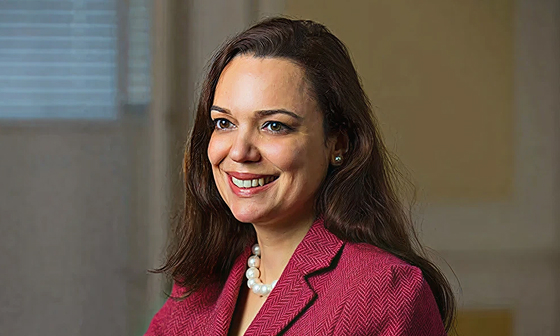
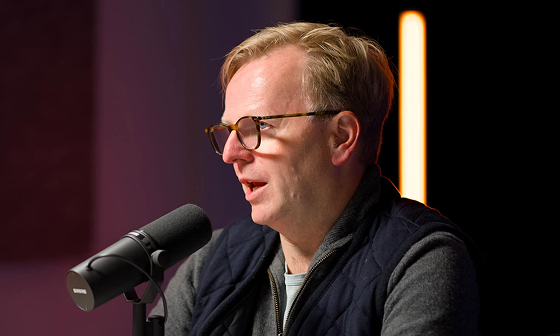

As an investor, your passion and ambition are as personal as those of the athletes themselves. By understanding your vision and partnering with our global resources, we provide advice and financial strategies to help transform your passion for sport into tangible results and future potential.
Vision, ambition and community: we understand the power of sport, both commercially and socially, to make a difference. Sport inspires people to strive for excellence and brings communities together globally to celebrate their passion.
As an athlete, I have seen that discipline, dedication, focus and teamwork are essential to achieving meaningful goals. These same values are at the heart of J.P. Morgan Private Bank’s commitment to excellence, providing expert guidance and seamless global support to clients in the sport, media and entertainment sectors. We are here to help you pursue your ambitions, wherever your journey takes you.
J.P. Morgan’s website and/or mobile terms, privacy and security policies don’t apply to the site or app you're about to visit. Please review its terms, privacy and security policies to see how they apply to you. J.P. Morgan isn’t responsible for (and doesn’t provide) any products, services or content at this third-party site or app, except for products and services that explicitly carry the J.P. Morgan name.
LEARN MORE About Our Firm and Investment Professionals Through FINRA BrokerCheck
To learn more about J.P. Morgan’s investment business, including our accounts, products and services, as well as our relationship with you, please review our J.P. Morgan Securities LLC Form CRS and Guide to Investment Services and Brokerage Products.
JPMorgan Chase Bank, N.A. and its affiliates (collectively "JPMCB") offer investment products, which may include bank-managed accounts and custody, as part of its trust and fiduciary services. Other investment products and services, such as brokerage and advisory accounts, are offered through J.P. Morgan Securities LLC ("JPMS"), a member of FINRA and SIPC. Insurance products are made available through Chase Insurance Agency, Inc. (CIA), a licensed insurance agency, doing business as Chase Insurance Agency Services, Inc. in Florida. JPMCB, JPMS and CIA are affiliated companies under the common control of JPMorgan Chase & Co. Products not available in all states.
Please read the Legal Disclaimer for J.P. Morgan Private Bank regional affiliates and other important information in conjunction with these pages.

